
Globally, one in every ten patients is harmed during health care, and around half of that harm is preventable. World Patient Safety Day brings together governments, partners and communities to focus attention on patient safety and reduce the avoidable harm in health care. Limited available evidence indicates that unsafe, poor-quality care has particularly severe consequences in low- and middle-income countries, contributing to an estimated 5 million deaths and US$6 trillion in economic welfare losses. This year, the campaign focuses on safe care for noncommunicable diseases (NCDs), with the slogan “Safe care for life!”. For people living with NCDs, repeated and often complex interactions with health services increases safety risks over time. In some conditions, such as cancer, up to one in three patients experiences an adverse event during care.
NCDs account for 74% of all deaths globally. In the WHO South-East Asia Region, 9.5 million people die from NCDs every year, with around half of these deaths occurring prematurely among people under the age of 70 years. Safe NCD care must extend between and within the stages of the continuum of care, including prevention, screening, diagnosis, treatment including self-care, rehabilitation, and palliative care. This includes diagnostic delays, medication errors, health care-associated infections, and the unsafe use of medical devices. It comes from handovers, referrals, and discharges that are poorly managed. For a person living with more than one condition, navigating several treatment paths and several medications, these risks compound.
The global frameworks exist. The 2019 World Health Assembly resolution on Global action on patient safety was followed by a Global Patient Safety Action Plan 2021–2030 which calls for integration and coordination between patient safety and NCD programmes. The 2025 United Nations General Assembly Political Declaration on NCDs and Mental Health identifies the provision of safe care as a critical component of improved health outcomes. The Global Strategy for Integrated Emergency, Critical and Operative care, 2026–2035, reinforces the need for timely, safe and high-quality care for acute complications of NCDs, calling for safety to be monitored through audits and case-based registries, and sustained by a team-based culture of safe practice.
Unsafe care carries economic costs. Evidence from OECD countries indicates that around 15% of hospital expenditure and activity is attributable to treating patients who have experienced safety failures, many of them preventable. At a time of constrained health budgets, avoidable harm is an expense no health system can justify.
Patient safety must be written into NCD policies, strategies, and programmes, and not added to them afterwards. That requires primary health care-oriented systems delivering continuous, coordinated care, and the removal of financial barriers that place safe essential services beyond reach. It requires sustainable financing, reliable data, and a health workforce trained, supported, and retained to deliver safe NCD care, working in conditions where incidents can be reported without blame.
People living with NCDs must be partners in their own safety. Their experience and knowledge should inform decisions about their own care as well, as the design and improvement of health services. Patients and caregivers should be empowered to ask questions, understand their medicines and treatment, maintain their health information, recognize warning signs, and communicate when something does not seem right. Health workers must, in turn, be supported with the knowledge, tools, resources and working conditions needed to provide safe care. Health-care facilities should foster a culture in which incidents and near misses can be reported and used for learning and improvement rather than blame.
On World Patient Safety Day, we reaffirm that safe care the right of every person, at every stage of care, for as long as care is needed, and it is inseparable from universal health coverage.
Safe care for life!
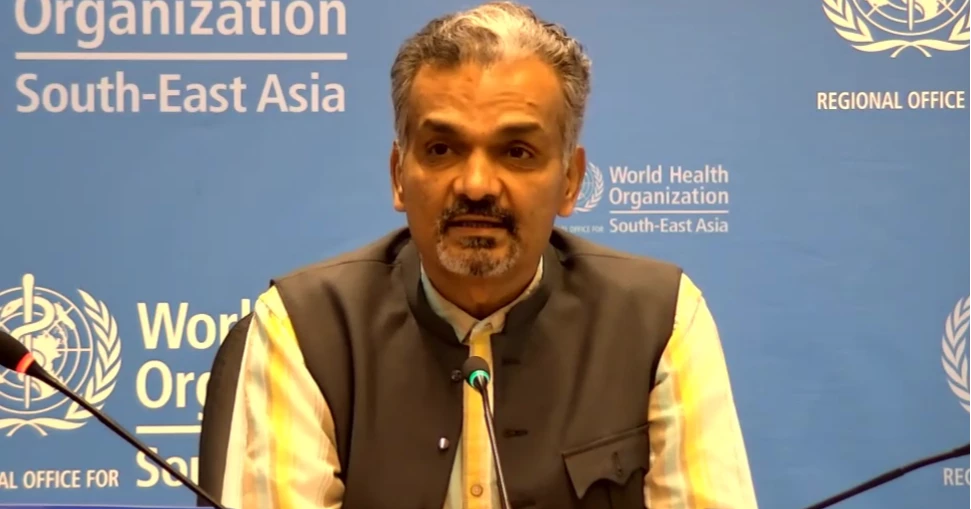
Dr Nilesh Buddha is the Officer-in-Charge, WHO South-East Asia. WHO’s South-East Asia Region comprises the following 10 Member States: Bangladesh, Bhutan, Democratic People’s Republic of Korea, India, Maldives, Myanmar, Nepal, Sri Lanka, Thailand and Timor-Leste.