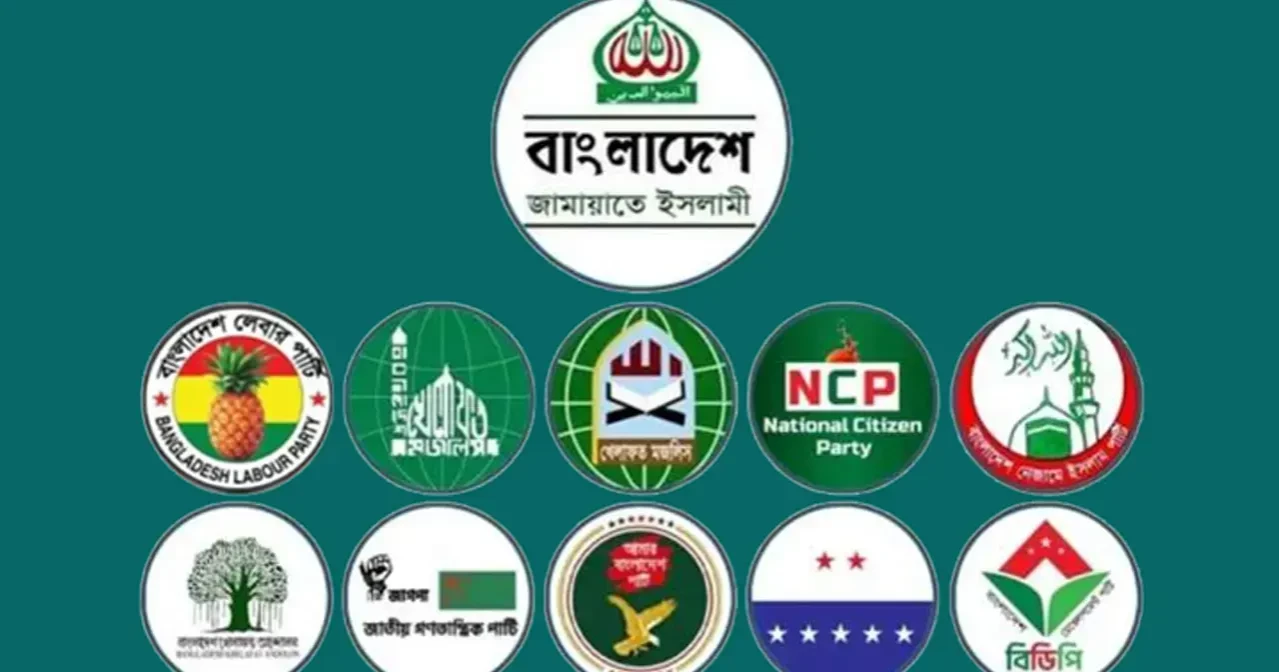
The 11-party alliance that represents the opposition to the BNP at present, has alleged that the country’s law and order situation has deteriorated significantly during the first six months of the BNP-led government compared with the period under the interim government.
Public suffering has increased due to what the alliance described as government mismanagement, the leaders said at a meeting held at the official residence of the Opposition Leader at 29, Minto Road in Dhaka on Sunday afternoon.
Opposition Leader and Ameer of Bangladesh Jamaat-e-Islami Dr Shafiqur Rahman presided over the meeting.
After the meeting, Opposition Chief Whip and National Citizen Party Convener Nahid Islam and Jamaat Assistant Secretary General and 11-party alliance coordinator Dr AHM Hamidur Rahman Azad briefed journalists.
The leaders expressed concern over the overall situation in the country and said the 11 parties would unite to make the planned Long March a success.
They said people who took part in the July Uprising would join the Long March.
The leaders alleged that extortion had become widespread and that farmers were facing a shortage of fertiliser.
They accused the government of denying the crisis and providing what they called misleading information to the people.
“The government has been mismanaging the country for 180 days. It has no plan to run the country,” they said.
They also said the government had ignored opposition proposals to resolve the ongoing energy crisis.
Regarding foreign policy, the leaders said the government had failed to hold India accountable over Sheikh Hasina’s press briefing in Delhi on August 5.
“Good relations with Bangladesh are not possible by allowing the fascist Awami League to carry out political activities in Delhi. We want relations with every country based on mutual respect and equality,” they said.
They alleged that universities were being turned into “sanctuaries for terrorists” and that leaders of opposition student organisations and student parliaments were being suppressed, narrowing the democratic space.
They also accused the government of unprecedentedly politicising the administration by appointing party activists to various state positions.
The leaders alleged that state constitutional institutions, including the Election Commission, had been politicised and that the government was not respecting the July Charter or the referendum verdict.
They warned that the 11 parties would give a “befitting reply” with the people if the government failed to implement the aspirations of the July Uprising and keep its promises.
Calling on people to join the Long March, they said, “Our Long March is a democratic movement. If there are any political or administrative obstacles, we will resist them and move forward.”
The leaders said a public meeting would be held in the capital on September 5 to mark the start of the Dhaka-Chittagong Long March.
They said road rallies would be held at various points along the route and that similar Long March programmes would be organised across the country.
They said the main demand of their movement was implementation of the referendum verdict.
“Although six months have passed since the formation of the government, the referendum verdict has not been implemented. No initiative has been taken and the issue is being avoided,” they said.
They also alleged that public opinion had been ignored by not forming the Constitutional Reform Council.
The leaders urged the government not to hesitate over constitutional reform or implementation of the referendum verdict.
“The government is moving towards constitutional amendments without reforming the Constitution. This will not bring good results for the government. This is our clear message,” they said.
They also expressed concern over the rising prices of essential commodities, saying people’s suffering had reached an unbearable level.
They said factories were closing due to shortages of electricity, oil and gas, and called for immediate steps to address these problems.