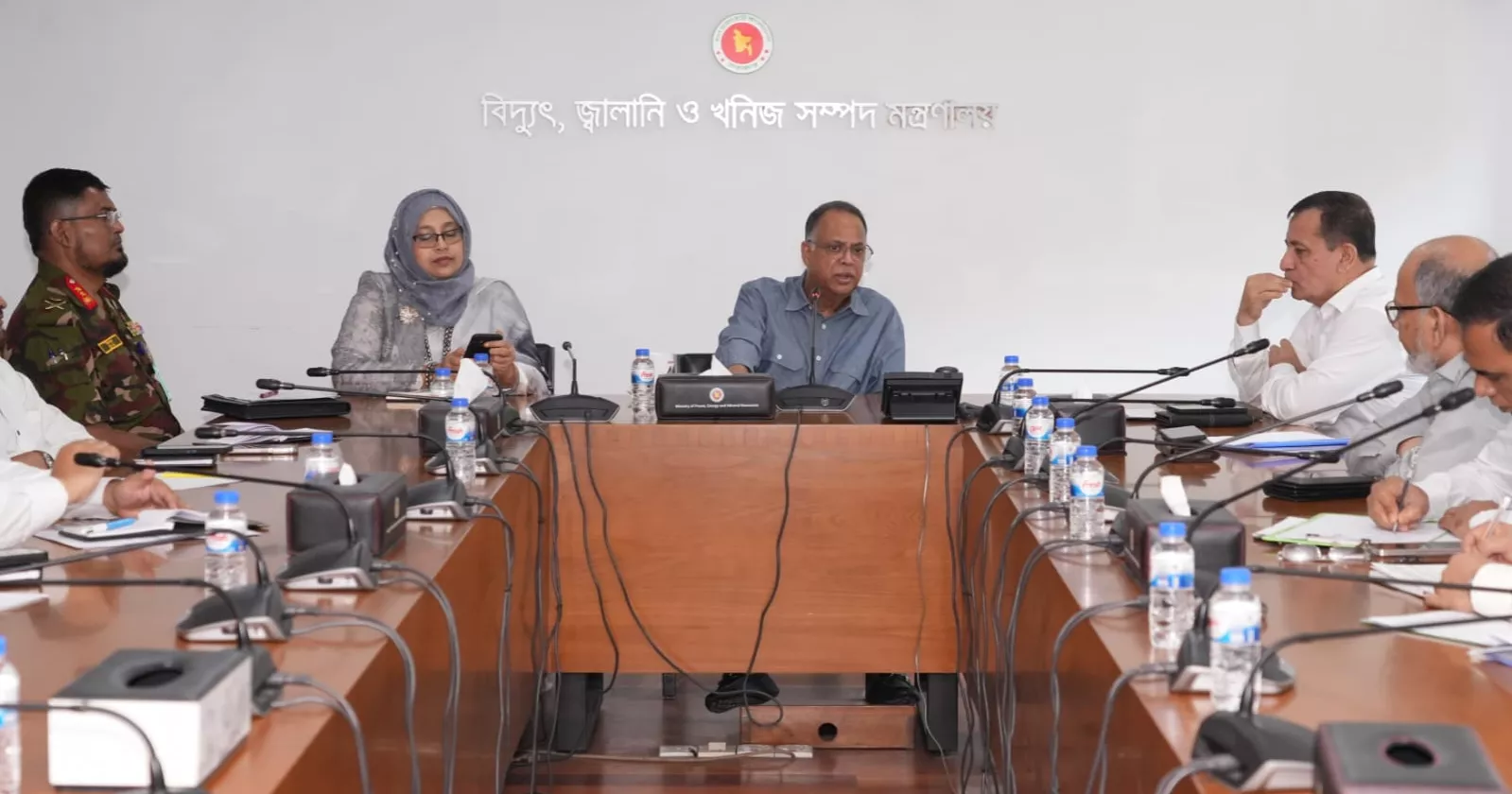
Power, Energy and Mineral Resources Minister Iqbal Hassan Mahmood on Monday directed officials to prepare a comprehensive working paper aimed at making Bangladesh’s power system safer, smarter and better suited for the country's transition into the nuclear power era.
The directive came during a review meeting held at the ministry’s conference room with chairmen and managing directors of power transmission and distribution agencies and companies under the Power Division.
The meeting discussed the country’s existing power transmission and distribution capacity, system weaknesses, smart grid development, and the challenges and preparations required for integrating nuclear power into the national grid.
The minister stressed the need for initiating immediate preparations to address potential challenges associated with the introduction of nuclear power generation.
Highlighting the importance of establishing a National Research Centre to strengthen the power sector, he said Bangladesh must ensure adequate readiness before nuclear power generation begins, given the highly sophisticated nature of the technology.
“We have already started the preparation process. The Power Grid Company of Bangladesh (PGCB) has been instructed to conduct the necessary studies and prepare a concept paper,” Iqbal Hassan said.
According to him, the concept paper will be reviewed by foreign consultants with practical experience in nuclear power systems. Based on their recommendations, the country’s transmission and distribution infrastructure will be upgraded before nuclear power is integrated into the grid.
“Our utmost effort will be to complete all preparations on time,” he added.
The minister noted that Bangladesh has gradually diversified its power generation mix, moving beyond gas-based generation to include coal and solar energy, and is now preparing to enter the nuclear power era.
However, he warned that synchronisation of transmission and distribution networks is essential for the successful integration of nuclear power.
“During the previous Awami League government, the necessary synchronisation measures were not adequately undertaken. Without proper coordination between transmission and distribution systems, there is a risk of system collapse,” Iqbal Hassan said.
To prevent such incidents, the government is working to establish a modern smart grid system and has initiated consultations with all relevant stakeholders, he added.
The minister instructed PGCB’s chief engineer and other officials concerned to submit a detailed concept and working paper on the smart grid system.
Describing nuclear power as critically important for Bangladesh’s future energy security, he emphasised that extensive preparation and caution are necessary because of the technology’s complexity and high safety requirements. “Public safety must receive the highest priority. We are working towards that goal,” he said.
Iqbal Hassan also revealed that several unnecessary projects in the power sector have already been identified. “Investigations are underway to determine responsibility, and appropriate action will be taken in due course,” he said.
He called on all stakeholders in the power sector to work together with genuine patriotism to advance the country’s energy development.
The meeting reviewed the steps already taken to ensure proper grid connection of Rooppur Nuclear Power Plant – introduction of primary and secondary frequency control system in the power plant.
Besides, the existing challenges and future steps to overcome them were discussed, which include ensuring adequate spinning reserve through the participation of power plants, implementation of smart grid technology, overall development of the distribution system, introduction of Distribution Management System (DMS), removing the existing bottleneck of the transmission line and controlling the massive increase and decrease in demand due to tripping/closing of the distribution lines due to adverse weather conditions.
The agencies concerned were instructed to work in a coordinated manner and take quick effective steps to address these challenges.
The minister said the government is determined to ensure safe, uninterrupted and affordable electricity supply to the people of the country by developing the necessary infrastructure and increasing technical capacity.