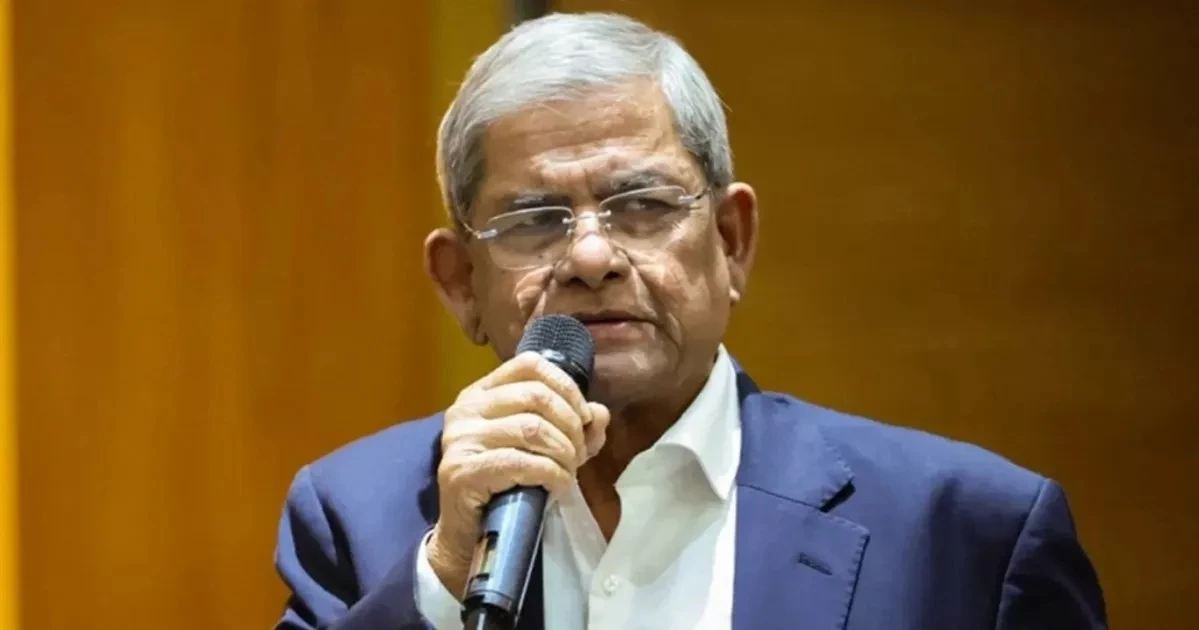
Local Government Minister and BNP secretary general Mirza Fakhrul Islam Alamgir on Sunday said research on life, work and political philosophy of martyred President Ziaur Rahman remains inadequate, stressing the need for comprehensive academic studies on his contributions.
“Whenever we try to discuss martyred President Ziaur Rahman, it becomes clear that research on him is still very limited. In my view, this amounts to a certain injustice to history,” he said while addressing a photo exhibition and discussion organised at the Jatiya Press Club marking the 45th death anniversary of BNP founder and former President Ziaur Rahman.
Fakhrul said Information and Broadcasting Minister Zahir Uddin Swapan, who was present at the event, now has an opportunity to take initiatives for conducting in-depth research on Ziaur Rahman’s life, work and political thoughts.
“There is a need for a high-standard research project that thoroughly examines his entire life, achievements and his vision,” he said.
At the beginning of his speech, Fakhrul referred to the FIFA World Cup and said he had watched the match of his favourite team, Brazil, the previous night.
“I still enjoy sports. Perhaps that is why I still feel young, not in age, but certainly in spirit,” he said.
Speaking about books written on Ziaur Rahman, Fakhrul said the work of late journalist Mahfuz Ullah remains, in his view, one of the best research-based publications on the former president.
“Among the books I have read, Mahfuz Ullah’s book impressed me the most. It is based on extensive research and offers valuable insights for those who want to understand Ziaur Rahman,” he said.
Fakhrul said that although Ziaur Rahman served for only three and a half to four years, he initiated reforms and development efforts in almost every sector of the state.
Zia’s greatest achievements were establishing a distinct Bangladeshi national identity, he said. “I am a Bangladeshi. I have a separate identity. I am not a Bengali from West Bengal, I am a citizen of this land. Through the concept of Bangladeshi nationalism, he established that distinct identity,” he said.
Fakhrul also highlighted Ziaur Rahman’s efforts to revive Bangladesh’s economy following the devastating famine of 1974.
Recalling Nobel laureate Amartya Sen’s observations, Fakhrul said the famine had been widely viewed as a man-made disaster resulting from policy failures.
He said Zia sought to rebuild public confidence, stimulate economic growth and inspire people to work towards national development. “Many of these contributions are not discussed adequately,” he said.
Fakhrul described Zia as a leader who travelled extensively across the country and worked directly with ordinary people to motivate them towards self-reliance and development.
The BNP secretary general said Zia’s contributions extended beyond politics and economics and included efforts to inspire national confidence, democratic values and grassroots development.
Leaders and activists of BNP and its associate bodies, journalists, researchers and admirers of the late president attended the event.