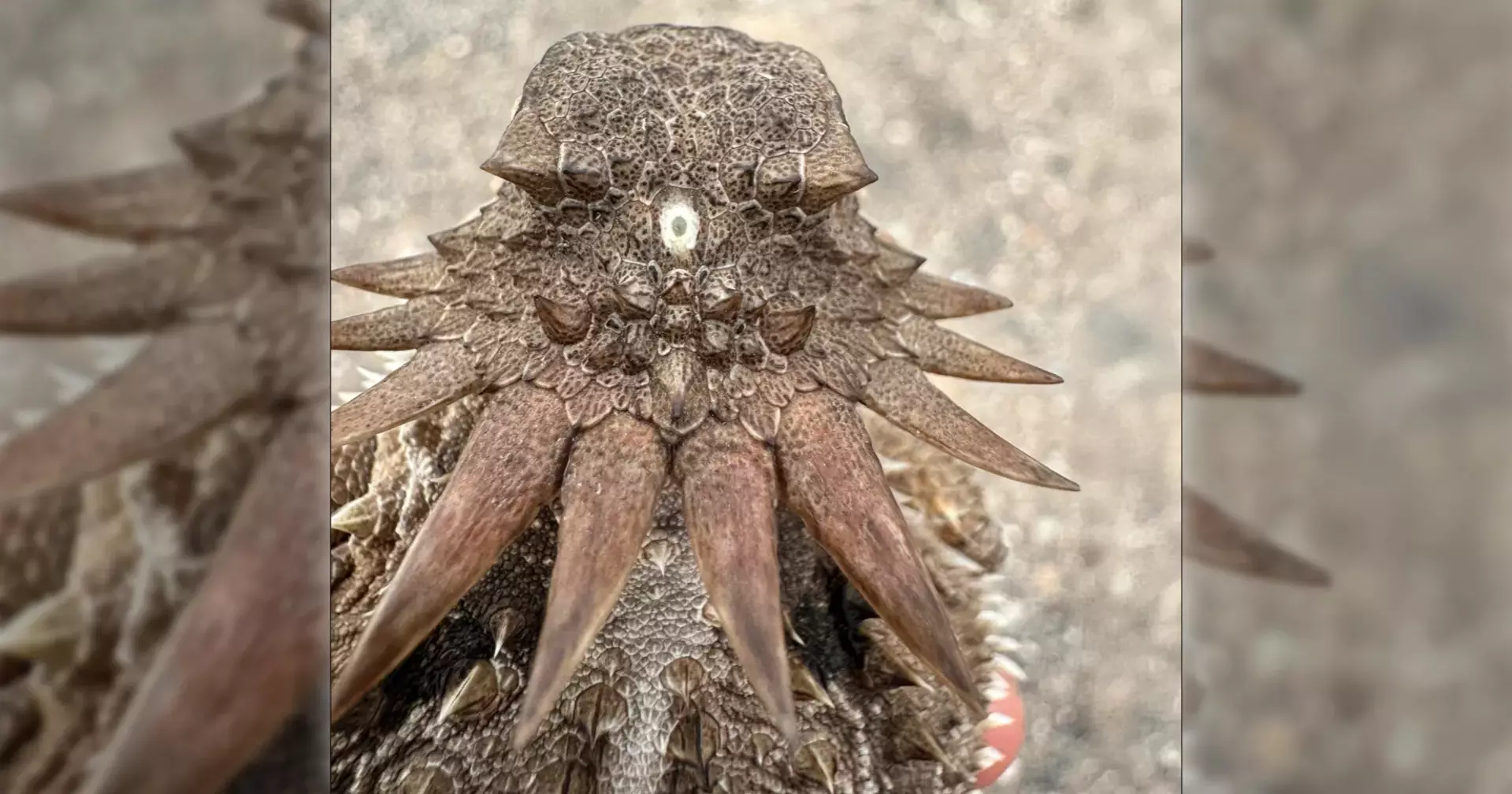
Scientists have proposed that the ancestors of modern vertebrates, including humans, may have passed through a “cyclops-like” stage nearly 600 million years ago, with a primitive central eye eventually contributing to the evolution of today’s paired eyes.
A study by researchers from Lund University in Sweden and the University of Sussex suggests that an ancient ocean-dwelling creature with a single central eye may have played a crucial role in shaping the visual system of vertebrates. The researchers also believe that traces of this ancient eye structure may still exist in the modern brain as the pineal gland, which helps regulate sleep.
“The results are a surprise. They turn our understanding of the evolution of the eye and the brain upside down,” said Dan-E Nilsson, professor emeritus in sensory biology at Lund University.
The tiny ancestor was a worm-like creature that lived in the ocean around 600 million years ago and remained mostly stationary, feeding by filtering plankton from seawater.
Researchers believe the animal may have initially had two eyes or groups of light-sensitive cells. However, because it later adopted a less active lifestyle, paired eyes became less useful and gradually disappeared through evolution.
The creature retained a group of light-sensitive cells in the centre of its head, which developed into a primitive “median eye”. While it likely could not form detailed images, the organ may have helped the animal detect changes between day and night and identify its orientation in the water.
Millions of years later, as descendants of the creature became more active swimmers, the need for advanced vision returned. Scientists suggest that parts of the original central eye system were reused, eventually giving rise to the image-forming paired eyes found in vertebrates.
The findings may explain why vertebrate eyes developed differently from those of animals such as insects and squid.
“The retina of vertebrates developed from the brain, while the eyes of insects and squid originate from skin tissue on the sides of the head,” Nilsson said.
The retina, a thin layer at the back of the eye, contains light-sensitive cells that convert visual information into electrical signals sent to the brain.
The researchers said their conclusion is based on comparisons of light-detecting cells across different animal groups, including their location, function and connections with nerves and other tissues.
They described vertebrate eye evolution as an unusual evolutionary journey in which an ancestor lost its original paired eyes, preserved a simple central eye, and later used elements of that system to develop a more advanced visual structure.
The study also suggests that the ancient central eye may not have completely vanished. Instead, its evolutionary remains may survive as the pineal gland, a small organ deep inside the vertebrate brain.
Although the human pineal gland does not produce visual images, it plays an important role in controlling the body’s sleep-wake cycle by producing melatonin, a hormone linked to darkness and light.
In many vertebrates, the pineal system can directly detect light, while in humans light signals reach the brain mainly through the eyes.
“It’s mind-boggling that our pineal gland’s ability to regulate our sleep according to light stems from the cyclopean median eye of a distant ancestor 600 million years ago,” Nilsson said.
Source: Science Daily