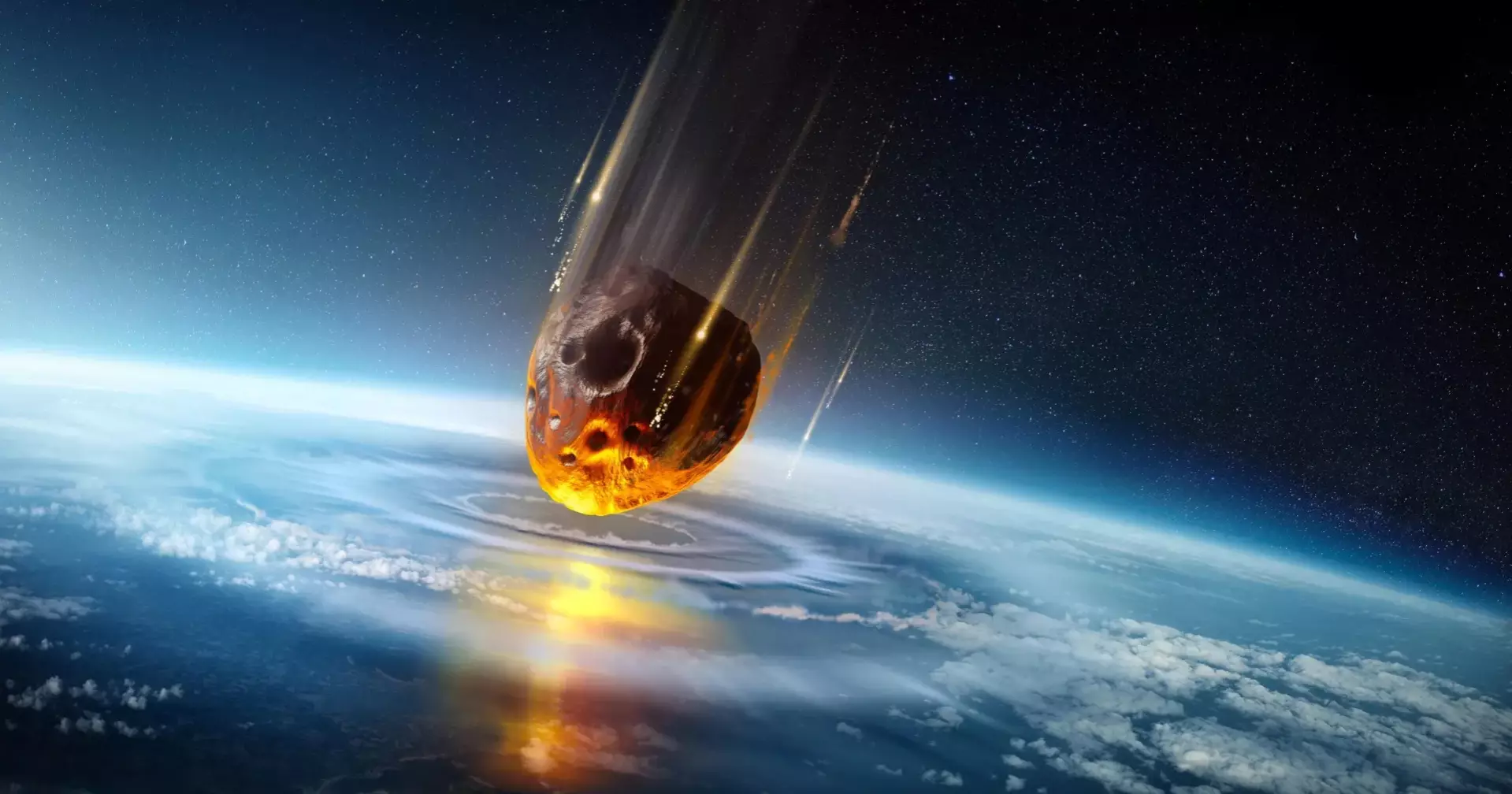
Scientists have identified the rare type of meteorite that is believed to have struck Earth 66 million years ago, triggering the mass extinction that wiped out about 75 percent of all species, including all non-avian dinosaurs.
According to a new study published in Science Advances, the impactor was most likely a rare carbon-rich meteorite known as a CO chondrite, based on an analysis of nickel isotopes preserved in material left behind after the Cretaceous-Paleogene impact.
The international research team included scientists from the University of British Columbia (UBC), as well as research institutions in Paris, Brussels and Vienna.
Researchers said CO chondrites differ significantly from the meteorites commonly found on Earth because they contain much lower amounts of volatile elements such as carbon, zinc, water and especially sulfur.
"CO chondrites are very different from the meteorites typically displayed in museums," said Dr. Philippe Claeys, a visiting professor at UBC and one of the study's researchers.
The findings suggest that sulfur carried by the meteorite itself was probably not the main cause of the global environmental disaster that followed the impact. Instead, scientists believe vast amounts of fine dust and debris blasted into the atmosphere played the biggest role by blocking sunlight and disrupting Earth's climate.
To identify the impactor, researchers conducted highly precise measurements of nickel isotopes in samples collected from a thin layer of clay found around the world. This layer was formed after the asteroid struck Earth and marks the boundary between the Cretaceous and Paleogene periods.
Scientists said the work was particularly challenging because nearly the entire meteorite vaporized upon impact, leaving behind only tiny traces of its original material.
Despite the limited evidence, the unique nickel isotope signature allowed researchers to identify the impactor as a rare CO chondrite.
The meteorite's exact origin remains uncertain. Researchers believe it may have come either from the outer regions of the solar system or from the outer part of the asteroid belt near Jupiter.
Carbonaceous chondrites make up only about five percent of meteorites recovered on Earth, while CO chondrites represent only a small fraction of that already rare group. They are considered among the oldest and most primitive materials formed during the early history of the solar system.
"Being struck by such a rare object highlights just how unfortunate the dinosaurs were," Claeys said.
Scientists estimate the asteroid measured between 10 and 15 kilometres in diameter and hit Earth at a speed of around 64,000 kilometres per hour.
The impact created the massive Chicxulub crater, which is now buried beneath Mexico's Yucatán Peninsula. Researchers say the collision triggered global environmental changes that led to one of the most devastating mass extinctions in Earth's history.
Source: Science Daily