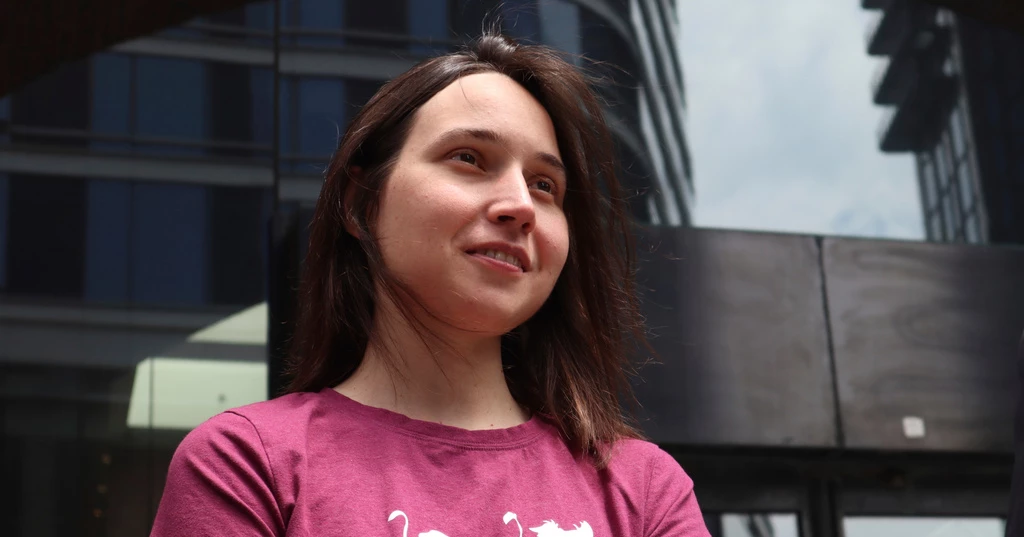
US prosecutors have dropped all criminal charges against a Russian scientist who spent four months in immigration detention after arriving at a Boston airport with frog embryos intended for cancer research at Harvard Medical School.
Kseniia Petrova, 31, was arrested in early 2025 while returning from a holiday in France, where she had visited a laboratory specialising in preparing extremely thin sections of frog embryos and collected samples for her research.
Customs officers questioned her about the samples at Boston's Logan International Airport before she was charged with smuggling, concealing information and making false statements to government officials.
On Wednesday, a federal judge approved prosecutors' request to dismiss all charges.
Petrova told The Associated Press that she had not realised the samples needed to be declared to customs and had no intention of bringing them into the country illegally.
The case weakened in April when a federal judge ruled that a customs officer had improperly revoked her visa over the incident. Petrova had feared deportation to Russia, where she could face imprisonment.
Her lawyers also argued that the prosecution was vindictive and unusual, claiming criminal charges were filed only after the government appeared likely to lose her immigration case.
On Tuesday night, US Attorney Leah Foley requested the dismissal, citing developments in the case and her office's priorities and resources.
She argued that the cost of continuing the prosecution outweighed the public interest, although she rejected Petrova's allegations of selective and vindictive prosecution.
US District Judge Leo Sorokin, who was nominated by former President Barack Obama, dismissed the charges on Wednesday without holding a hearing.
Petrova's lawyer, Daniel Marx, welcomed the decision, saying the prosecution should never have been brought against the Harvard scientist.
He said Petrova was conducting medical research into ageing that could benefit society and that the samples were inert, non-living and non-toxic, posing no danger to anyone.
Earlier, the Department of Homeland Security had defended her detention, accusing her of misleading federal officers about the embryos.
In her court filing, Foley also referred to an April ruling that could have allowed Petrova's lawyers broad access to government records to support their claim of selective prosecution.
The ruling would have required prosecutors to provide information about comparable cases involving passengers carrying undeclared items, regardless of how the items were transported or whether there was evidence of deliberate deception.