Scientists in Argentina are investigating an unusually high number of southern right whale calves found dead along the country's Patagonian coast, raising concerns about the health of the species.
Dozens of dead calves have washed ashore around Peninsula Valdes, a major breeding ground for southern right whales in Chubut province. The whales, once hunted to near extinction during the 19th and 20th centuries, now return to the peninsula's sheltered waters to give birth and nurse their young.
Marcela Uhart, a veterinarian with the One Health Institute at the University of California, Davis, is leading the investigation as head of the Southern Right Whale Health Monitoring Program.
"We're looking into the whale calf deaths based on 23 years of monitoring that we have of this same population. That's what allows us to say that this is an unusual event," Uhart said.
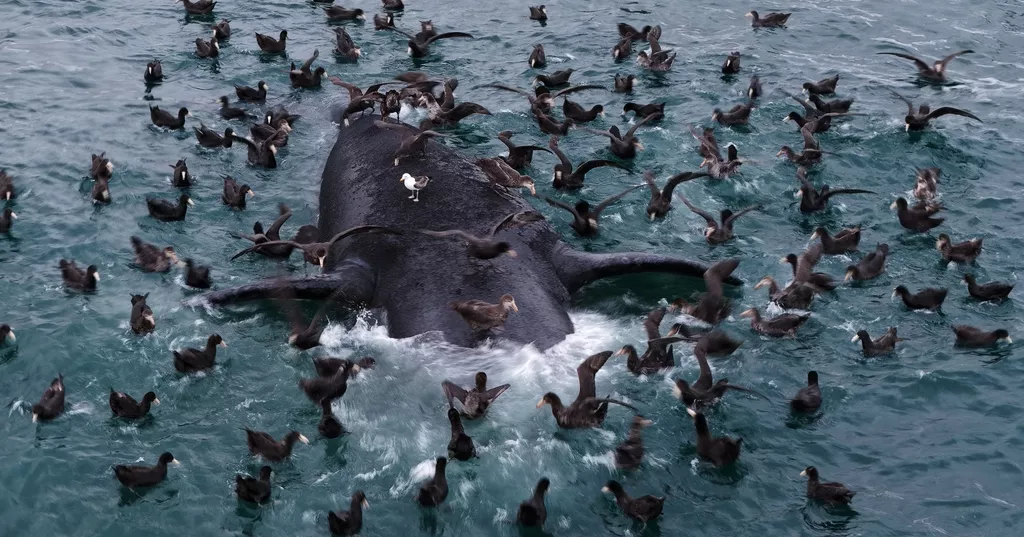
Researchers' leading theory is that the calves are developing infections caused by marine bacteria that enter their bodies through wounds inflicted by kelp gulls, Uhart said.
For decades, the seabirds have attacked whales as they surface to breathe, feeding on their skin and blubber. Adult whales have learned to expose only their heads while keeping their backs underwater, making it harder for gulls to reach them. Calves, however, are unable to use the same technique and are more vulnerable to attacks.
Dead calves have been washing ashore around Puerto Madryn, including areas near the city's waterfront, alarming residents and tourists. While residents have reported seeing hundreds of carcasses, researchers have declined to provide a death toll, saying the number will become clearer after the season ends in late November.
Uhart and a team of biologists, veterinarians and park rangers are searching for dead whales from the shore and using boats, aircraft and drones.
The researchers photograph and examine the carcasses and collect skin and organ samples before decomposition makes testing difficult. The samples are being analysed at a veterinary school in Tandil, farther north.
Bacteria have already been detected in some tissue samples, but researchers are continuing to culture the samples to identify the microorganisms and determine whether infections caused the deaths.
Even if bacteria are confirmed as the cause, scientists will need to establish why the infections have become particularly deadly this year.
Uhart said changes in marine conditions, including rising sea temperatures potentially associated with climate change or El Nino, could have created conditions in which bacteria become strong enough to overcome the calves' immune defences.
Researchers are therefore trying to identify the factors that may have triggered the unusually large-scale deaths.
Southern right whales received their name from whalers who considered them the "right" animals to hunt because they moved slowly, stayed close to shore and floated after being killed, according to the International Whaling Commission.
Although illegal hunting continued into the 1970s, the species has gradually recovered since receiving international protection in 1935.
However, the whales still face threats common to whale populations worldwide, including declining food supplies, entanglement in fishing gear, oil spills and collisions with ships.
Researchers warn that if deaths on this scale occur repeatedly, they could slow the population's recovery.
By determining what is killing the calves, scientists hope to identify ways to protect the vulnerable whale population.
"If the cause relates to something that we are doing as humans, then we need to change that," Uhart said. "We don't want to endanger these whales again."