
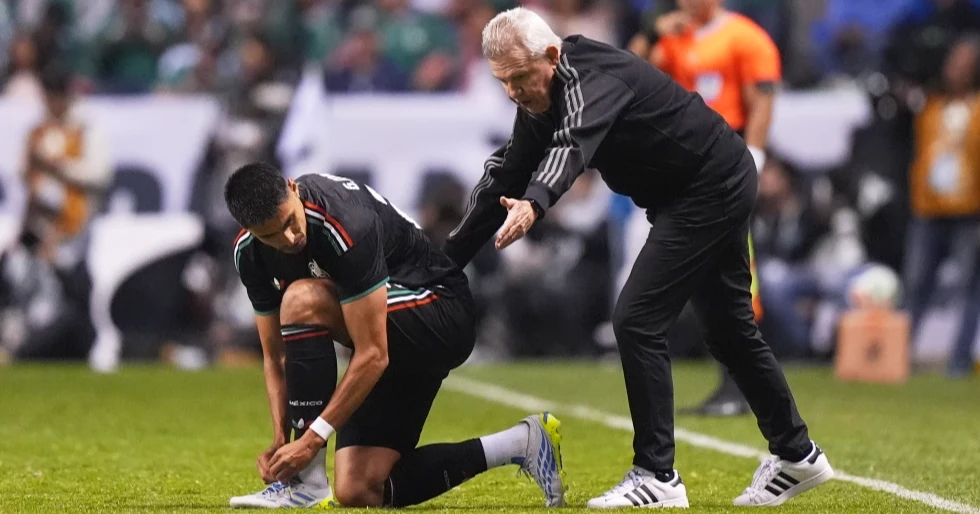
Mexico coach Javier Aguirre is going beyond tactical training as the team prepares to co-host the 2026 World Cup, using motivational and psychological strategies to inspire his squad for a strong run on home soil.
As part of his preparations, Aguirre has brought in former members of Mexico’s 1986 World Cup squad as well as legendary boxer Julio César Chávez to speak with the players at the team’s training base at the Centro de Alto Rendimiento.
“The idols change, the uniforms evolve, but the pride of representing Mexico remains intact,” said Mexican Football Federation commissioner Mikel Arriola. He added that while the 1986 generation created history, the upcoming tournament offers a chance to match or surpass those achievements.
Mexico’s best World Cup performances came as hosts in 1970 and 1986, when they reached the quarterfinals. Chávez, one of the country’s most celebrated athletes and a multiple-time world boxing champion, encouraged the team to aim higher.
“I hear people talking about reaching the fifth match, but I believe you are going to go much, much further,” Chávez told the players, urging them to dream big regardless of their opponents’ strength or speed.
Mexico has failed to reach beyond the round of 16 in seven consecutive World Cups from 1994 to 2022, making the so-called “fifth match” — the quarterfinals — a long-standing target for fans and media.
The 2026 World Cup, which will be co-hosted by Mexico, the United States and Canada, will feature an expanded 48-team format. With the addition of a round of 32, reaching the quarterfinals will require teams to play a sixth match instead of the traditional fifth.
Aguirre, who was part of Mexico’s 1986 squad, has also highlighted the importance of home advantage and national identity in motivating players.
“We went to the anthropology museum, and it is marvelous. For the players, it was an incredible experience — they have to know where we come from,” he said, adding that the visit had a strong emotional impact on the squad.
The Mexican Football Federation has also brought back Spanish mental performance coach Imanol Ibarrondo, who previously worked with the national team at the 2018 World Cup and later assisted Ecuador during the 2022 tournament in Qatar.
Defender Mateo Chávez said the psychological sessions had been valuable for the team’s development.
“We’ve had individual and group sessions, and we’ve gotten to know each other better,” the 22-year-old said, adding that the work has helped improve team cohesion.
Mexico will begin its 2026 World Cup campaign on Thursday against South Africa at the Mexico City stadium.