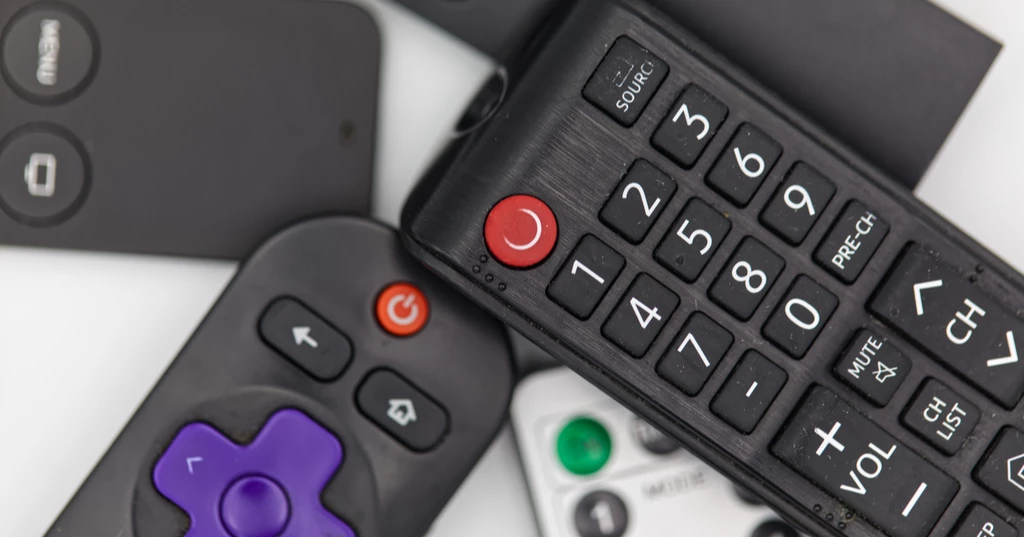
The humble television remote control has transformed the way people watch TV, allowing viewers to switch channels without leaving the comfort of their couches and even influencing how television programs are produced.
For people under 40, it may be hard to imagine a time when changing channels required getting up and turning a dial on the television. But that changed in 1950, when Zenith Electronics introduced the first TV remote, known as the “Lazy Bone.”
The device was not wireless, meaning viewers still had to deal with a cable that could easily become a tripping hazard.
Five years later, Zenith introduced the first wireless remote, the “Flash-Matic,” which used light signals to change channels. However, sunlight could trigger unwanted channel changes. In 1956, the company introduced the “Space Command,” which relied on sound waves. The clicking sound made when its buttons were pressed helped give rise to the term “clicker.”
Infrared technology became common in remotes during the 1980s, just as the expansion of cable television dramatically increased the number of available channels and made remote controls almost essential.
David Bianculli, a television critic for NPR's “Fresh Air” and a professor at Rowan University, said losing a remote in the cushions of a sofa could become a major crisis for viewers.
The remote also changed television programming. Before viewers could easily switch channels, broadcasters placed great importance on maintaining a smooth sequence of programs to keep audiences from tuning elsewhere.
Networks such as CBS and NBC developed carefully planned schedules to retain viewers. CBS's Saturday night lineup in the 1970s and NBC's “Must-See TV” Thursday nights became examples of successful programming strategies.
The rise of cable television also created the “channel surfer,” a viewer who rapidly moved through numerous channels looking for something interesting. As a result, eye-catching programming became increasingly important.
Despite its convenience, the remote has its drawbacks. It can encourage arguments over who controls the television, accumulate in multiple versions for different devices and inevitably stop working when batteries run out.
With modern appliances increasingly capable of responding to voice commands, the traditional remote could eventually become less important.
Until then, the search for the missing “clicker” remains a familiar household ritual.
The late Zenith scientist Eugene Polley, who helped pioneer wireless remote technology alongside Robert Adler, once humorously compared the remote's importance with other major inventions, saying it was nearly as important as sex.
Whatever its ultimate place in history, the remote has certainly given television viewers one enduring form of power: control over the clicker.