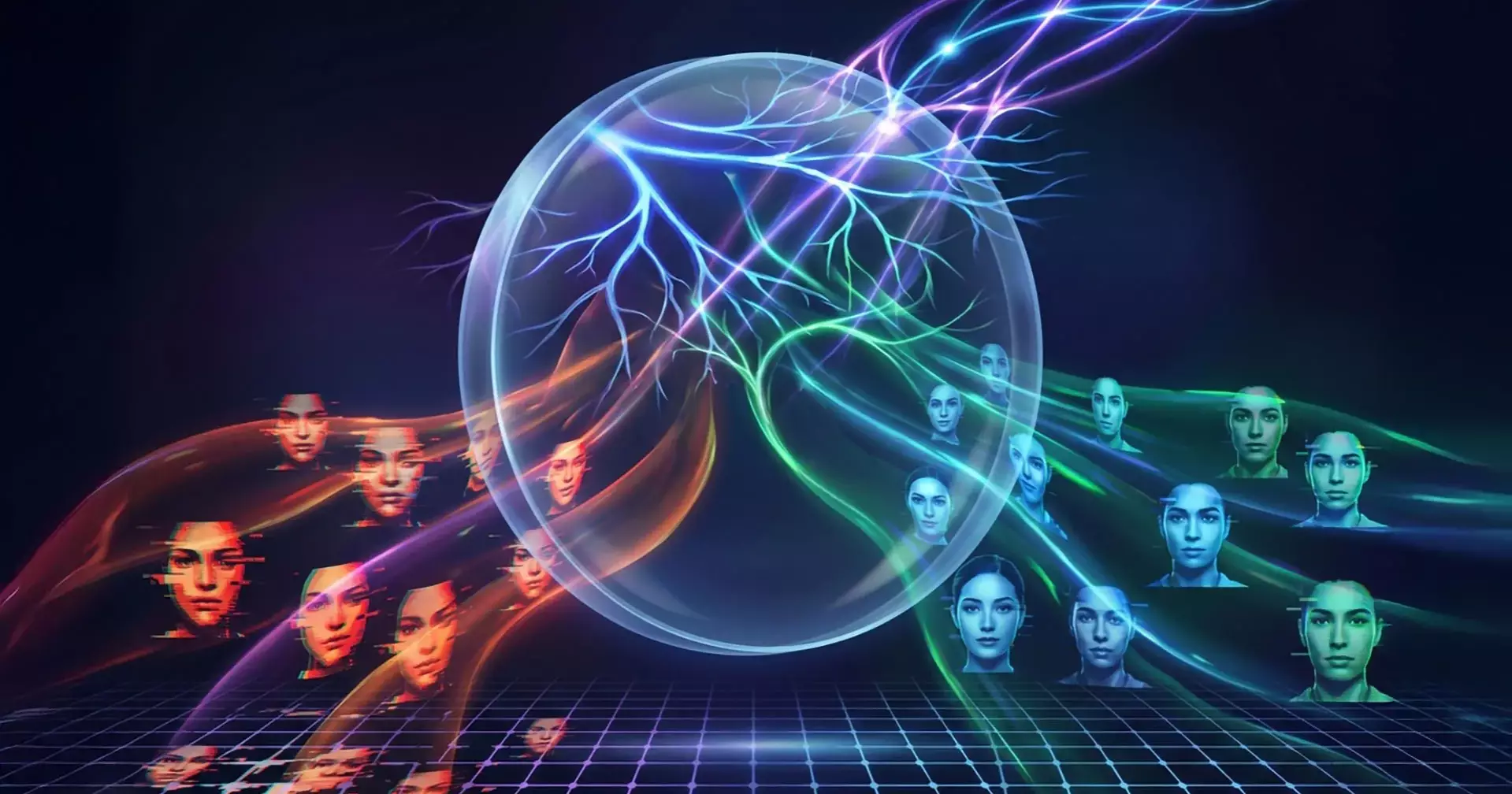
Researchers at the University of California, Los Angeles (UCLA) have developed a light-powered artificial intelligence system that can detect deepfake videos with nearly 98 percent accuracy while screening 15 videos simultaneously.
Unlike conventional digital detectors that process videos sequentially, the new optical-neural processor uses the physical propagation of light to analyse multiple video streams in parallel, potentially reducing processing time and energy use.
The technology is detailed in a study published in eLight. Led by Professor Aydogan Ozcan, the UCLA team designed the system as a high-throughput first line of defence against manipulated and AI-generated video.
In tests using 15 Celeb-DF videos, the processor achieved 97.79 percent overall accuracy, with 99.86 percent sensitivity and 95.72 percent specificity. When the system was expanded to process 18 videos at once, accuracy remained at 96.13 percent.
The researchers also improved performance by adding two passive diffractive optical layers. When tested against more challenging manipulations, the additional layers increased detection accuracy by about 6.8 percent without substantially increasing energy consumption or processing time.
The system was further tested on videos generated by Google's VEO-3 model, which can produce increasingly realistic synthetic footage. With minimal fine-tuning, it recorded 94.80 percent accuracy and 97.61 percent sensitivity on previously unseen VEO-3 videos.
Researchers said the optical design also offers greater resistance to certain adversarial attacks because key computational parameters are physically embedded in the optical hardware, making them harder to reproduce or reverse engineer.
The processor remained functional despite image noise, blur, JPEG compression and minor optical misalignments.
The team does not intend the technology to replace conventional digital detectors. Instead, it could serve as a rapid screening layer, filtering large volumes of video and sending suspicious content to more sophisticated digital systems for detailed analysis.
The researchers said the hybrid approach could eventually support large-scale content moderation, media authentication, surveillance and other security-related applications.
The study was co-authored by Parnian Ghapandar Kashani, Dr. Shiqi Chen and Professor Aydogan Ozcan of UCLA's departments of Electrical and Computer Engineering and Bioengineering, and the California NanoSystems Institute.
Source: Science Daily