
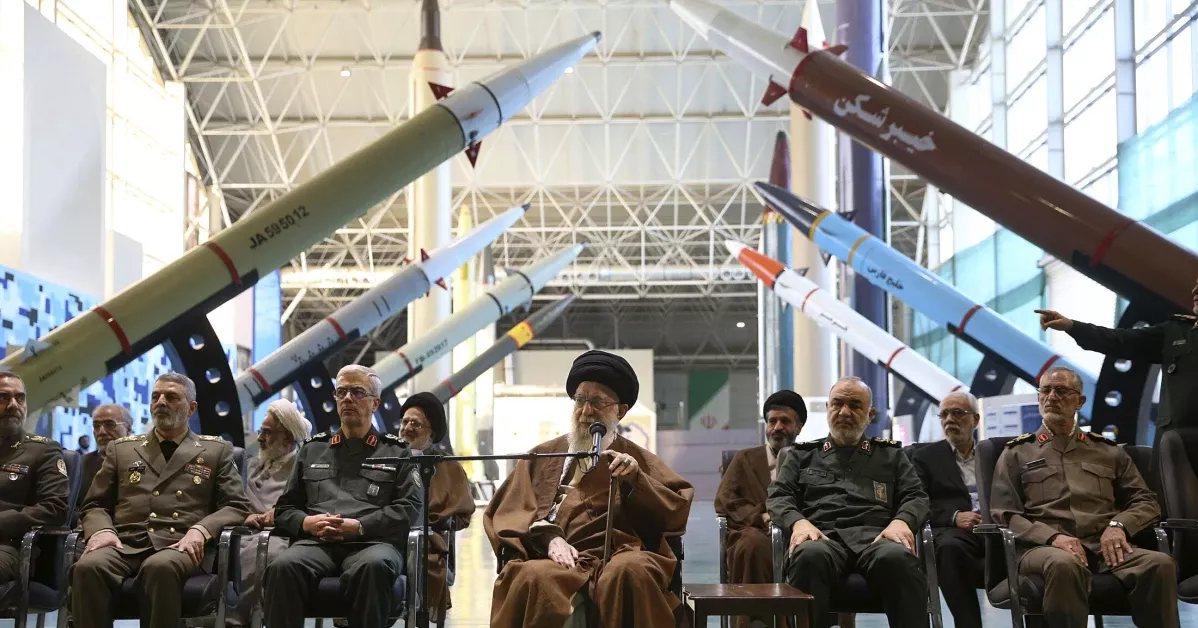
Iran’s leadership structure has come under intense strain following the killing of several top figures, including Supreme Leader Ali Khamenei and senior official Ali Larijani, raising questions over who now holds real authority in the country.
Following Khamenei’s death, his son Mojtaba Khamenei was swiftly named as the new supreme leader, placing him formally at the apex of Iran’s political and military system. However, his absence from public view and limited political experience have cast doubt on how firmly he controls the state.
Israeli Prime Minister Benjamin Netanyahu said Iran’s leadership appeared to be in disarray, questioning who is effectively in charge as the conflict continues.
Analysts suggest that real power may now lie with the Islamic Revolutionary Guard Corps, which has long been one of the most powerful institutions in the country. Experts say the force, originally established after the 1979 Islamic Revolution, could be playing a dominant role amid the leadership vacuum.
“The Revolutionary Guard is the state now,” said Ali Vaez of the International Crisis Group, noting that civilian leadership structures have been weakened by the loss of key figures.
Iran’s governance system, however, is designed with multiple layers of authority. Analysts say this could allow continuity even after the elimination of senior leaders, with lower-ranking officials stepping in to maintain operations.
Earlier, Foreign Minister Abbas Araghchi indicated that some military units were acting with a degree of autonomy, following pre-set directives amid the ongoing conflict.
Experts caution that while the loss of senior leadership could reshape Iran’s political system, any transformation is likely to unfold gradually rather than lead to immediate collapse.