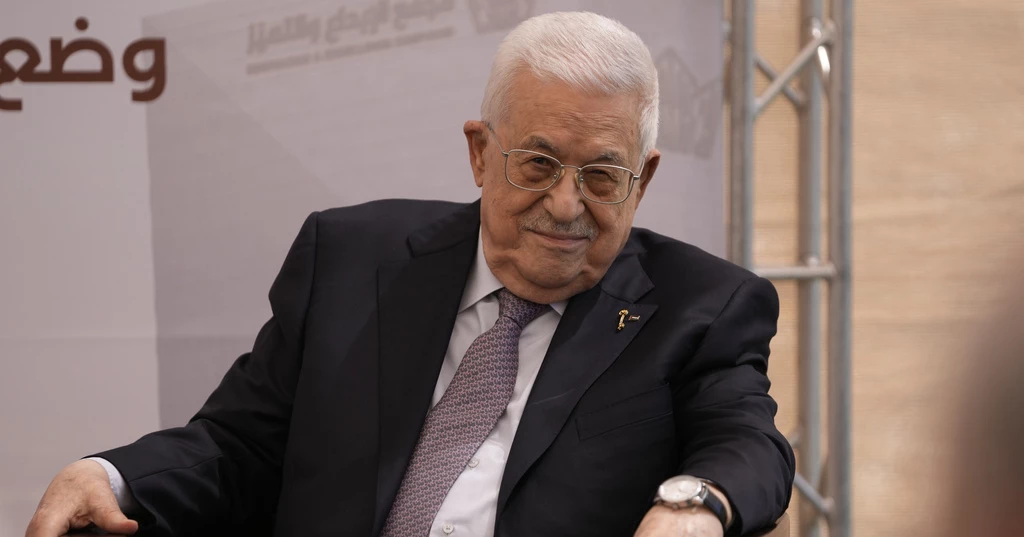
Palestinian President Mahmoud Abbas has postponed legislative elections scheduled for next month, delaying the vote until September 11, 2027, according to the official Palestinian news agency WAFA.
A decree issued on Friday also scheduled presidential elections for the same day. Palestinians have not held a presidential election for more than two decades.
The decision delays what would have been the first Palestinian legislative election in nearly 20 years, leaving established political leaders in power and risking further damage to the Palestinian Authority’s credibility among Palestinians and international donors.
The Palestinian Authority, dominated by Abbas’ Fatah party, administers parts of the Israeli-occupied West Bank under agreements reached in the 1990s. It has become increasingly unpopular during Abbas’ presidency, with many Palestinians viewing it as corrupt and criticising its security cooperation with Israel.
The postponement followed a meeting of senior Palestinian officials to discuss the election. The Palestine Liberation Organization’s Executive Committee, headed by Abbas, said conditions in East Jerusalem, the West Bank and Gaza were unsuitable for holding the vote. It also cited Israel’s refusal to allow election materials and international observers into Gaza.
The delay had been widely anticipated after Palestinian factions from across the political spectrum met in Cairo to discuss the issue. Islamic Jihad deputy secretary-general Mohammed al-Hindi told The Associated Press earlier this week that the factions had discussed postponing the election.
The last Palestinian legislative election was held in 2006, when Hamas won a majority of seats. Israel and Western countries subsequently boycotted the Hamas-led government, fuelling months of unrest that culminated in Hamas taking control of Gaza the following year.
Since then, power has remained divided between Hamas in Gaza and Abbas’ Palestinian Authority in the West Bank.
Violence in the West Bank has escalated in recent years as Israel has expanded settlements and outposts. Settler attacks on Palestinians and Israeli military raids on cities under Palestinian Authority control are regularly reported.
A US-brokered ceasefire plan reached last year outlined a possible future role for the Palestinian Authority, but its immediate responsibilities remained largely undefined. Hamas has continued to govern Gaza, while technocrats operating under the Board of Peace have remained in Cairo awaiting permission to enter the territory and oversee a transition of power.
Before the postponement, major political factions had not registered candidate lists for the election. Behind the scenes, however, veteran officials had been discussing an alliance to challenge Abbas.
An unexpected grouping had emerged involving Hamas, Islamic Jihad and a bloc led by former Fatah security chief Mohammed Dahlan. Dahlan had previously been driven out of Gaza by Hamas and went into exile in 2010 following a falling-out with Abbas.
“Abbas is terrified by the electoral alliance bringing our faction together with opposition factions and forces within Fatah that reject his leadership,” Dimitri Dilliani, a spokesperson for Dahlan’s faction, said in a statement.
Abbas has served as president since 2005 and has repeatedly postponed presidential and legislative elections during his tenure.