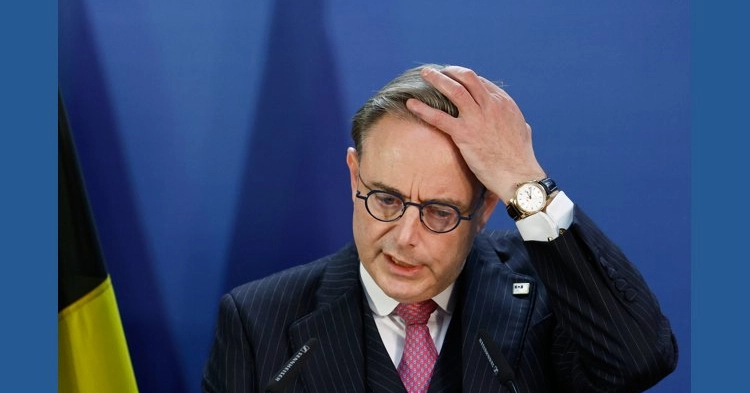
Belgium's King Philippe on Friday rejected Prime Minister Bart De Wever's resignation and directed him and the governing coalition to resume negotiations to resolve the country's prolonged budget crisis.
De Wever submitted his resignation on Monday after talks over the budget collapsed. However, the king, who plays a key role in the formation of national governments, decided to withhold his approval.
Throughout the week, King Philippe held consultations with leaders of the coalition parties. According to a Royal Palace statement, all party leaders reiterated their commitment to reaching an agreement on a sustainable budgetary plan for the next three years.
The leaders also pledged to act responsibly and demonstrate a willingness to compromise, the statement said.
"Based on these discussions, the King decided to reject the prime minister's resignation and asked him to resume budget negotiations immediately," the palace said.
De Wever has been asked to report back to the king on November 16.
The conservative Flemish nationalist prime minister, who assumed office in February 2025, had pledged to address Belgium's mounting public debt and budget difficulties. However, he has struggled to secure support from the other members of his five-party coalition for his proposed measures.
Some political commentators viewed his resignation attempt as a possible political strategy to pressure coalition partners into reaching an agreement.
De Wever is facing mounting pressure to finalise a deal on the 2027 budget before December 31.
Belgium is among the most heavily indebted countries in the 27-member European Union, alongside France and Italy. Its debt burden had been increasing for years before being further aggravated by the COVID-19 pandemic and the energy crisis.
The European Commission has projected that Belgium's public debt will reach 110% of its gross domestic product this year.
Rising interest payments on the debt are also creating additional pressure as the government seeks to increase defence spending.
The political crisis is unfolding amid growing student protests and frequent labour strikes across the country, including several nationwide days of action organised by trade unions.