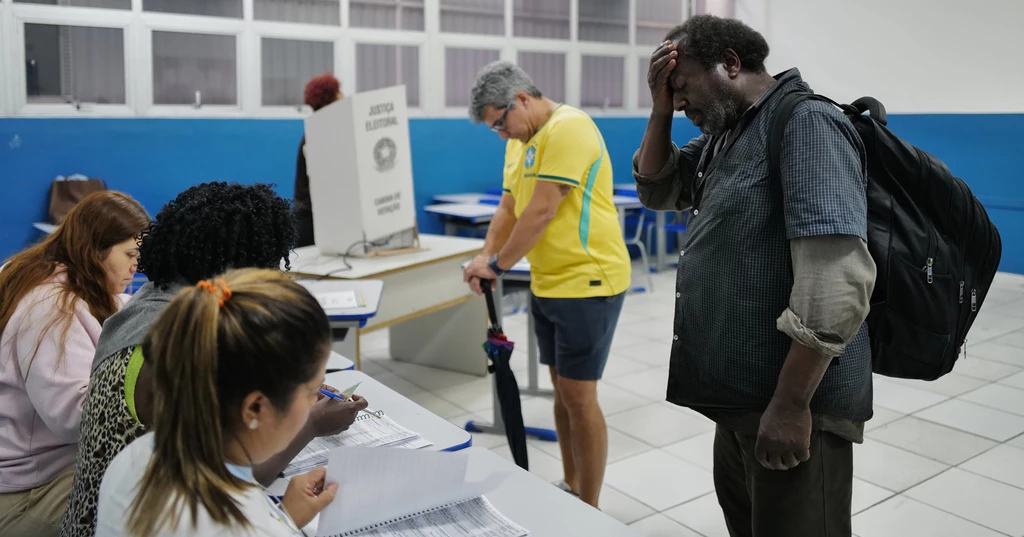
Brazilians began voting on Sunday in a highly polarised presidential runoff between incumbent President Luiz Inácio Lula da Silva and Flávio Bolsonaro, with the outcome set to determine whether the United States significantly expands its growing influence in Latin America.
Pre-election polls showed the two candidates locked in a tight race. Both need more than 50% of the vote to become Brazil's next president in January. The contest pits veteran left-of-centre politician Lula against Bolsonaro, an ally of US President Donald Trump and the son of imprisoned former President Jair Bolsonaro.
Flávio Bolsonaro secured more than 2.2 million votes more than Lula in the first round of the election earlier this month. More than 33 million voters out of nearly 160 million eligible voters did not cast their ballots.
The two candidates hold sharply different ideological positions on issues ranging from US-Brazil relations and climate change to social welfare.
A Bolsonaro victory would mark a rightward shift in Latin America's most populous country and largest economy, in a year when Trump's allies have won elections in Chile, Peru and Colombia.
A Lula victory, meanwhile, would leave Brazil and Mexico, the region's second-most populous country led by President Claudia Sheinbaum, under left-of-centre leadership.
In many ways, Sunday's runoff represents another showdown between Brazil's two deeply divided political camps, which inspire both strong support and intense opposition. Four years ago, Lula defeated Bolsonaro's father by the narrowest margin since Brazil returned to democracy in 1985. Opinion polls suggest this year's contest could be even closer.
Security and cost-of-living concerns
Lula, who previously governed Brazil from 2003 to 2010, has faced a difficult re-election campaign amid concerns over rising living costs and security.
Bolsonaro has made a tough approach to crime a central pillar of his campaign and pledged to reduce food prices.
Both candidates have faced corruption allegations involving family members and political allies. Bolsonaro has been implicated in a major scandal that has shaken Brazil, while Lula spent more than a year in prison over corruption convictions that were later annulled.
Bolsonaro's admission that he received around $12 million from disgraced former banker Daniel Vorcaro to produce a film about his father's life has cast a shadow over his campaign. He is under investigation for alleged corruption, money laundering and tax evasion in connection with the case.
When Bolsonaro voted at a school in Rio de Janeiro around 8am, his supporters shouted, "Lula, thief, your place is in prison," while Lula's supporters chanted in his favour.
"The time of real change has arrived," Bolsonaro told journalists. "Brazil can't go on another four years on its current trajectory."
Ahead of the election, Lula repeatedly portrayed Bolsonaro, whose father is under house arrest over an attempt to stage a coup, as a threat to democracy. Bolsonaro has pledged to seek an amnesty for his father if elected.
The next president will appoint at least three of Brazil's 11 Supreme Court justices during the coming term as several judges are due to retire.
Bolsonaro has long criticised the country's highest court, which has been rocked by a corruption scandal, and pledged to pursue judicial reforms.
Seeking to attract undecided voters after losing the first round, Lula has introduced several costly incentives. His government's latest initiatives include backing a debt-relief programme for small businesses and promising free public transport on weekends.
The Senate's approval of a six-day working week, a popular proposal supported by the government, also provided a boost to the incumbent's campaign.
Trump administration looms large over election
Lula has criticised the US president ahead of Brazil's election, warning of the risks of American intervention in the country's political affairs.
The Trump administration has imposed high tariffs on Brazilian exports, sanctioned a Supreme Court justice who led the investigation that resulted in Jair Bolsonaro's sentencing, and designated drug-trafficking groups as foreign terrorist organisations. Experts say the latter move may have been intended to portray Lula as weak on crime.
Flávio Bolsonaro has highlighted his close ties with the White House, arguing that Brazil needs to secure better agreements with the Trump administration, including in the rare-earth minerals sector.
Brazil estimates that its rare-earth deposits total as much as 21 million tonnes, making it the world's second-largest holder of such reserves after China.
Bolsonaro has denied receiving assistance from the US government.
Voting in Brazil is conducted electronically, and results are usually available within hours after polling stations close at 5pm in Brasilia.