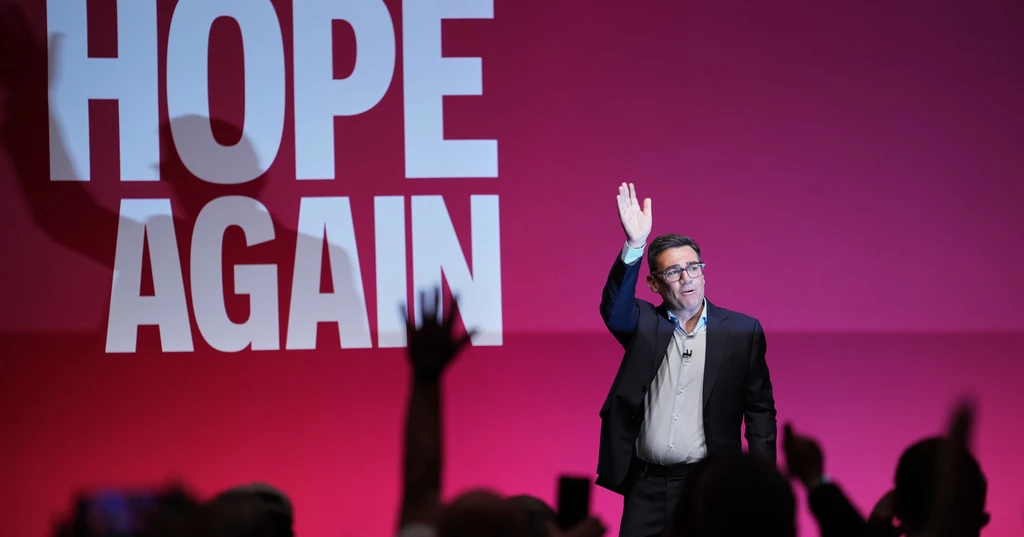
British Prime Minister Andy Burnham on Tuesday pledged sweeping reforms to create what he called “a new social contract for the 21st century,” while warning that economic constraints would force his government to make difficult choices.
Addressing the Labour Party’s annual conference in Liverpool, Burnham promised more social housing, improved education and a free-to-use national care service funded through taxation.
He said Labour would weaken the pensions triple lock to help finance the care service, acknowledging that the move could carry a political cost.
“I accept I may pay a political price,” Burnham said. “But someone has to go through the pain barrier and rip the plaster off.”
Burnham also pledged to replace Britain’s winner-takes-all electoral system with a form of proportional representation and to reset the country’s relationship with the European Union, saying Brexit “has done more harm than good.”
His wider agenda includes ending street homelessness, reducing youth unemployment and increasing public control over privatized utilities.
Burnham criticized the economic policies of the 1980s, including deregulation and privatization under former Conservative Prime Minister Margaret Thatcher, saying they had left Britain facing economic and political turmoil.
But he acknowledged the difficult economic backdrop, with the US-Iran war disrupting shipping through the Strait of Hormuz, pushing up oil prices, inflation and government borrowing costs. Diesel prices in Britain reached a record of just under 2 pounds ($2.70) per litre on Monday, according to the Royal Automobile Club.
Burnham said his government would stick to its fiscal rules to reduce borrowing and debt.
“I would love to go quicker, but I have to be honest about what the country can afford,” he said.
Security concerns have also overshadowed the conference after five men were arrested Sunday on suspicion of explosives and terrorism offences outside RAF Fairford in western England. They were released on bail Monday as police investigate, including a possible link to a hostile state.
The next general election does not have to be held until 2029, though Labour’s improving fortunes have prompted speculation about an early vote. Burnham has ruled out a snap election.
Politics professor John Curtice of the University of Strathclyde said Burnham’s popularity had given Labour “a halo effect from a popular leader,” but the party needed to make further progress before considering an election.