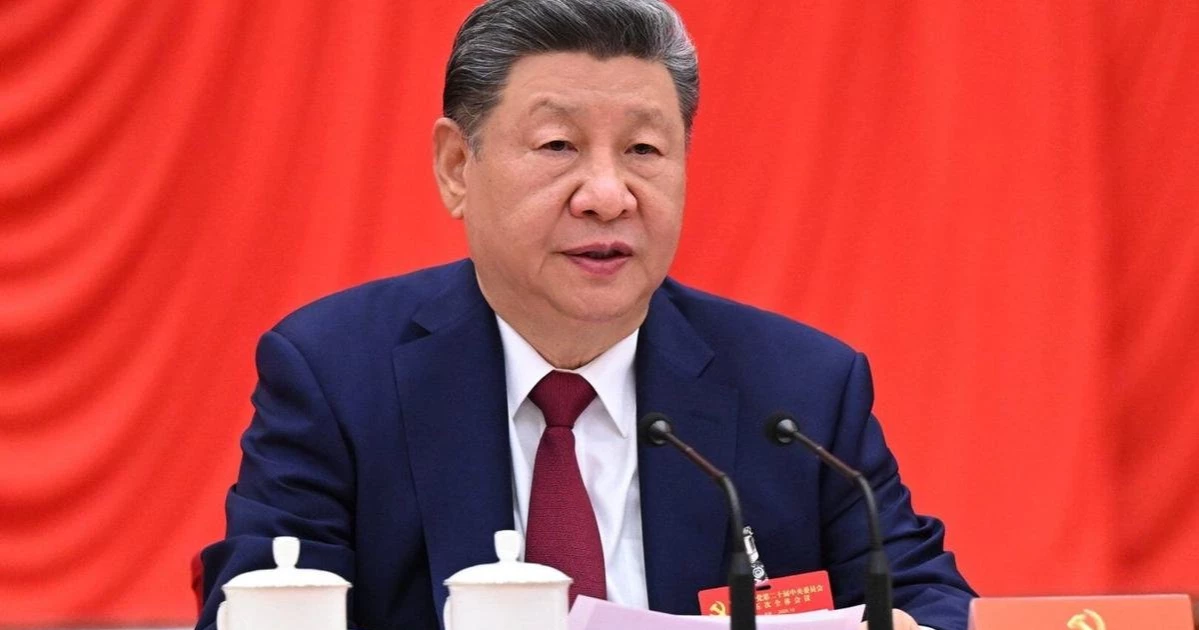
China's Communist Party leadership has reaffirmed its commitment to tightening internal discipline and fighting corruption, a major priority for President Xi Jinping, following a closely watched four-day meeting that could lead to changes in senior leadership positions next year.
The Central Committee's fifth plenary session, which concluded Thursday, adopted a resolution on strengthening party discipline and combating corruption. It also approved the expulsion of more than 30 senior officials, including a former top army general, while promoting the remaining general on the commission overseeing China's military to the Politburo.
On Friday, party officials outlined plans to implement the decisions, stressing that disciplinary action would continue.
Since taking power in 2012, Xi has made political loyalty and anti-corruption efforts central to his leadership. However, officials acknowledged that misconduct and violations of party rules remain widespread.
Zhang Fuhai, deputy director of the Central Committee for Discipline Inspection, said authorities had investigated 8.1 million cases and disciplined 7.9 million people since 2012, including 963 senior officials directly managed by the party's central leadership.
He described disciplinary violations as persistent problems requiring long-term efforts.
Huang Jianfa, deputy head of the Central Organization Department, said severe punishment of corrupt officials would protect those serving honestly. He also pointed to officials' reluctance to act, lack of motivation and fear of making mistakes.
Dongshu Liu, a professor at the City University of Hong Kong, said the recent expulsions reflected Xi's efforts to strengthen control, particularly over the military.
However, analysts warned that excessive discipline could discourage officials from taking initiatives. Liu said prioritising personal loyalty over professional competence could weaken the government's problem-solving capacity.
Benjamin Hillman of the Australian National University warned that officials might resort to superficial activities, such as meetings and training sessions, to demonstrate compliance without achieving meaningful results.
"Officials are increasingly cautious of trying new things because mistakes can be costly," he said.
Ruby Osman of the Tony Blair Institute said Xi considers corruption a major threat to the party's long-term power, but ensuring effective implementation of Beijing's priorities across China's vast bureaucracy remains difficult.