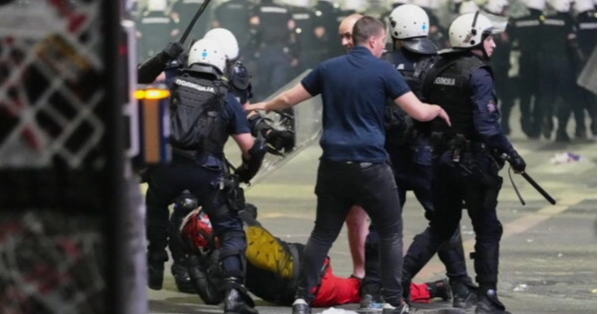
Clashes broke out between protesters and riot police in Serbia’s capital on Saturday evening after a large anti-government rally led by opponents of President Aleksandar Vučić, who has faced growing public anger over his rule.
The main rally in central Belgrade passed off peacefully, but tensions flared later when groups of young protesters confronted police. Some demonstrators threw rocks, bottles and flares at riot police, who responded with pepper spray and moved in to disperse the crowd.
Authorities said 23 people were detained after the unrest. Police also deployed armored vehicles in parts of central Belgrade to prevent protesters from regrouping.
Officials said some of the violent groups appeared to include football hooligans. They blocked streets using overturned trash bins before police moved in to restore order.
Earlier in the day, tens of thousands of people filled Belgrade’s central Slavija Square, many carrying banners and wearing T-shirts with the slogan “Students win,” a youth-led movement behind the protest. Large crowds also arrived from other Serbian cities.
The demonstration comes amid ongoing political tension in Serbia, where protests have continued for more than a year following anger over a railway station disaster in November 2024 that killed 16 people and triggered allegations of corruption and negligence during renovation work.
Opposition groups are demanding early elections, rule of law and accountability for alleged corruption. Prosecutor Bojana Savović told the rally that a country where laws are applied selectively risks becoming “a mafia organization.”
Serbia’s state railway company suspended all train services to and from Belgrade during the protest, a move widely seen as an attempt to limit arrivals from other regions.
President Vučić, who was travelling to China at the time, said in a social media video that protesters had shown “violent behaviour” and insisted that state institutions were still functioning normally.
Police estimated around 34,300 people attended the rally, while organizers said the turnout was significantly higher.
Tensions also rose near a camp of Vučić supporters set up close to the presidential building, where clashes first began. The site has been used in previous demonstrations as a protective gathering point for the president’s allies.
Human rights concerns over Serbia’s handling of protests have increased in recent months. The Council of Europe’s Commissioner for Human Rights, Michael O’Flaherty, has raised concerns about police conduct and reports of excessive force against demonstrators and journalists.
Serbia is formally seeking European Union membership but continues to maintain close ties with Russia and China. EU officials have warned that democratic backsliding could threaten billions of euros in potential funding.
The student-led movement says it plans to challenge Vučić in upcoming elections, which the president has said could be held between September and November this year.
Despite the clashes, protesters say the movement reflects growing frustration over corruption, governance and lack of accountability in the country.