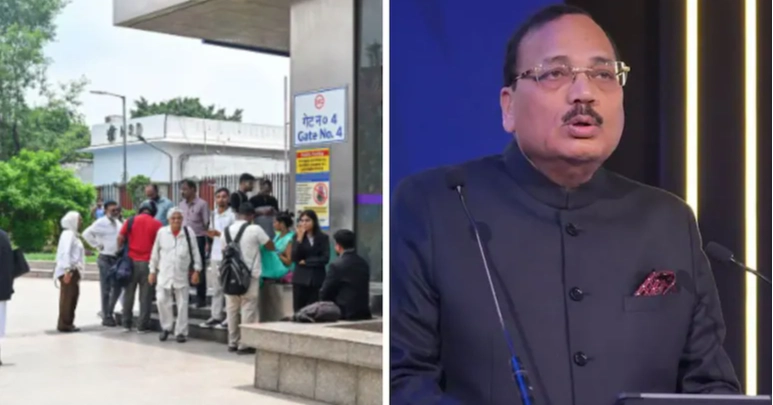
The closure of several Metro stations in the Indian capital due to ongoing student protests reached the Supreme Court on Thursday, as lawyers complained of difficulties in accessing the court.
Several Metro stations in central Delhi have remained closed for the past few days as protests at Jantar Mantar, led by the social media platform Cockroach Janta Party (CJP), intensified.
At least 16 Metro stations remained shut on Thursday, including the Supreme Court Metro station.
The issue was raised before the apex court by Supreme Court Bar Association President Vikas Singh.
Referring to the closure of key Metro stations around the Supreme Court, Singh said many lawyers and court staff were facing difficulties and were unable to reach the court on time.
He urged Chief Justice of India Surya Kant to intervene. In response, the Chief Justice said he would step in if the issue was not resolved by lunchtime.
Singh suggested that people holding valid Supreme Court entry passes, along with Registry staff, should be allowed to exit at the Supreme Court Metro station after appropriate security screening.
"In the metro, there is one advantage that when they come out of the train, there is an exit point. There they can be screened. People having proximity cards, and Registry staff, can be permitted to come out, and the rest can be told to take the other train and go. So people will be able to use the train also," Singh submitted.
Responding to the concern, the Chief Justice said the Supreme Court administration had already taken up the matter with Metro authorities.
He also assured the Bar that if the issue remained unresolved, he would personally intervene.
"If by lunchtime something does not happen to open the Metro station, I will intervene. We have directed that no adverse orders should be passed today for non-appearance of lawyers etc," the Chief Justice said.
The Delhi Metro on Thursday morning announced that 16 Metro stations, including the Supreme Court station, would remain closed until further orders.
#Source: NDTV