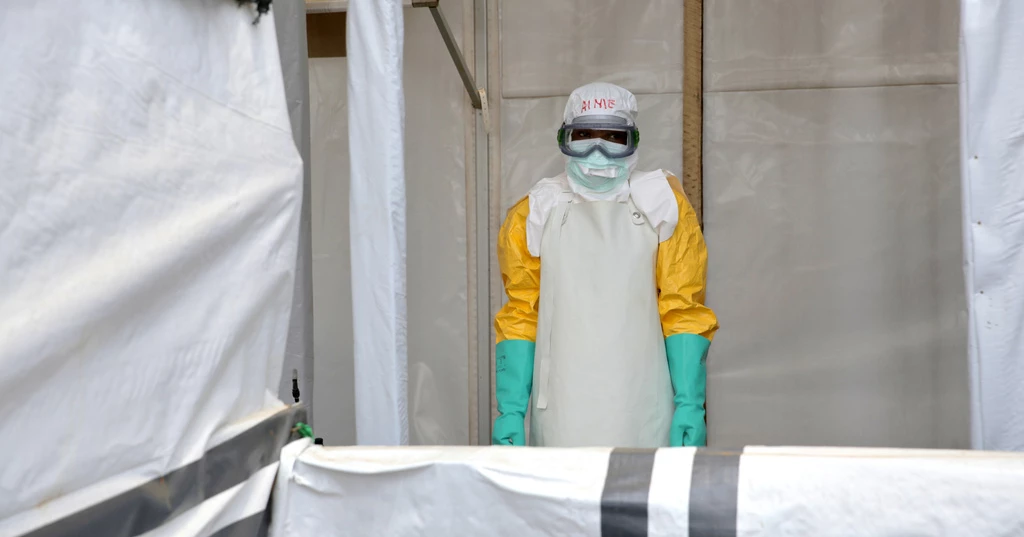
Schools reopened across the Democratic Republic of Congo on Tuesday for the new academic year, even as parents and teachers expressed concerns over the continued spread of Ebola in Ituri province, the epicenter of the outbreak.
The reopening comes as the deadly virus continues to spread rapidly. Government figures showed that 2,950 people had died from Ebola among 6,100 confirmed cases as of Tuesday.
The teachers’ union in Ituri had urged authorities to postpone the reopening of schools over health concerns. However, the government went ahead with the academic calendar.
UNICEF said it is working with authorities to strengthen measures aimed at preventing Ebola transmission in schools.
Several schools in Ituri, particularly government-run institutions, saw low attendance on the first day. A number of parents chose to keep their children at home.
Aimerance Vahweka, a parent in Bunia, the provincial capital, said she was surprised by the decision to reopen schools and decided not to send her child back yet.
“I do not really see an increase in prevention measures,” she said.
Education officials said schools were being provided with noncontact infrared thermometers, hand sanitizers and hand-washing facilities as part of preventive measures.
Teachers are also educating students about hygiene practices, including frequent handwashing and the proper use of hand sanitizer, said Etienne Ndjabu, a teacher at a private school in Bunia.
Health and education experts, however, warned that significant challenges remain, particularly because many schools do not have reliable access to clean water and funding for the response remains insufficient.
“There are also significant logistical challenges, particularly in remote areas, where the delivery of equipment and learning materials may be delayed,” said Greg Ramm, director of Save the Children in Congo.
Children aged four and below have been particularly vulnerable, with the highest case-fatality rate among all age groups at 60%, according to available health data.
Dounia Dekhili, UNICEF emergency coordinator in DRC, said authorities need to balance the protection of students, teachers and communities with children's right to education.
The current outbreak, caused by the rare Bundibugyo virus, is reportedly the fastest-spreading Ebola outbreak in history and has reached more than 60 health zones.
Authorities believe the virus had been circulating undetected in communities since at least February. The World Health Organization has warned that the outbreak could surpass the scale of the West African Ebola epidemic of 2014-2016.
The response has also been affected by repeated strikes by health workers over delays in salary payments.
Efforts to control the outbreak have been further complicated by the absence of an approved vaccine or specific treatment. Congolese authorities have begun administering thousands of doses of the Ervebo vaccine, which the WHO says may offer some protection.
Ongoing conflict between government forces and rebel groups in eastern Congo, attacks targeting health workers and large-scale population movements have also made containment efforts more difficult.