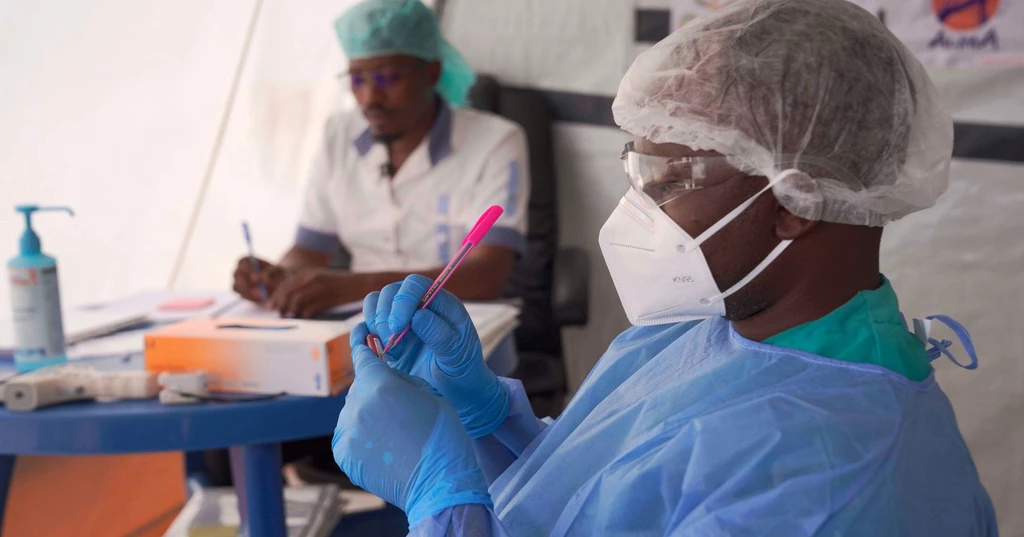
Confirmed Ebola cases in the Democratic Republic of Congo have exceeded 9,000, with more than 4,300 deaths, as health authorities struggle to contain an outbreak spreading across seven provinces, according to government figures released Tuesday.
The Health Ministry reported 9,066 confirmed cases and 4,381 deaths, putting the death toll close to half the number of confirmed infections.
The rising number of deaths has alarmed health workers and authorities, particularly as many fatalities have occurred outside treatment centres. The latest report recorded 88 new cases and warned that community transmission remained a concern.
The outbreak has spread to more communities, creating new hotspots. A total of 65 health zones across seven provinces have been affected.
Officials estimate that confirmed cases account for only about one-third of the actual infections, with many cases going undetected. The outbreak is caused by the rare Bundibugyo virus, for which no approved vaccine or treatment is available.
Efforts to contain the virus have been hampered by fighting between government forces and rebel groups, widespread disregard for health precautions, population movements, and shortages of medical supplies and treatment centres. The conflict has also contributed to one of the world's most severe humanitarian crises.
The outbreak has surpassed the scale of Congo's previous 16 Ebola outbreaks and is on course to exceed the 2014-2016 West Africa outbreak, which killed around 11,000 people.
“I feel that the government is overwhelmed by events. But there is nothing else to say. The government needs to fully shoulder its responsibilities to ensure the effectiveness of the response against Ebola,” said Samuel Buju, a resident of Bunia, the provincial capital of Ituri, one of the worst-affected areas.
Last week, Kenya became the second country after Uganda to report an Ebola case imported from Congo, heightening concerns about the virus spreading across national borders.