
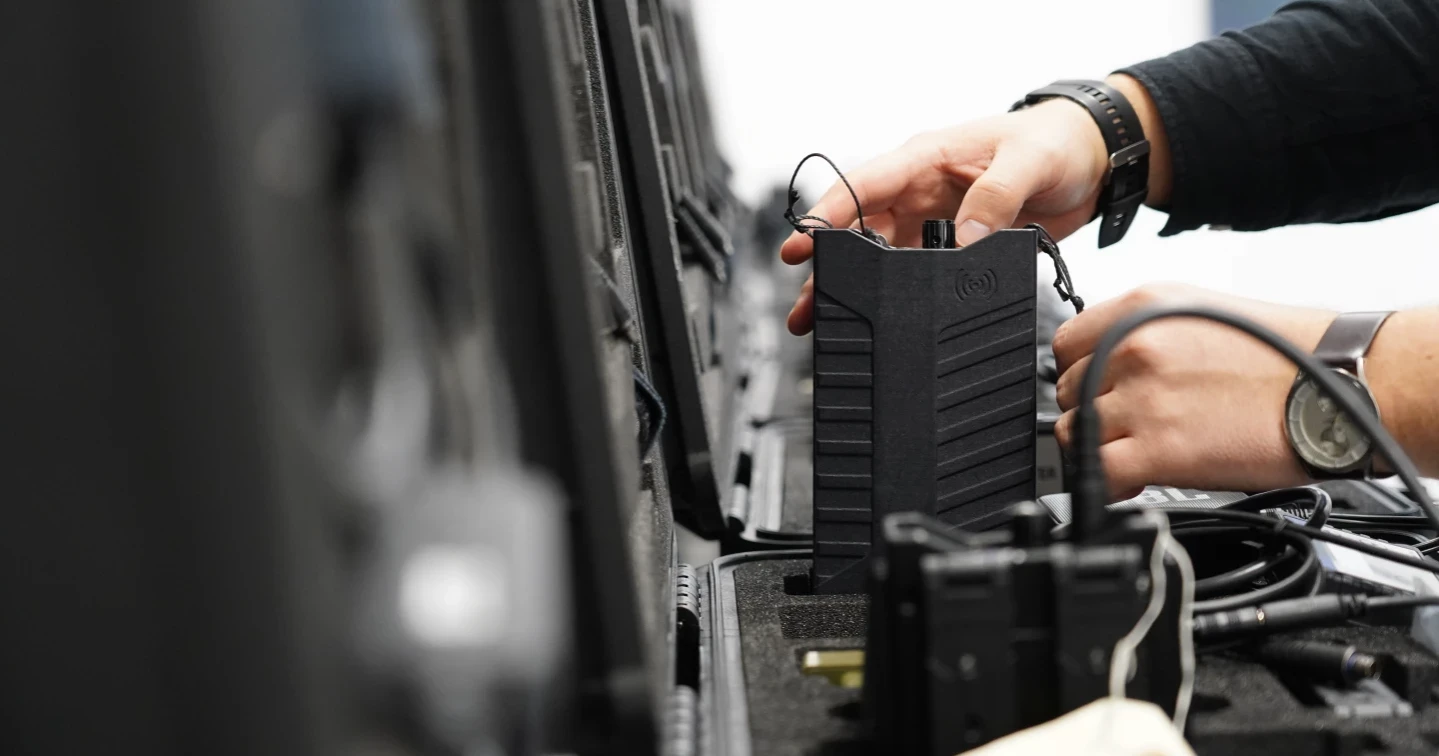
In a quiet warehouse in northern Denmark, workers are assembling anti-drone devices now being used on the Ukrainian battlefield and across Europe to counter a growing wave of mysterious drone incursions into NATO airspace.
Two Danish defence companies — Weibel Scientific and MyDefence — have seen soaring demand for their technology, as governments and security agencies rush to protect airports, military bases, and other sensitive sites targeted by drone flyovers in recent weeks.
Weibel Scientific’s radar-based drone detection system was deployed at Copenhagen Airport ahead of a key EU summit earlier this year, when unidentified drones forced the closure of Danish airspace for several hours. MyDefence, meanwhile, produces handheld and wearable radio-frequency devices capable of severing the connection between drones and their pilots.
While such “jamming” technology is tightly restricted within the European Union, it is widely used on Ukraine’s front lines. There, both Russia and Ukraine have intensified electronic warfare to disable each other’s drones — prompting the use of fiber-optic-tethered models that can’t be jammed by radio interference.
Europe’s concern has deepened since September, when a surge of drone flyovers across NATO territory prompted EU leaders to propose building a continent-wide “drone wall” for surveillance and interception. NATO has since deployed a new U.S.-made anti-drone system, Merops, along its eastern flank, where Denmark, Poland and Romania are among the first to implement it.
Experts say the drone incursions may be testing NATO’s readiness. “All countries in Europe are struggling to find the right solutions to detect drones and build early warning systems,” said Andreas Graae, assistant professor at the Royal Danish Defense College.
Founded in 2013, MyDefence has delivered more than 2,000 of its “Wingman” detectors to Ukraine since the war began and doubled its revenue last year to nearly $19 million. Its CEO, Dan Hermansen, said the Russia-Ukraine conflict was a “turning point” for the company.
North of Copenhagen, Weibel Scientific has been adapting its long-established Doppler radar technology — once used for aerospace tracking — to detect drones by measuring their velocity and direction. The firm recently secured its largest-ever order worth $76 million.
“The Ukraine war, and especially the rapid evolution of drone technology, has driven unprecedented demand for this kind of product,” said Weibel’s chief executive Peter Røpke.
With NATO nations reinforcing their defences and discussing a potential “drone shield” across Europe, Røpke said Denmark’s radar systems could play a vital role in securing the alliance’s skies.