
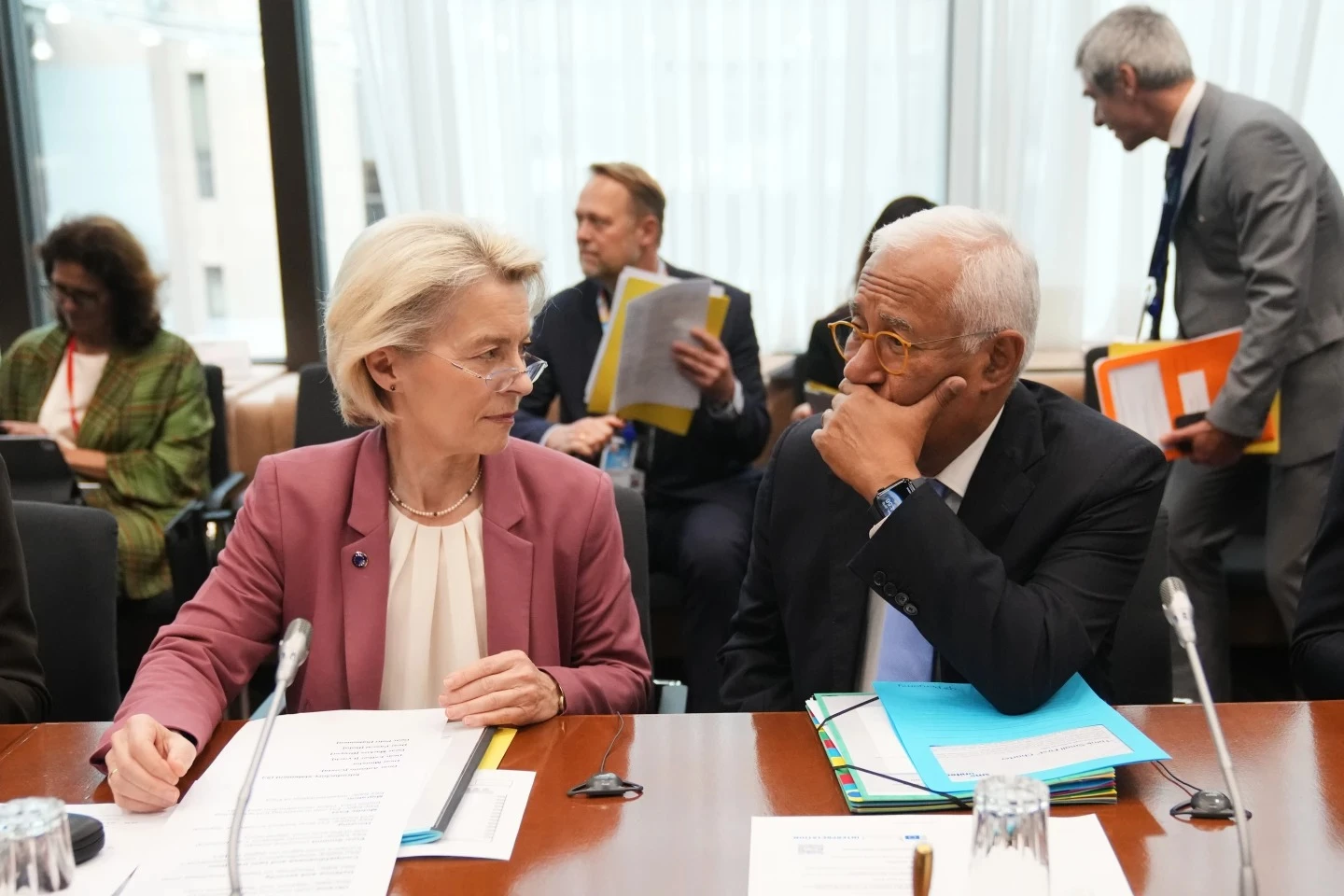
European Union leaders are set to approve a fresh round of sanctions against Russia and advance plans to use Moscow’s assets frozen in Europe to support Ukraine’s war effort and economy for at least the next two years.
Ukrainian President Volodymyr Zelenskyy will attend the one-day summit in Brussels, as he and European allies push for a ceasefire to end nearly four years of conflict.
“Both support for Ukraine and pressure on Russia remain the two necessary requirements to achieve a just and lasting peace,” EU Council President António Costa said in an invitation letter to EU leaders.
The summit comes after U.S. President Donald Trump paused plans for a meeting with Russian President Vladimir Putin, saying he did not want it to be “a waste of time.” The move adds another twist to Trump’s stop-and-go efforts to resolve the war.
EU leaders are also discussing ways to remain engaged in Trump’s Gaza peace plan. While the EU is the world’s largest donor to Palestinians, it has limited influence over Israel, partly due to divisions among member states, and has struggled to play a significant role in the conflict.
In contrast, the EU’s position on the Ukraine war is clearer. The summit occurs as Russian forces continue to strike Ukraine’s power grid ahead of the approaching winter.
Earlier this week, Ukraine’s strongest European supporters, forming a “coalition of the willing,” opposed any pressure on Kyiv to cede territory captured by Russia in exchange for peace, as Trump recently suggested. The U.K. will host a meeting of the coalition’s more than 30 members on Friday.
On the EU side, leaders plan to push ahead with using billions of dollars in frozen Russian assets to fund Ukraine’s military and economic needs, despite concerns about potential consequences. Belgium holds the largest share of these frozen assets, estimated at $225 billion, and has sought guarantees from other European partners before releasing any funds. Ukraine’s budget and defense requirements for 2026 and 2027 are projected at around $153 billion.
The EU summit is also expected to approve a new “road map” to prepare Europe for potential Russian aggression by the end of the decade, as officials warn that Russia could target another European country within three to five years.
Source: AP