European Union foreign policy chief Kaja Kallas on Wednesday described an alleged Russian drone attack plot targeting a German airport as “state-sponsored terrorism” as EU countries considered how to respond.
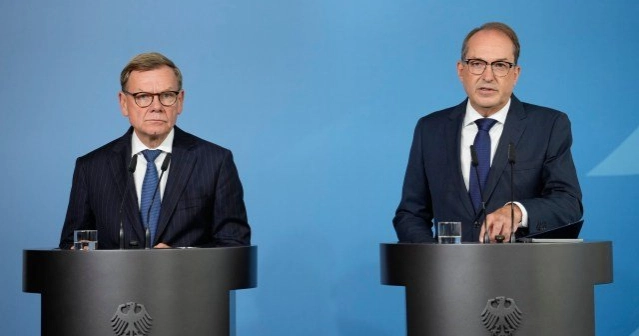
The German government on Tuesday blamed Russia for the attempted attack at Leipzig/Halle Airport on Aug. 4, involving a drone carrying explosives. Berlin also announced plans to close a Russian consulate among other measures.
The drone was found near a Ukrainian aircraft, and the explosive device was safely defused. German officials said the incident represented a new level of danger.
“It is clear that it has all the hallmarks of state-sponsored terrorism. The question is: what do we do about this,” Kallas told reporters before chairing a meeting of EU defence ministers in Ireland.
Western officials have repeatedly accused Moscow of carrying out sabotage and other disruptive activities across Europe to weaken support for Ukraine and create instability.
The EU is already preparing additional sanctions against individuals and organisations linked to Russia's war in Ukraine.
Kallas said about 1,600 people and entities linked to Russia's military-industrial complex are already being considered for sanctions, with more potentially to be added.
The alleged airport attack and its attribution to Russia could prompt the EU, and possibly NATO, to consider a stronger response. However, European countries remain cautious about taking steps that could lead to a direct confrontation with nuclear-armed Russia.
The EU has already imposed nearly two dozen rounds of sanctions on Russia since its invasion of Ukraine, targeting around 3,000 individuals and organisations.
Those targeted include Russian President Vladimir Putin, wealthy businessmen who support him and numerous lawmakers.
The sanctions have also targeted Russian banks and financial institutions, as well as hundreds of vessels accused of being part of a “shadow fleet” used to transport oil and support Russia's war effort.
Energy companies, drone manufacturers and other businesses have also faced restrictions.
Most EU measures involve freezing assets and imposing travel bans. The bloc has also sanctioned individuals and companies in countries accused of supporting Russia, including Belarus, China, Iran and North Korea.