
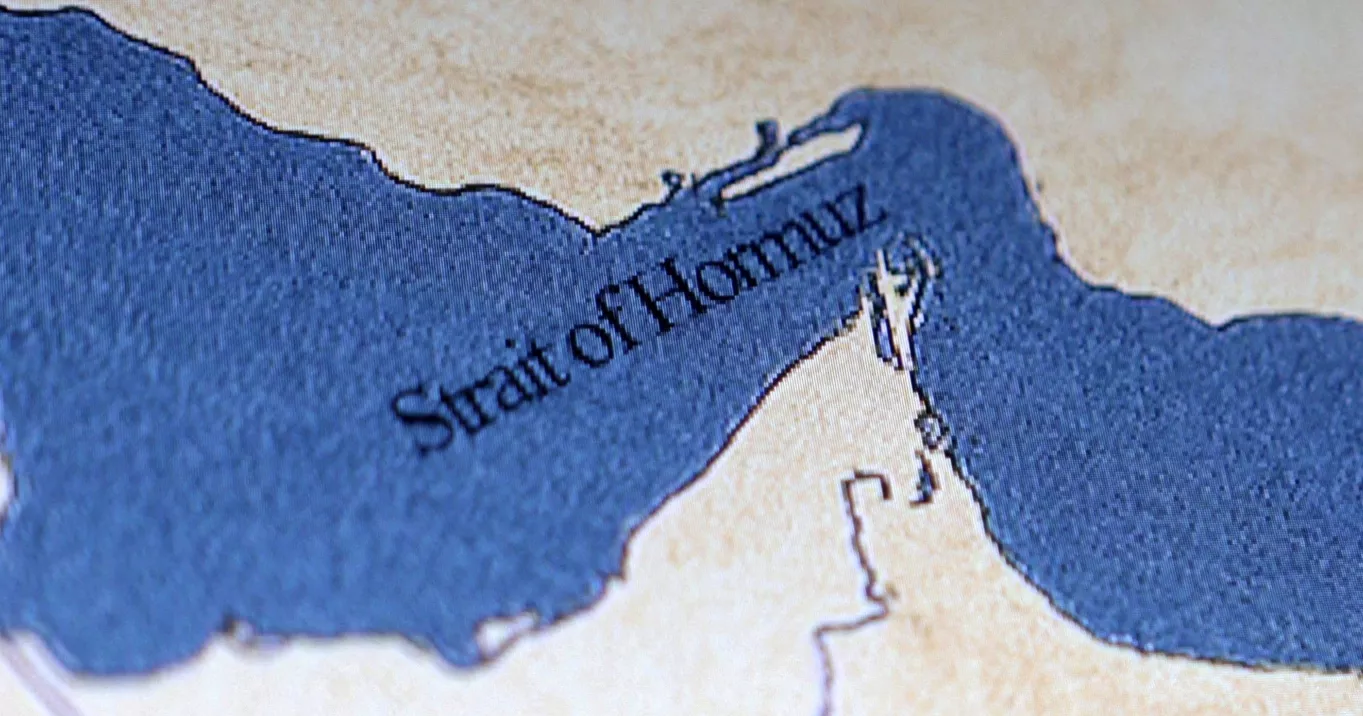
U.S. President Donald Trump has called on several countries heavily dependent on Middle Eastern oil to join a coalition to escort vessels through the Strait of Hormuz, a vital chokepoint carrying roughly 20 percent of the world’s oil. However, forming such a coalition has so far proven challenging.
Strategic importance of the strait
The Strait of Hormuz, a narrow waterway between the Persian Gulf and the Gulf of Oman, is crucial for the world’s energy trade. At its narrowest, it measures only 39 kilometers, and it carries the bulk of oil exports from Gulf countries including Saudi Arabia, Iraq, Qatar, and the UAE. About 20 million barrels of oil pass through it daily, along with significant liquefied natural gas shipments.
Since March, only 77 vessels have transited the strait, a nearly 90 percent decline from last year, as shipping companies avoid the region amid high security risks.
Conflict escalation
On February 28, Israel and the United States launched joint airstrikes on Tehran and other Iranian cities, killing Iran’s then-Supreme Leader Ali Khamenei along with senior military commanders and civilians. In response, Iran conducted missile and drone strikes on U.S. and Israeli bases in the region and tightly controlled access to the strait. Iranian Foreign Minister Abbas Araghchi stated that the strait remains open for all international shipping except vessels belonging to the U.S., Israel, and their allies.
The disruption has forced Gulf countries to cut millions of barrels of oil production, affecting global supply chains. The International Energy Agency said Gulf nations have reduced at least 10 million barrels a day, about 10 percent of global demand. Shipping costs have soared, and analysts warn that continued closure could severely disrupt global logistics, comparable to the impact of the COVID-19 pandemic.
Why the U.S. wants a coalition
Trump has publicly urged seven countries dependent on Gulf oil to contribute naval forces for a vessel escort mission. While the U.S. military has claimed to neutralize Iran’s mine-laying capabilities and struck over 7,000 targets in Iran, the ongoing conflict continues to threaten shipping in the region.
Why allies are hesitant
Several countries, including Japan, Australia, Germany, and other European nations, have declined to send warships. European leaders emphasized the need for diplomacy and warned against escalating the conflict into a NATO mission or a broader regional war. Germany’s Chancellor Friedrich Merz stressed that NATO is a “defense alliance” rather than an “intervention alliance.” EU Foreign Policy Chief Kaja Kallas said Europe has no plans to expand its naval mission in the Red Sea to the Strait of Hormuz.
Australia also ruled out sending naval forces, citing potential economic risks from the ongoing Middle East conflict. Japan stated that its Self-Defense Forces will not be deployed to escort ships in the region. Analysts note that even if a coalition is formed, escorting hundreds of tankers daily under the threat of mines and drones would be extremely challenging.
U.S. Senator Chris Murphy of Connecticut said on social media, “It’s harder than you think. Escorting 100 tankers each day would require our entire navy, and our ships remain at risk if mines and drones are not fully neutralized.”