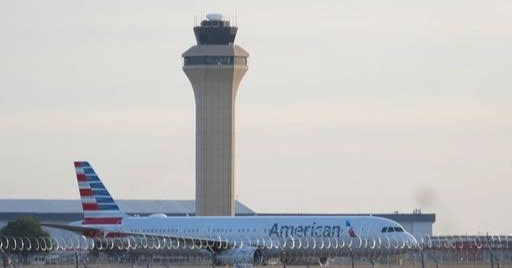
The Federal Aviation Administration’s (FAA) decision to temporarily suspend flights across the United States on Friday caused major disruptions in the sports world, forcing NBA, NHL and college football teams to make last-minute changes to their travel plans ahead of weekend games.
Transportation officials attributed the nationwide flight suspension to “extraordinary circumstances” involving communication problems at several regional air traffic control centers. The disruption left professional teams struggling to secure hotel accommodations, while college teams had to rearrange their travel schedules. Some schools even considered chartering buses instead of waiting for flights to resume.
During a Friday night news conference in Washington, D.C., Transportation Secretary Sean Duffy explained that larger aircraft movements, particularly charter flights, would receive priority. He also encouraged college football programs to contact the FAA to arrange travel schedules so their teams could reach their destinations in time for Saturday's games.
The disruption particularly affected college football programs that traditionally travel one day before their games. Several prominent teams, including No. 2 Utah, No. 8 Texas and No. 9 Tennessee, faced delays while preparing for important road matchups. Utah was scheduled to play No. 22 Arizona, Texas was set to visit No. 24 LSU, and Tennessee was traveling to face Texas A&M.
The Southeastern Conference acknowledged the situation, stating that it was monitoring the nationwide flight suspension and communicating with member institutions to minimize disruptions. The conference emphasized that the safety and well-being of student-athletes, coaches and team personnel remained its top priority.
Texas and Tennessee returned to their respective campuses while the flight suspension remained in effect. After the restrictions were lifted more than four hours later, both programs began arranging flights to ensure they could arrive before their scheduled games.
Meanwhile, Auburn and Purdue chose alternative transportation. Auburn traveled by bus to Mississippi State, while Purdue took a bus from West Lafayette, Indiana, to Iowa.
Other college programs affected included No. 19 Ole Miss, Baylor, Washington, Kansas State and Minnesota. The Big 12 Conference also announced that it was reviewing the possibility of making adjustments to Saturday's football schedule in response to the travel problems.
Washington returned to campus after its flight was grounded. However, the university remained in contact with its airline partners, Alaska and Hawaiian Airlines, while the flight crew stayed available. The Huskies hoped to depart later Friday night.
Some teams were also concerned about their return journeys following Friday's games. Florida State was playing at Pittsburgh, Illinois was visiting No. 4 UCLA, and No. 14 Houston was facing Colorado. All three programs hoped their charter flights home would not be affected by the disruption.
The flight suspension also raised questions about whether game officials would reach their scheduled assignments on time, as referees generally travel a day before games. However, the Big Ten Conference confirmed that all its officials had arrived for Saturday's assignments.
Fortunately, several college teams managed to depart before the suspension took effect. These included teams traveling within the Atlantic Coast Conference, Missouri on its way to face No. 1 Georgia, Duke traveling to play No. 5 Miami, and No. 10 Texas Tech, which shared pictures of its arrival ahead of its game against Oklahoma State.
NFL teams scheduled to play on Sunday were also expected to travel as planned on Saturday, avoiding major changes to their usual schedules.
The disruption extended to the NBA as well. The Brooklyn Nets were among five teams scheduled to fly on Friday ahead of Saturday's games. Their aircraft had already boarded in New Orleans following a game against the Pelicans earlier in the week, but their planned journey to Memphis was suddenly interrupted.
The Detroit Pistons had managed to reach Miami earlier in the day, while the Cleveland Cavaliers, Chicago Bulls and Memphis Grizzlies were scheduled to travel after their Friday night games.
Cleveland faced additional uncertainty after playing Miami on Friday, with a home matchup against Dallas scheduled for Saturday. Cavaliers coach Kenny Atkinson revealed about 90 minutes before tip-off that the organization was urgently trying to arrange hotel rooms in case the team could not travel that night. He acknowledged that unexpected situations like this required teams to remain flexible.
The NHL was also preparing for a busy Saturday, with 14 games scheduled. Most teams, including the Florida Panthers, had already reached their destinations before the suspension began. However, the San Jose Sharks were still waiting in San Jose to find out whether they could travel to Utah.
In women's college basketball, JuJu Watkins and her No. 3-ranked USC teammates also experienced travel difficulties. The team was scheduled to face top-ranked South Carolina on Sunday. However, the players had already boarded their aircraft at Los Angeles International Airport when the flight suspension was announced. They were eventually asked to leave the plane and returned to the Galen Center.
The disruption also affected professional women's soccer teams preparing for the National Women's Soccer League semifinals. The Utah Royals were already in the Washington, D.C., area ahead of their Saturday match against the Washington Spirit. However, the Kansas City Current were scheduled to fly out Friday for their Sunday semifinal against Gotham FC in New York. Team officials remained uncertain about when their flight would be permitted to depart.
Despite the widespread travel disruption, the United States national team's match against Haiti on Saturday in Miami was not affected. Both teams and the match officials had already arrived in the city for the opening game of their two-match CONCACAF Nations League quarterfinal series.
Overall, the FAA's nationwide flight suspension created significant logistical challenges across American sports, forcing teams in multiple leagues to reconsider their travel arrangements. Although several programs managed to find alternative solutions, the incident highlighted how disruptions to the country's aviation system can affect major sporting events and the schedules of teams across the nation.