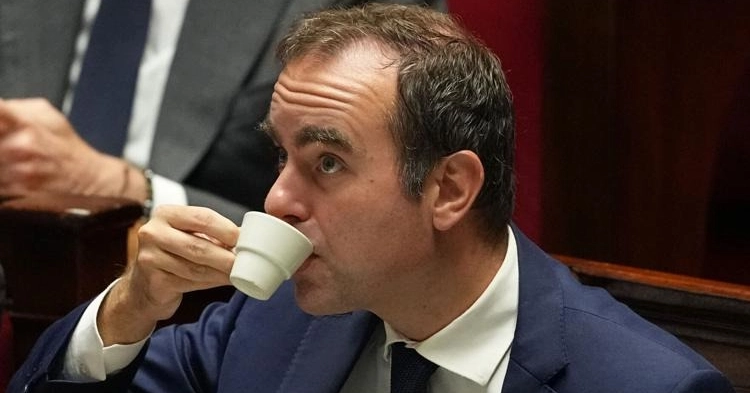
French Prime Minister Sébastien Lecornu narrowly survived two no-confidence votes in Parliament on Thursday, avoiding a government collapse that could have plunged France deeper into political chaos.
The outcome gives Lecornu a temporary reprieve and allows him to focus on his next major test — pushing through the 2026 national budget in a bitterly divided National Assembly. His survival also spares President Emmanuel Macron from having to dissolve Parliament and call new elections, a step he took in 2024 and had warned he might repeat.
Lecornu, a close Macron ally, faced censure motions from both the far-left France Unbowed party and Marine Le Pen’s far-right National Rally. The first motion fell short by 18 votes, gaining 271 of the 289 needed for a majority. Le Pen’s motion received only 144 votes, backed mainly by her party and a few allies.
To shore up support, Lecornu hinted at suspending Macron’s controversial 2023 pension reform, which raised the retirement age from 62 to 64. The promise persuaded most Socialist Party lawmakers to withhold support for the opposition’s bid to topple him. The conservative Republicans, despite pressure from party figures aligned with Le Pen, also opted not to back his removal.
Still, Lecornu’s position remains fragile. Any loss of support from the Socialists or Republicans during the upcoming budget negotiations could trigger another no-confidence challenge. He has pledged not to use the constitutional clause that allows a government to force through a budget without parliamentary approval — the same tool Macron used to push through pension reform amid protests.
France’s lower house has been deeply split since Macron dissolved Parliament in 2024, leaving no clear majority. Lecornu urged lawmakers to put aside partisan goals, warning: “Do not hold the nation’s budget hostage.”