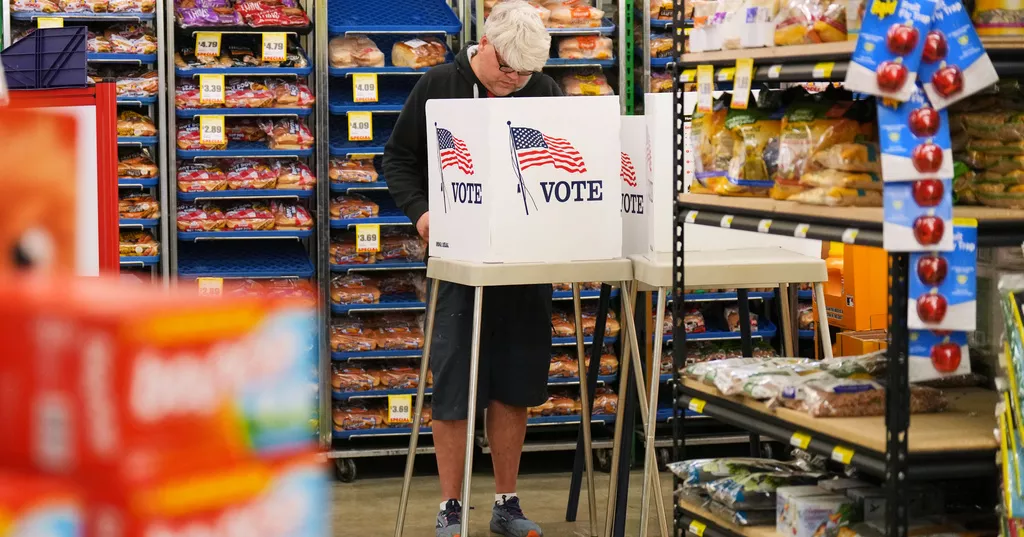
Rising living costs and dissatisfaction with President Donald Trump's economic policies contributed to sweeping Republican losses in the US midterm elections, with voters blaming his administration for worsening inflation.
According to an AP Voter Poll of around 100,000 midterm voters, about two-thirds said Trump's policies had fuelled inflation, while voters across states broadly viewed his tariffs on foreign imports as more harmful than beneficial.
The findings showed a failure of Trump's efforts to blame his predecessor, Joe Biden, for rising prices. Many voters instead linked price increases to Trump's tariffs and higher energy costs following the US war with Iran in February.
About nine in 10 voters said the cost of living was a major or crucial factor in their congressional vote, and around six in 10 of them supported Democratic candidates in local House races.
Consumer prices have risen 3.7 percent over the past 12 months, compared with 3 percent when Trump began his second term.
Trump acknowledged on Wednesday that the war with Iran had pushed up fuel prices in the short term but defended the decision to launch the conflict, saying he would make the same choice again.
Although the economy continues to grow, with the S&P 500 rising more than 10 percent this year and unemployment standing at 4.2 percent, many voters remain concerned about their financial prospects.
Artificial intelligence, a major driver of economic growth, has also generated public anxiety. Around six in 10 voters said AI would do more harm than good to society, citing concerns about job losses and potential financial risks.
The poll also found widespread concern over economic inequality, with around seven in 10 voters saying the economy favours wealthy people, while only three in 10 considered it fair to ordinary Americans.
Healthcare costs emerged as another major concern, with around six in 10 voters wanting the government to play a bigger role in addressing medical expenses. Most also said Trump's policies had made healthcare more expensive.
Economic dissatisfaction was particularly strong among lower-income voters. Around six in 10 people earning less than $50,000 annually said they were financially worse off than two years ago.
Higher-income voters, meanwhile, were more concerned about the state of American democracy. Around four in 10 households earning more than $200,000 in 2025 identified democracy as their top issue, placing it nearly level with the economy.
Overall, a slim majority considered government corruption a crucial factor in their vote, while about half identified high prices as a major concern.
Around six in 10 voters said Trump's priorities were misplaced, while most felt he was not fighting for people like them.
The results reflected growing voter dissatisfaction with an administration that had promised economic relief but faced criticism over inflation, tariffs and the concentration of wealth.