
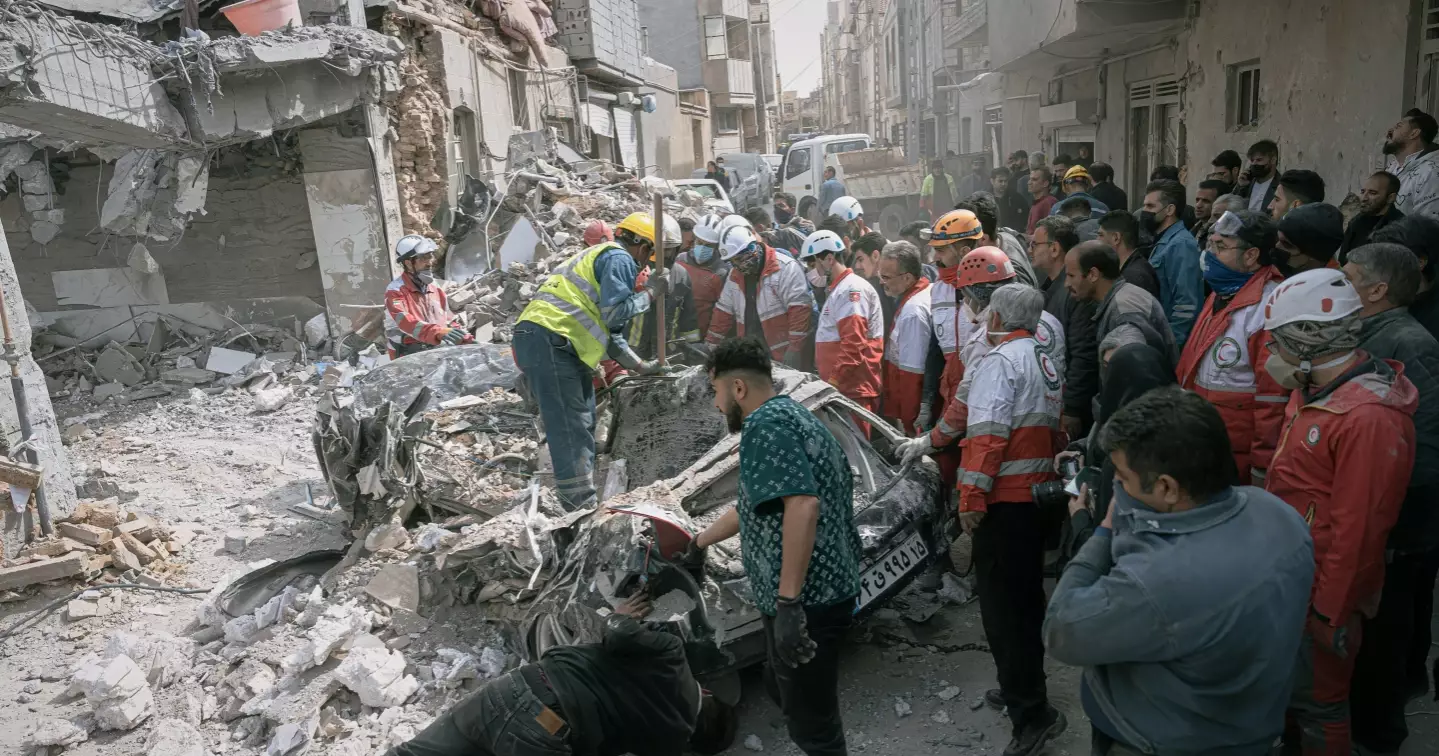
Iran has rejected a US-backed proposal to pause the ongoing Middle East conflict, instead pressing its own conditions while continuing attacks across the region, including a strike that hit a fuel tank at Kuwait International Airport and triggered a fire.
Tehran’s stance came as Israel carried out fresh airstrikes on the Iranian capital and the United States moved additional troops into the region, escalating tensions further.
Iranian Foreign Minister Abbas Araghchi said on state television that Tehran has neither entered nor plans to enter negotiations to end the war. Iranian media earlier reported that the country had dismissed Washington’s ceasefire plan and outlined its own demands.
According to officials familiar with the proposal transmitted via Pakistan, the US plan included sanctions relief, curbs on Iran’s nuclear and missile programmes, and reopening the Strait of Hormuz — a vital global oil shipping route. It also reportedly sought limits on Iran’s support for armed groups.
US President Donald Trump, however, claimed Iran remains interested in reaching a deal but is reluctant to say so publicly.
Iran has consistently ruled out negotiations over its missile programme and regional alliances, which it considers central to its security. Its control over access through the Strait of Hormuz remains a key strategic lever, especially as disruptions there have driven global oil prices sharply higher.
Meanwhile, Washington is reinforcing its military presence in the region, with around 1,000 troops from the 82nd Airborne Division expected to deploy soon, alongside thousands of Marines and naval personnel.
Despite the escalation, diplomatic efforts are ongoing. Mediators are exploring the possibility of direct US-Iran talks, potentially in Pakistan, though major obstacles remain over who in Tehran would engage and under what terms.
Iranian state media outlined a five-point proposal that includes guarantees against future attacks, compensation for war damage, an end to hostilities, and recognition of Iran’s authority over the Strait of Hormuz — conditions likely to be rejected by the US.
On the battlefield, Israel said it launched multiple waves of strikes on Tehran, while also coming under missile and rocket attacks from Iran and the Iran-backed Hezbollah group in Lebanon. Gulf states have also faced threats, with Saudi Arabia intercepting drones and Kuwait reporting multiple drone incidents.
Casualties continue to mount across the region. Iran says more than 1,500 people have been killed, while Israel has reported 20 deaths. Additional fatalities have been recorded in Lebanon, Iraq, and among US forces.
Oil prices, which surged earlier in the conflict, have eased slightly amid signs of potential negotiations, though they remain significantly higher than pre-war levels, raising concerns about broader economic impacts worldwide.