
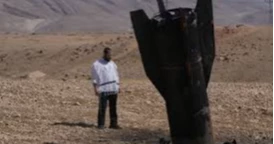
Israel and Iran exchanged missile and air strikes early Monday in their first direct military confrontation since a ceasefire brokered by the United States two months ago, raising concerns that the Middle East could once again slide into a broader conflict.
Several hours after the attacks, Iran’s military announced it was suspending offensive operations, while warning that any further Israeli action would trigger a stronger response.
The latest escalation threatens to unravel the fragile truce reached in April following a conflict that began on February 28 with coordinated US and Israeli strikes on Iran. The war disrupted global markets, pushed up energy costs and contributed to rising prices of essential goods worldwide.
Despite the ceasefire, tensions have remained high. Iran has continued to exert influence over the strategically vital Strait of Hormuz, a key route for global oil and gas shipments, while Israel has maintained military operations against Hezbollah in Lebanon. Yemen’s Iran-aligned Houthi rebels also entered the fray on Monday, launching attacks toward Israel and renewing threats against Israel-linked vessels in the Red Sea.
With peace negotiations showing little progress, the renewed exchanges between Israel and Iran, coupled with Houthi involvement, have heightened fears of a wider regional conflict.
US President Donald Trump urged both sides to halt hostilities, posting online that Israel and Iran “must immediately stop shooting.”
Shortly afterward, Iran’s military command said it was halting offensive actions but warned that any new “aggression” by Israel or its allies, including in southern Lebanon, would be met with “far more severe” measures.
Diplomatic Push to Preserve Ceasefire
Regional diplomats have intensified efforts to prevent the ceasefire from collapsing.
According to two regional officials, Egypt, Saudi Arabia, Turkey, Pakistan and Qatar have urged Washington to pressure Israel to scale back attacks on Iran and Beirut while also encouraging Tehran to cease strikes against Israel.
Trump confirmed that discussions aimed at maintaining the ceasefire were continuing but did not provide further details.
Fresh Military Exchanges
Iran launched multiple waves of attacks on Israel on Monday, prompting retaliatory Israeli strikes on targets in central and western Iran.
Iranian media reported explosions in Tehran, Isfahan, Karaj and Tabriz, while authorities temporarily closed airspace around Tehran’s Imam Khomeini International Airport.
Iranian news agencies reported that Israeli strikes targeted a petrochemical facility in Mahshahr. The Israeli military later confirmed attacks on sites it said were involved in producing ballistic missile materials and on mobile missile-launching systems.
Israel said the operations were carried out in response to Iranian missile attacks. Tehran had previously vowed retaliation after Israeli strikes in Beirut’s southern suburbs.
Iran’s Revolutionary Guard claimed responsibility for attacks on two Israeli military installations.
Air raid sirens sounded across parts of Israel and neighboring Jordan as air defense systems attempted to intercept incoming projectiles.
Iran accused Washington of being complicit in the escalation, with Foreign Ministry spokesman Esmail Baghaei saying Israel would not have acted without US coordination. The White House did not immediately comment on the allegation.
Strains Between Trump and Netanyahu
Although Trump and Israeli Prime Minister Benjamin Netanyahu closely coordinated military operations at the start of the conflict, signs of tension between the two leaders have emerged in recent weeks.
Analysts suggest Netanyahu faces domestic pressure ahead of upcoming elections and ongoing security concerns along Israel’s northern border, while Trump is eager to reduce international tensions and limit the economic fallout before congressional elections later this year.
Houthis Rejoin the Conflict
Yemen’s Houthi movement claimed responsibility for attacks on Israel and warned that vessels linked to Israel would again be targeted in the Red Sea, Gulf of Aden and Bab el-Mandeb Strait.
The group had launched similar operations during the Gaza conflict, carrying out more than 100 attacks on commercial shipping, disrupting one of the world’s most important maritime trade routes.
Civilians Prepare for Uncertainty
Residents on both sides of the conflict expressed concern that the latest escalation could mark the beginning of another prolonged confrontation.
In Tehran, some residents said they expected fighting to continue despite the ceasefire, while in Israel schools remained closed nationwide. Although many businesses stayed open, daily life was disrupted as residents repeatedly sought shelter during missile alerts.