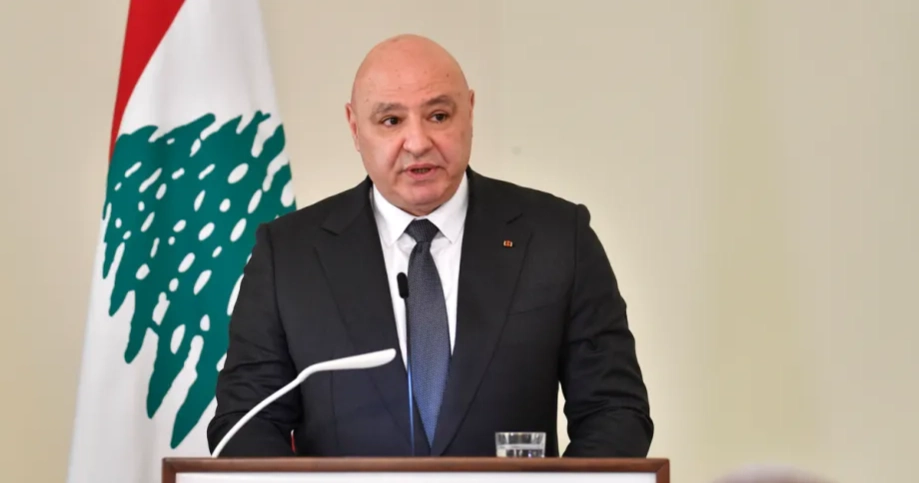
Lebanese President Joseph Aoun is set to meet US President Donald Trump in Washington on Tuesday as part of efforts to secure the withdrawal of Israeli troops from southern Lebanon and advance a long-term security arrangement following months of conflict between Israel and the Iran-backed Hezbollah group.
The meeting will conclude Aoun’s four-day visit to the United States and comes as Lebanon and Israel continue rare direct negotiations under US mediation.
Beirut hopes the talks will lead to the withdrawal of Israeli forces from areas of southern Lebanon they continue to occupy, while also securing international support to strengthen the Lebanese Armed Forces and enable them to assume full control over territories previously influenced by Hezbollah.
On June 26, Lebanon and Israel announced a US-backed framework agreement outlining the gradual withdrawal of Israeli troops from southern Lebanon and the disarmament of Hezbollah. The agreement also sets out steps toward a future peace accord between the two neighbours, which have never established formal diplomatic relations and have technically remained at war since Israel's creation in 1948.
The US State Department announced on Monday that operations had begun in three villages—Froun, Srifa and Zawtar al-Gharbieh—designated as part of a pilot zone under the agreement, although no further details were disclosed. The three villages are currently outside Israeli military control, and neither Lebanese nor Israeli authorities immediately commented on the announcement.
Ahead of his meeting with Trump, Aoun held talks with US Secretary of State Marco Rubio on Sunday.
Rubio reaffirmed Washington’s commitment to supporting the framework agreement and its full implementation, describing the discussions as positive.
He said lasting peace in Lebanon would not be possible without resolving the issue of Hezbollah’s armed presence.
Rubio said Lebanon’s government must become the country's only legitimate armed authority while also stressing the importance of rebuilding the country's economy and attracting international investment.
He noted that security alone would not ensure long-term stability, highlighting the need for economic recovery and stronger state institutions.
The Lebanese army has recently increased deployments in several areas expected to fall within the pilot zone, establishing checkpoints and conducting patrols in preparation for the agreement’s implementation.
Despite signs of progress in negotiations, Israeli troops remain stationed in parts of southern Lebanon. Israeli officials have indicated that they intend to maintain forces in what they describe as a long-term security zone along the border.
Hezbollah has rejected the direct Lebanon-Israel talks mediated by Washington and instead has expressed support for US-Iran negotiations aimed at ending the broader regional conflict, including hostilities in Lebanon.
Lebanon’s government, which took office earlier this year on a reform agenda, has pledged to disarm all non-state armed groups, including Hezbollah.
The government has accused Hezbollah of drawing Lebanon into renewed conflict with Israel after the group launched rockets toward northern Israel in March following US and Israeli strikes on Iran.
At the same time, Beirut has criticised Israel’s subsequent military offensive, which Lebanese authorities say killed more than 4,000 people and displaced around 1.2 million others.
Lebanese officials maintain that a complete Israeli withdrawal and increased international support for the country's financially strained military are essential to achieving lasting peace and stability in southern Lebanon.