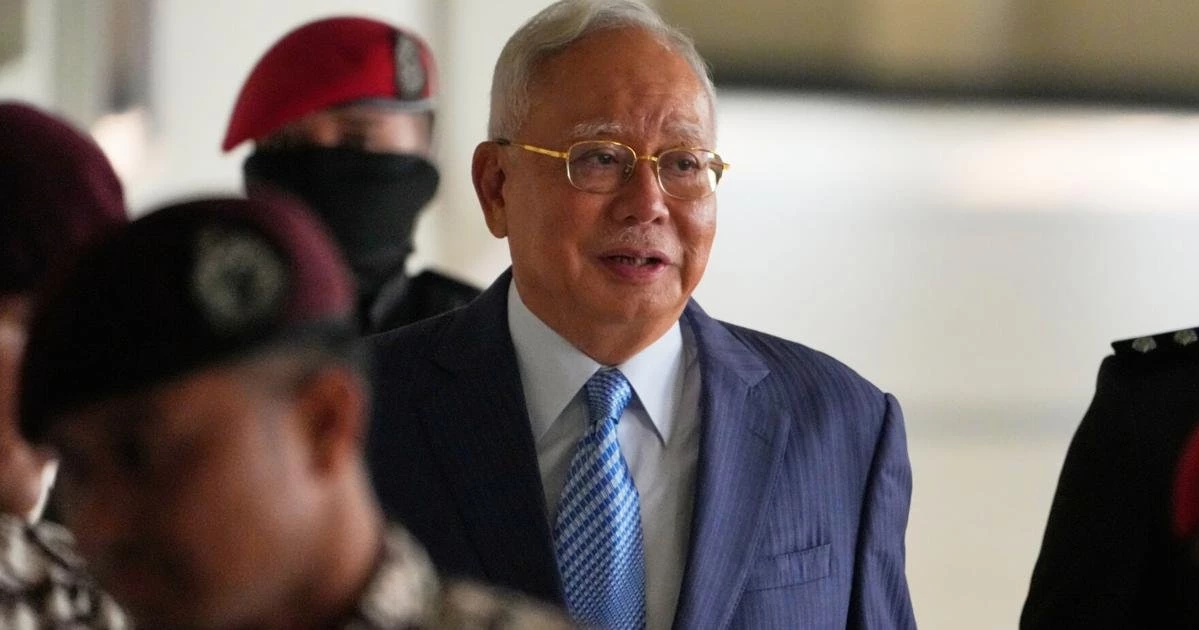
Malaysia's attorney-general on Saturday defended his decision to seek court clarification on a royal order permitting jailed former Prime Minister Najib Razak to serve the remainder of his sentence under house arrest, dismissing allegations of treason after the palace demanded that the order be enforced.
The disagreement has triggered an uncommon public dispute between the royal palace and the government's highest legal authority over the implementation of a royal decree.
On Friday, the attorney-general temporarily stopped Najib's transfer from prison to house arrest, citing the need for further legal clarification.
The palace responded on Saturday, asserting that King Sultan Ibrahim Iskandar's decision to grant Najib house arrest under his royal pardon was unambiguous and must be honoured because all the required conditions had been met. It warned that any attempt to contest the decision would amount to disobeying the king's command.
Najib was initially released from prison on Friday after his political party paid a 50 million ringgit ($12.3 million) fine required to implement the house arrest arrangement. However, he was returned to prison several hours later following the attorney-general's intervention.
Najib has been serving a prison sentence since August 2022, when Malaysia's highest court upheld his conviction in his first corruption case involving the multibillion-dollar embezzlement of state investment fund 1MDB.
In September, the king granted him clemency, reducing his sentence to six years and permitting him to serve the remaining term under house arrest after payment of the court-ordered fine.
The arrangement covers only the reduced sentence in the first case. It does not apply to a separate 15-year prison term handed down in December 2025 for corruption and money laundering in another major 1MDB-related case. Najib has appealed that sentence.
In a statement on Saturday, the attorney-general's office defended its decision, emphasising that it had no intention of challenging or disregarding the royal pardon.
The office said it needed the court to clarify the legal consequences of the High Court's discharge order issued on Friday following payment of the fine.
It said the main issue was whether the discharge order indicated that Najib had completed his first sentence or still had time remaining to serve. The distinction would determine when his second prison sentence would take effect.
The attorney-general's office maintained that seeking judicial clarification was necessary to ensure the royal decree and existing court decisions were enforced in accordance with the law. It also rejected accusations that its actions amounted to disrespect or treason against the king.
"Seeking legal certainty through the courts is a responsible step toward upholding the integrity of the administration of justice," the office said.
The dispute is unusual in Malaysia, where the king serves as head of state under a constitutional monarchy, while the elected government administers the country and the judiciary interprets the law.