
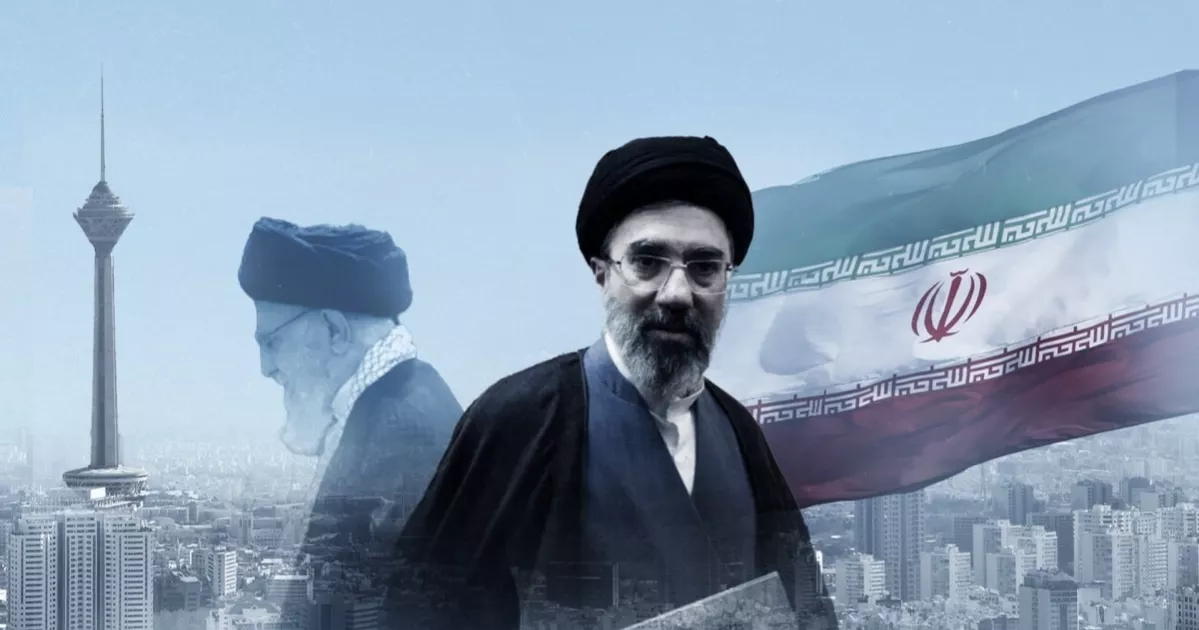
Mojtaba Khamenei, the son of Iran’s late Supreme Leader Ayatollah Ali Khamenei, has long been considered a contender to succeed his father, despite never holding an elected or official government position.
The 1969-born cleric has largely operated behind the scenes, building influence within Iran’s political and military structures and maintaining close ties to the paramilitary Revolutionary Guard.
Last week, an Israeli airstrike targeting the supreme leader’s office killed Ayatollah Khamenei and Mojtaba’s wife, Zahra Haddad Adel. Mojtaba has not been seen publicly since and is believed to be in hiding as U.S. and Israeli strikes continue in Iran.
Hard-liners in the 88-member Assembly of Experts, which selects the next supreme leader, may now view him more favorably, portraying his family’s deaths as martyrdom amid the ongoing conflict with the United States and Israel.
Mojtaba Khamenei has been described as the “power behind the robes,” serving as gatekeeper, advisor, and administrator in his father’s office. He oversaw internal operations, helped consolidate control over billions in state-run foundations, and influenced domestic politics, including support for hard-line President Mahmoud Ahmadinejad during the 2005 election and the disputed 2009 re-election, which triggered the Green Movement protests.
If appointed, Mojtaba would inherit control of Iran’s military, the Revolutionary Guard, its nuclear program, and the country’s ballistic missile arsenal—key instruments of power in the ongoing U.S.-Israel-Iran conflict.
U.S. President Donald Trump has criticized him as “a lightweight” and claimed he should have a role in selecting Iran’s next leader, highlighting the international stakes of the succession.
Mojtaba Khamenei’s potential rise underscores the complex mix of hereditary influence, clerical authority, and military power that shapes the future of the Islamic Republic, as the country faces escalating regional tensions and global scrutiny.