Russian President Vladimir Putin is becoming increasingly willing to take risks as the war in Ukraine drags on and Moscow seeks to divide NATO allies, a senior NATO commander said Tuesday.
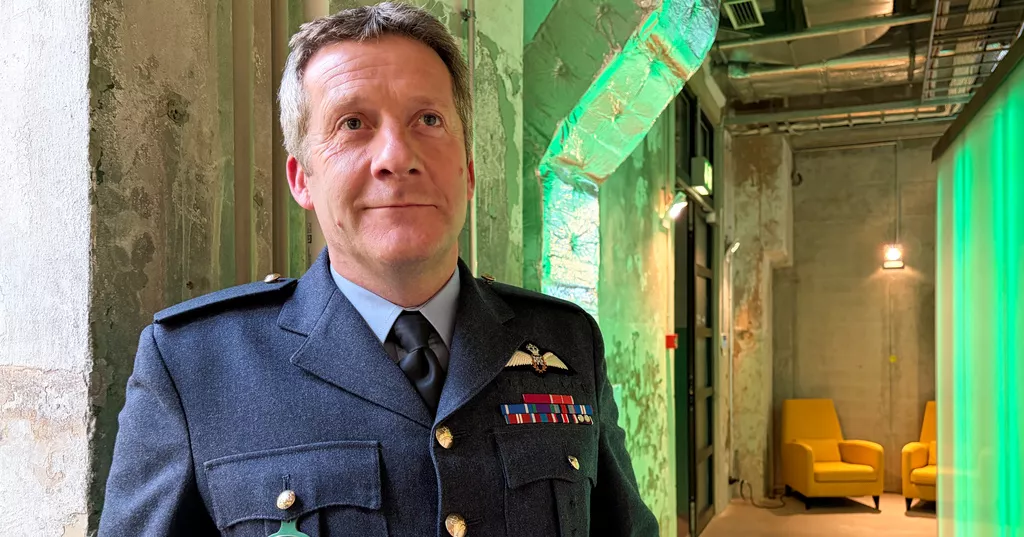
Air Chief Marshal Sir John Stringer, NATO’s deputy supreme allied commander for Europe, told The Associated Press at a security conference in Estonia that Putin was becoming “increasingly cavalier, dangerous and risk accepting.”
Stringer warned NATO members to respond carefully to a growing number of Russian-linked incidents, saying Putin could seek to provoke the alliance into an “overreaction.”
Polish Prime Minister Donald Tusk has warned that Russia could deliberately target NATO countries with drones or missiles while claiming the attacks were accidental. French President Emmanuel Macron has also ordered preparations to protect critical infrastructure from potential drone and cyberattacks.
However, some European officials have urged caution. A British defense official said the UK does not assess that Putin is seeking a direct confrontation with NATO.
Latvian President Edgars Rinkevics also said there was no evidence of a Russian military buildup near his country’s borders.
“The perspective of direct military attack is not correct,” Rinkevics told reporters on the sidelines of the UN General Assembly in New York.
US Ambassador to NATO Matthew Whitaker similarly said Putin “does not want a conflict with NATO,” while noting that Russian-linked sabotage and other hybrid activities were more concerning.
NATO Secretary-General Mark Rutte said NATO must remain prepared and strong, warning that any serious Russian action would draw a firm response.
European countries have faced repeated Russian drone incursions and other covert activities since Moscow’s invasion of Ukraine. An AP review found more than 210 incidents by March 2026, including vandalism, propaganda, arson, sabotage and cyberattacks, up from 59 a year earlier.
Stringer said some drone incursions into NATO airspace could be accidental, particularly when Russian electronic warfare disrupts drones during attempts to counter Ukrainian attacks. But he said Moscow could deliberately escalate such activity.
Estonian Prime Minister Kristen Michal said the distinction between negligence and deliberate targeting can be difficult to establish. He and Stringer said the rise in covert Russian activity was largely linked to Western support for Ukraine.
Stringer said Putin was seeking to create divisions among NATO members because Russia’s campaign in Ukraine was not progressing as Moscow had hoped.
Michal said Russia was increasing pressure across Europe in an effort to weaken Western support for Kyiv. He said a conventional Russian attack on Europe was currently unlikely because of NATO’s deterrent and Russia’s military commitments in Ukraine.
Baltic leaders expect Russian attacks on infrastructure to increase as winter approaches and see little prospect of diplomatic progress before spring.
Michal said the Russian threat would remain until Putin changes his military objectives, arguing that continued support for Ukraine is the strongest means of deterrence.