Nepal has announced an end to search and rescue operations for victims of the Aug. 26 floods that killed at least 1,455 people, while thousands of others remain unaccounted for.
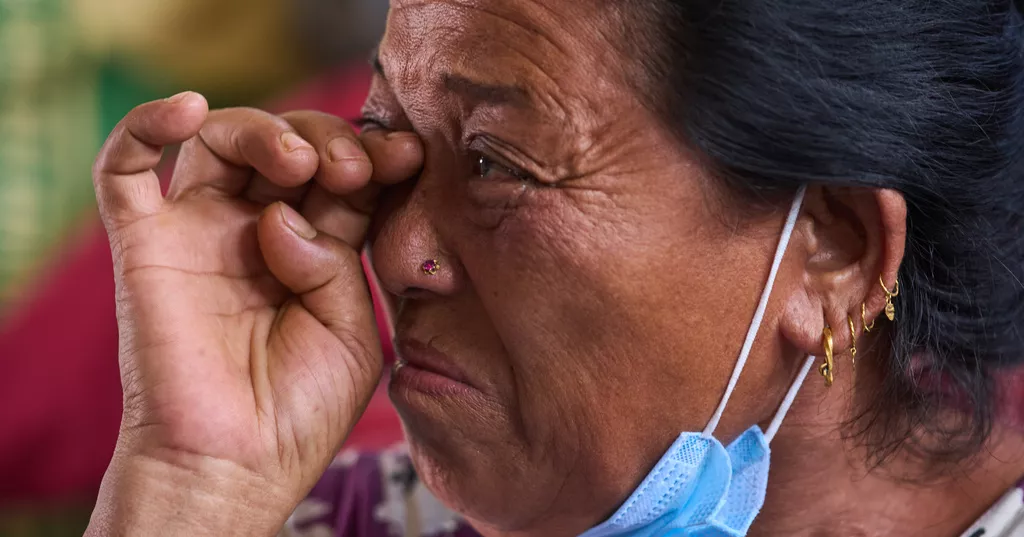
The families of 5,285 missing people, including hundreds of foreign nationals, have reacted differently to the government’s decision announced late Monday, with some accepting it while others expressing anger and frustration.
Prime Minister Balendra Shah’s office said the government will now focus on rehabilitation and reconstruction, including restoring roads and bridges cut off by the floods, particularly in remote areas where damaged infrastructure has hampered aid delivery.
The government estimates that recovery and reconstruction will require $4.77 billion. Nearly 33,000 people have been affected by the disaster, while around 7,500 homes were damaged or destroyed.
Hopes of finding survivors were revived on Sept. 4 when two Nepalese workers were rescued from an underground tunnel at the Trishuli hydropower project. Two days later, rescuers also found a Chinese national alive at the same site.
Families of other missing victims have staged protests and held vigils in different parts of Nepal, demanding that search operations be strengthened.
Usha Khatri, whose husband remains missing, strongly opposed the government’s decision to end the search. She has spent days traveling to towns along the river where recovered bodies have been found.
“I am so angry at the government for giving up on search and rescue with thousands of people still missing. I just don’t understand how they can do that when we still have hope left that our loved one can still be found,” Khatri said Wednesday.
As part of her search, Khatri has examined photographs of recovered bodies that were buried for preservation until they can be identified.
“Either they have to give up the body or show some solid proof that my husband is gone and then only they can declare him dead,” she said.
However, some other relatives welcomed the government’s decision, saying they now want official death certificates for their missing family members.
“After so many days and weeks there is little or no hope of finding anyone alive. We are sure that none of our family members survived and we are just looking for a closure,” said Nirajan Poudel, who lost five family members in the floods.
Some families whose relatives remain missing have already performed symbolic funerals. Cremation is an important final rite in Hindu tradition, and conducting the ceremony without a body can provide some families with a sense of spiritual closure.
Poudel said the government has so far declined to issue death certificates, arguing that existing laws must first be amended.
Such certificates are needed by families in Nepal to claim compensation and insurance benefits and to inherit property.
The Nepalese government did not immediately respond to a request for information about the issuance of death certificates.
Legal experts said a major challenge is establishing the number of people who were swept away by the floods.
“There is more to do with practical complications than legal provisions,” said Supreme Court lawyer Hardik Subedi.
He said the process for facilitating the issuance of death certificates has not yet been initiated.