
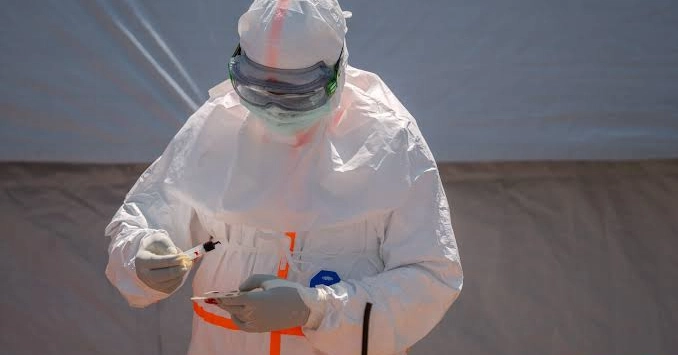
The death toll from the Ebola outbreak in the Democratic Republic of Congo has climbed to at least 930, the country's Ministry of Health said on Monday, reporting 37 new fatalities within a 24-hour period from Friday to Saturday—one of the highest daily increases since the outbreak began.
According to the ministry, 2,344 Ebola cases had been confirmed as of Saturday.
The outbreak, declared in eastern Congo on May 15, has become the fastest-growing Ebola epidemic on record. It is caused by the Bundibugyo strain of the virus, for which there is currently no approved vaccine or specific treatment.
Ebola is a highly infectious disease that can spread from wild animals to humans and is transmitted between people through direct contact with infected bodily fluids, including blood, vomit and semen, as well as contaminated items such as clothing and bedding. Although rare, the disease is often severe and can be fatal.
Response efforts have been hampered by security concerns in Ituri, the province hardest hit by the outbreak. The virus has spread across five eastern provinces, a region plagued by ongoing rebel violence.
Authorities said at least 12 attacks, largely driven by misinformation and public distrust, have targeted healthcare workers and medical facilities since the outbreak was declared. In addition, many health workers have gone on strike over unpaid wages.
The outbreak has also claimed the lives of at least 36 healthcare workers infected with the virus.
Last week, the World Health Organization warned that around 80 percent of newly detected Ebola cases were linked to unknown transmission chains, indicating that the disease is spreading more rapidly than health authorities can trace despite expanded response efforts.
In its latest update, Congo’s Health Ministry said 724 patients are currently being treated in isolation units and hospitals. It added that response measures are being strengthened in the affected health zones and that 22 patients had recovered during the previous 24 hours.