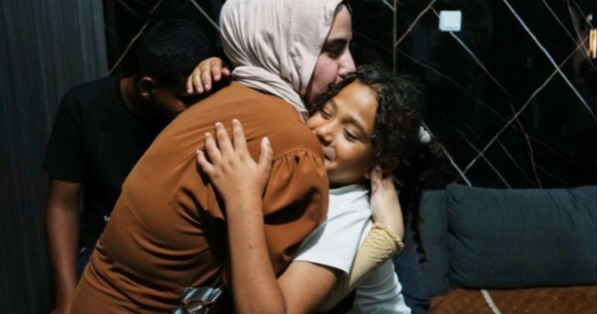
A Palestinian family divided between Israel and Gaza has reunited after nearly two years of war, displacement and personal tragedy.
Mais al-Gharam, 23, had not seen her seven younger siblings since leaving Gaza for Israel shortly before the war began. During the conflict, an Israeli airstrike destroyed the family's home in central Gaza, killing her parents and one of her brothers.
Earlier this month, Mais waited outside Israel's Kerem Shalom crossing, searching the crowd for her surviving siblings as they emerged from Gaza.
"We never stopped being a family," she said. "But every day I wondered whether I would see them again."
After years of legal efforts, Mais was finally able to bring her brothers and sisters, aged 8 to 22, to Israel. The siblings reunited at the border crossing and then travelled together to Nazareth, where relatives welcomed them with hugs and home-cooked meals.
The reunion brought both relief and grief. Although the family was together again, they were also mourning the loss of their parents and younger brother.
Their grandfather, Faraj al-Gharam, described the moment as "coming back from the grave."
The family's story began in 2002 when Murad al-Gharam, a resident of Gaza, met Amal Karim, a Palestinian citizen of Israel from Nazareth, while working in Israel on a temporary permit. After marrying, the couple moved permanently to Gaza, where they raised eight children in Nuseirat refugee camp.
Life changed dramatically after the Hamas-led attack on southern Israel on October 7, 2023, which killed about 1,200 people and led to Israel's military campaign in Gaza.
Mais had already returned to Nazareth, where she married and found work. Her seven siblings, who were born in Gaza, were eligible to apply for Israeli citizenship through their mother, but their father was not.
The family initially decided to remain together in Gaza rather than leave without him.
As fighting intensified, they were displaced multiple times before returning to their home in Nuseirat. On July 10, 2024, an airstrike struck the house, killing Murad, Amal and their 11-year-old son, Maisara.
The surviving children were injured but managed to reach Al Aqsa Hospital in Deir al-Balah, where doctors confirmed the deaths of their parents and brother.
The Israeli military did not immediately comment on the strike.
After the attack, the older siblings took responsibility for caring for the younger children. They cooked, cleaned, collected firewood for heat and water, and even opened a small bakery to earn money while receiving support from relatives in Nazareth.
Meanwhile, Mais worked with Israeli rights group HaMoked to secure permits, legal guardianship papers and citizenship applications for her siblings.
According to HaMoked, the Israeli Interior Ministry initially rejected the request because the children's mother had died. The family was later required to undergo DNA testing to prove their relationship to Mais before the applications were approved.
Nearly two years after the airstrike, the siblings crossed into Israel on July 8 and travelled to Nazareth.
After arriving, they spoke not about politics but about ordinary plans for the future, including going back to school, seeing doctors and spending time with relatives.
"Family is the most important thing," said Jwaher, one of the siblings.