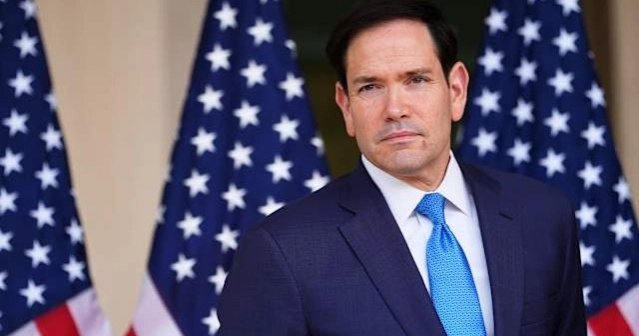
US Secretary of State Marco Rubio is holding talks on Sunday with Indian Foreign Minister Subrahmanyam Jaishankar as both sides work to ease tensions that have pushed relations to their weakest level in more than two decades.
Rubio arrived in New Delhi on Saturday on his first official visit to India, at a time when economic and diplomatic ties between Washington and New Delhi have been strained, largely due to tariff policies under US President Donald Trump that increased duties on several Indian exports.
His visit comes ahead of a meeting on Tuesday with foreign ministers of India, Japan and Australia under the Quad framework, the Indo-Pacific security partnership.
Speaking in New Delhi, Rubio said India remains central to US strategy in the Indo-Pacific, both through the Quad and bilateral relations.
India is also marking the 250th anniversary of US independence with a gala reception during Rubio’s four-day visit, which includes travel to multiple cities.
However, experts say trust between the two countries has weakened significantly over the past year. Former Indian foreign ministry adviser Ashok Malik said recent US statements on sensitive security and trade issues have contributed to a “trust deficit.”
He added that Rubio’s visit would be seen as successful if it helps stabilize ties and prevents further deterioration.
Analysts note that while India and the US share strategic interests, their priorities often differ. India’s long-standing ties with Russia and its cautious approach toward closer alignment with Washington have sometimes created friction.
Relations between the two countries have deepened over the past two decades, especially due to shared concerns over China’s growing influence in the Indo-Pacific. The Quad grouping has frequently raised concerns about China’s maritime claims in the South China Sea, which Beijing rejects, calling the alliance an attempt to contain its rise.
Tensions escalated further over the past year following several developments, including disagreements over trade, energy, and regional diplomacy.
The US imposed tariffs on Indian goods over New Delhi’s discounted purchases of Russian oil, adding strain to already delicate ties.
Observers also point to India’s dissatisfaction with Washington’s engagement with Pakistan during recent regional tensions, as well as US diplomatic moves involving Iran and China.
Senior analyst Praveen Donthi of the International Crisis Group said India-US relations face structural challenges that have become more visible in recent years.
He said India’s foreign policy has become more rigid and politically driven, particularly regarding US ties with Pakistan and Washington’s approach to China.
Despite current tensions, experts believe New Delhi may adopt a cautious approach, hoping for improved relations after the Trump administration.
For now, both sides are expected to focus on managing differences while trying to preserve a long-term strategic partnership built on shared regional interests.