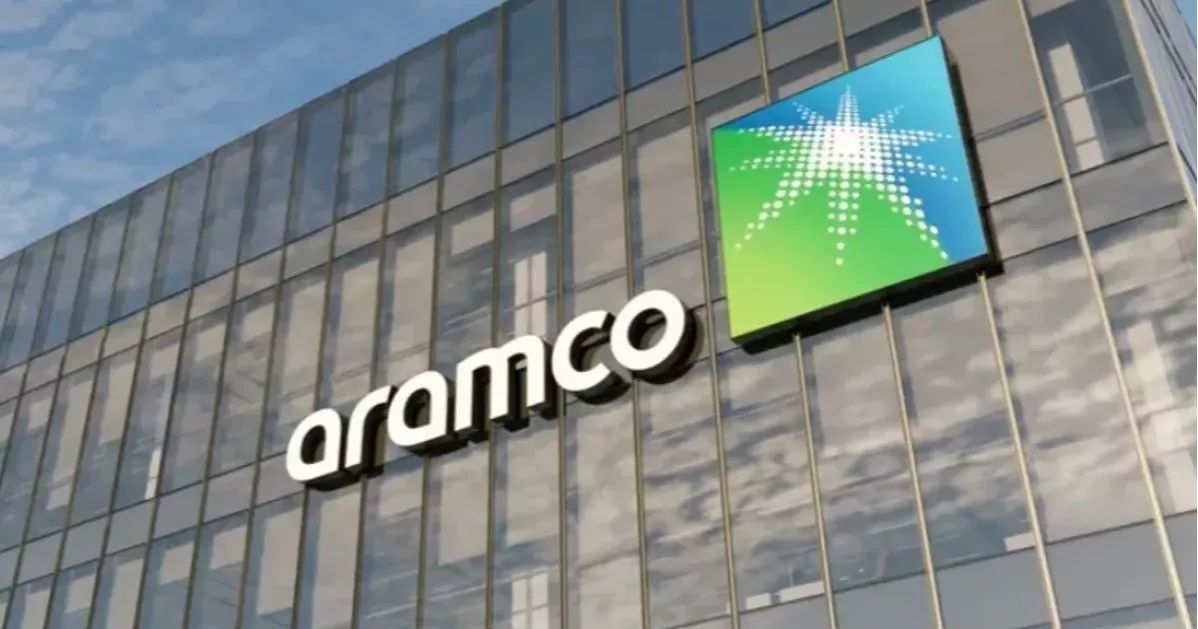
Saudi Arabia said it intercepted missiles targeting its capital and other regions on Sunday, while falling debris from the interceptions damaged a building of state-owned oil giant Aramco in Riyadh's financial district.
Meanwhile, the United Arab Emirates (UAE) said it rescued 22 crew members after a fire broke out aboard a cargo ship in the Sea of Oman, amid continued security risks to commercial shipping in the region.
Here are the latest developments in the Middle East on Sunday.
Aramco building damaged in Riyadh after missile interceptions
Witnesses in Riyadh reported hearing a loud explosion on Sunday morning and said several floors of an Aramco building in the King Abdullah Financial District had sustained damage, with some sections appearing severely affected.
The witnesses spoke on condition of anonymity due to security concerns.
The Saudi-led coalition said its air defence systems intercepted two ballistic missiles and two cruise missiles targeting Riyadh and other parts of the kingdom early Sunday, blaming the Houthis for launching the attacks.
Saudi Arabia's Energy Ministry said debris from the interceptions fell on the building, causing minor damage, but no casualties were reported.
The Saudi Center for International Communication and Aramco did not immediately respond to requests for comment from The Associated Press.
The Saudi-led coalition also said it intercepted a ballistic missile overnight that was heading towards the kingdom's southern region along the Yemeni border, an area that has repeatedly faced Houthi attacks.
The latest incident came a day after Saudi airstrikes targeted areas near Sanaa, Yemen's Houthi-controlled capital. Houthi officials claimed that at least 27 people were killed in the strikes.
UAE rescues 22 crew members after cargo ship catches fire
The UAE National Guard said it rescued 22 crew members from a cargo vessel that caught fire in the Sea of Oman. All the crew members, who were of Arab nationalities, were in stable condition after receiving first aid.
The National Guard did not disclose the vessel's identity or the cause of the fire.
Meanwhile, the United Kingdom Maritime Trade Operations (UKMTO), a British military organisation that monitors maritime security incidents, said a tanker caught fire on Saturday about eight nautical miles northwest of Oman's Khasab, forcing its crew to evacuate.
The organisation did not identify the vessel or specify who might have targeted it. It was also unclear whether the tanker was the same vessel whose crew members were rescued by the UAE.
The incident came amid heightened security risks to commercial shipping in the region. On Saturday, US forces disabled a St Kitts-flagged cargo ship in the Gulf of Oman, alleging that it had attempted to breach the US naval blockade of Iran.
The blockade is being enforced in and around the strategically important Strait of Hormuz, a key route for global oil shipments.
Separately, Iran's military said late Saturday that two tankers had struck mines and caught fire in the Strait of Hormuz area. However, it did not disclose the vessels' flags or destinations.
Israel's president taps Netanyahu's election rival to form government
Israeli President Isaac Herzog on Saturday designated Gadi Eisenkot to form the country's next government following consultations with political parties elected to parliament on October 27.
The decision marked another setback for Prime Minister Benjamin Netanyahu, whose parliamentary majority was lost in the election, which failed to give any party a clear majority.
However, Herzog's decision does not necessarily mean Eisenkot will become the next prime minister.
Following an official ceremony on Sunday, Eisenkot is expected to begin challenging negotiations with potential coalition partners to secure the support needed to form a government.
Mixed reactions across Middle East to Israel's political change
Residents of Israel, the Palestinian territories and other parts of the Middle East expressed mixed reactions to Gadi Eisenkot's efforts to form a new Israeli government, with some welcoming the prospect of political change while others remained doubtful about any significant shift in Israeli policies.
In Jerusalem, some residents expressed hope that the new government would give priority to Israel's security and bring together politically divided groups.
Others called for a reversal of Netanyahu's judicial overhaul and the inclusion of an Arab party in the government, which would be only the second such instance in Israel's history.
"The majority of the country is against this dictatorial regime of Bibi Netanyahu and need a new start," Jerusalem resident Anny Soronow said.
However, Palestinians in the war-ravaged Gaza Strip and the occupied West Bank expressed less optimism about the possible political transition.
In neighbouring Lebanon, resident Rima al-Ghazal said she did not expect an Eisenkot-led government to bring an end to ongoing Israeli strikes in southern Lebanon.
In Tehran, Iranian resident Ali Soroush said the hostility between Israel and the Islamic Republic would largely continue regardless of the political change in Israel.