Saudi Crown Prince Mohammed bin Salman sought Egypt's support Tuesday as the kingdom confronts escalating attacks by Yemen's Houthi rebels on Saudi shipping and key infrastructure, developments that have contributed to a sharp rise in global oil prices.
The crown prince met Egyptian President Abdel-Fattah el-Sissi in Cairo, with Saudi Arabia increasingly facing the Iran-backed Houthis largely on its own.
The rebels have made rapid territorial gains in Yemen over the past week, enhancing their ability to disrupt Saudi oil exports through the Red Sea.
The vulnerability of Saudi Arabia's oil infrastructure was highlighted further by an attack several days ago that damaged the kingdom's largest pipeline. The attack was reportedly carried out by Iran-aligned militias in Iraq.
Regional officials said the East-West Pipeline is expected to remain largely out of service for weeks while repairs are carried out. The disruption could remove several million barrels of oil per day from the global market.
The Houthi offensive has effectively created a new front in the wider Middle East conflict and strengthened Iran's position against its traditional regional rival, Saudi Arabia. Iran has also targeted shipping through the Strait of Hormuz, another major maritime route in the Persian Gulf.
Following his meeting with el-Sissi, Crown Prince Mohammed said in a statement that the two countries reaffirmed "their shared commitment to ensuring freedom and security of maritime navigation" in the Red Sea and the Bab el-Mandeb Strait, the strategic chokepoint at the southern end of the Red Sea.
El-Sissi's office issued a statement expressing "Egypt's unwavering position in supporting Saudi Arabia."
Neither country provided specific details about possible future measures.
Although Egypt is unlikely to send military forces to assist Saudi Arabia, Cairo has significant influence in the Arab world and could help build regional support. Egypt has also played a central role in mediation efforts during the region's three years of turmoil, maintaining relations with all sides, including Iran and its allies.
Kingdom faces difficult choices as it seeks support
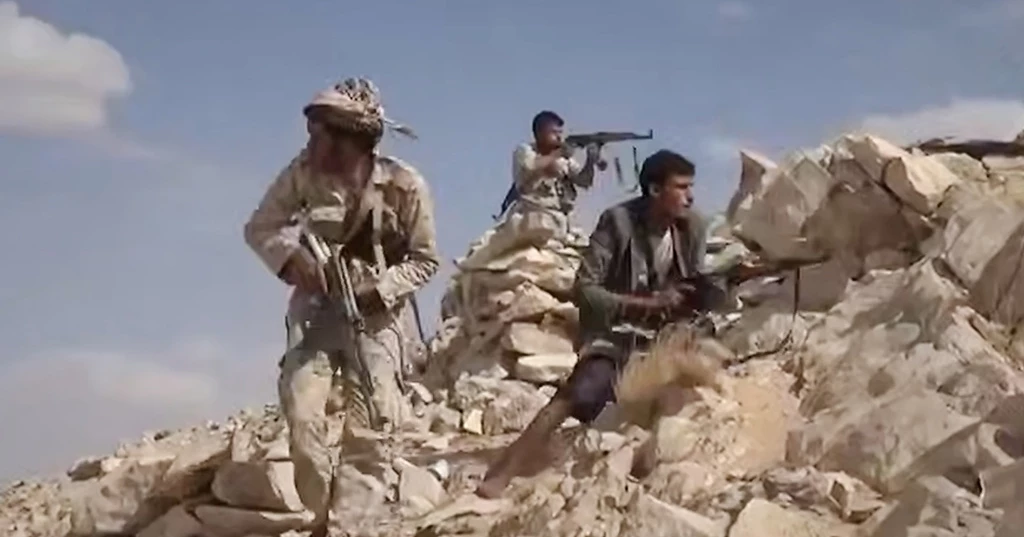
The Houthis have made significant advances in recent days, capturing the Red Sea port of Mokha as well as three strategically important islands in and around the Bab el-Mandeb Strait.
The territorial gains have strengthened the Houthis' ability to potentially block the strait for Saudi shipping, which they have been targeting since late July.
Bab el-Mandeb links the Red Sea with the open ocean and, ultimately, with Saudi Arabia's major oil markets in Asia.
Saudi Arabia has so far appeared hesitant to launch a large-scale military campaign against the Houthis. The kingdom is concerned that such an operation could trigger further attacks on its oil facilities and pull it back into a full-scale civil war in Yemen, its southern neighbor.
With Houthi attacks continuing, Riyadh now faces a difficult choice between escalating its military response and pursuing a diplomatic settlement.
Saudi Arabia's most important ally, the United States, has also been unpredictable and at times unreliable. US President Donald Trump appears reluctant to expand an already unpopular and deadlocked Middle East war ahead of congressional elections.
The United Arab Emirates, which had previously been part of the Saudi-led coalition fighting the Houthis, has withdrawn from the conflict following disputes between its allies in Yemen and Saudi Arabia.
Yemen's U.N. Ambassador Abdullah Al-Saadi told the U.N. Security Council Tuesday that Yemen's armed forces were regrouping and regaining control.
He called for enforcement of a U.N. arms embargo on the Houthis and urged the council to condemn the escalation.
Al-Saadi asked "whether the international community will accept for one of the world's most important gateways for trade and energy to become a blackmail card in the hands of a transnational terrorist group."
Egypt also suffering from Houthi attacks
Egypt has also suffered economic consequences from the Houthi campaign.
Houthi attacks on commercial vessels in the Red Sea during the Gaza war caused a decline in traffic through the Suez Canal, reducing a major source of Egyptian revenue.
During the Iran war, Saudi Arabia rerouted its oil exports through the Red Sea, with a significant portion moving through the Suez Canal or an Egyptian pipeline linking the Red Sea with the Mediterranean.
However, the shutdown of the East-West Pipeline is expected to sharply reduce or completely halt those shipments for several weeks.
There are, however, limits to the assistance Egypt can provide Saudi Arabia.
"I don't think MBS wants troops from Cairo, which he knows would be a very difficult ask," said analyst H.A. Hellyer, referring to the crown prince by his initials.
Hellyer, a senior fellow at the Center for American Progress, said Cairo could instead provide Riyadh with political support among Arab countries for whatever measures it decides to take against the Houthis.
"There's genuine international consensus that the Houthis cannot be allowed to hold a choke point like Bab el-Mandeb hostage," Hellyer said.
However, he noted that some countries remain reluctant to cooperate with Saudi Arabia because of their previous experience with the kingdom's intervention in Yemen.
The coalition that Crown Prince Mohammed assembled in 2015 to fight the Houthis largely collapsed several years later amid internal disputes and factional divisions.
"MBS is keenly aware of this and will be trying to make it clear there is a much better plan for going forward," Hellyer said.
"It just depends on how many are convinced."
Fighting pushes Yemen back toward civil war
The Houthi advances have inflicted major setbacks on Saudi-backed forces in Yemen, including the country's internationally recognized government, reviving a conflict that had largely subsided under a 2022 truce.
The World Health Organization said fighting between the Houthis and Saudi-backed forces killed more than 500 people over the past week, compared with nearly 200 the previous week. The violence has also displaced nearly 94,000 people.
Save the Children reported that at least 117 civilians, including 19 children, were killed between Aug. 1 and Sept. 9.
The organization said 43 children were killed or injured during the first week of September, making it the highest weekly child casualty figure recorded by the group in a year.
"Children are once again paying the highest price for some of the most severe violence the country has seen in years," said Rishana Haniffa, the agency's Yemen director.
Anees al Asbahi, spokesperson for the Houthi-run Health Ministry, said Tuesday in a post on X that Saudi airstrikes killed three people, including two children, in Yemen's Taiz province. The Associated Press could not independently verify the claim.
Alerts sounded in several parts of Saudi Arabia early Tuesday, which often indicates missile or drone launches by the Houthis or Iraqi militias. There were no immediate reports of attacks.
On Monday, Houthi missile and drone strikes in southern Saudi Arabia injured 13 civilians and damaged homes and vehicles, Saudi military spokesman Maj. Gen. Turki al-Malki said.
The Houthis control the capital, Sanaa, as well as northern and western Yemen, where most of the country's population lives.
The internationally recognized government and its allied forces, consisting of a mix of militias, control southern and eastern Yemen, including the country's largest port, Aden, and its oil fields.
Saudi Arabia led an aerial bombing campaign against the Houthis for years beginning in 2015, but its allies made little progress on the ground.
The conflict has killed an estimated 150,000 people and at times pushed Yemen to the brink of famine.