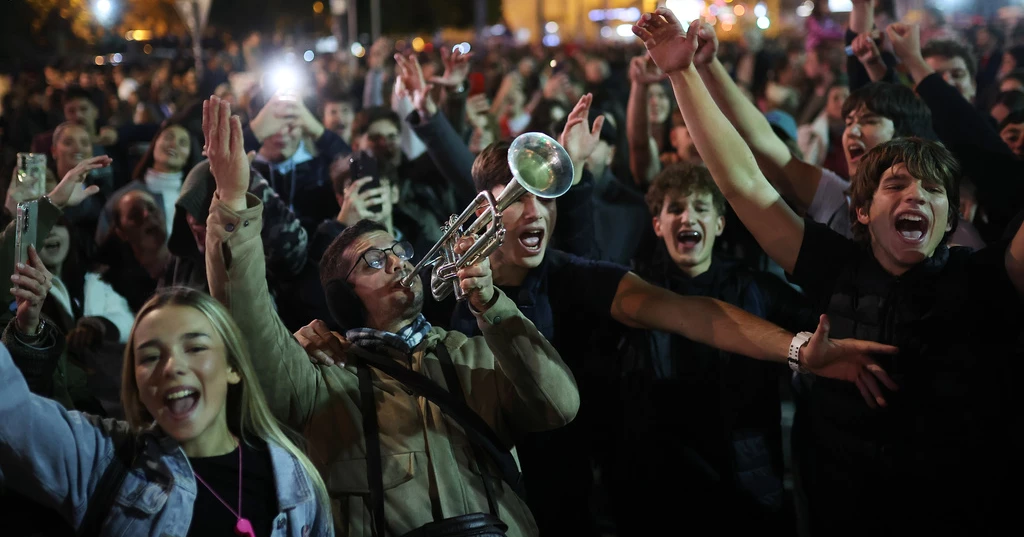
Serbia’s student movement has won a major election victory over longtime leader Aleksandar Vucic, but fulfilling its promises of democratic reforms will be difficult amid entrenched corruption, political divisions and high public expectations.
The leaderless movement, whose candidates have limited political experience, has pledged to fight corruption, ensure media freedom and restore the rule of law after Vucic’s 14 years in power.
Preliminary results indicate that the Students’ List will secure 140 seats in the 250-member Parliament, compared with 104 for Vucic’s Serbian Progressive Party. However, appeals and possible polling reruns could delay the formation of a new government.
The transition may also require a separate presidential election following Vucic’s resignation last month to lead his party in the parliamentary race.
Tensions have surfaced since the victory, including incidents at pro-Vucic television stations. Journalists’ associations have also asked the media regulator to revoke Informer TV’s broadcasting licence.
Fighting corruption will be another major challenge, with the students promising police and judicial reforms, independent oversight and reviews of major government projects.
The movement has yet to clarify its position on Serbia’s EU membership bid and relations with Russia. Some of its officials have indicated that the country’s policy on sanctions against Moscow will remain unchanged, potentially disappointing supporters seeking closer ties with the West.
EU Enlargement Commissioner Marta Kos has welcomed the proposed reforms, saying they could bring Serbia closer to the European Union.