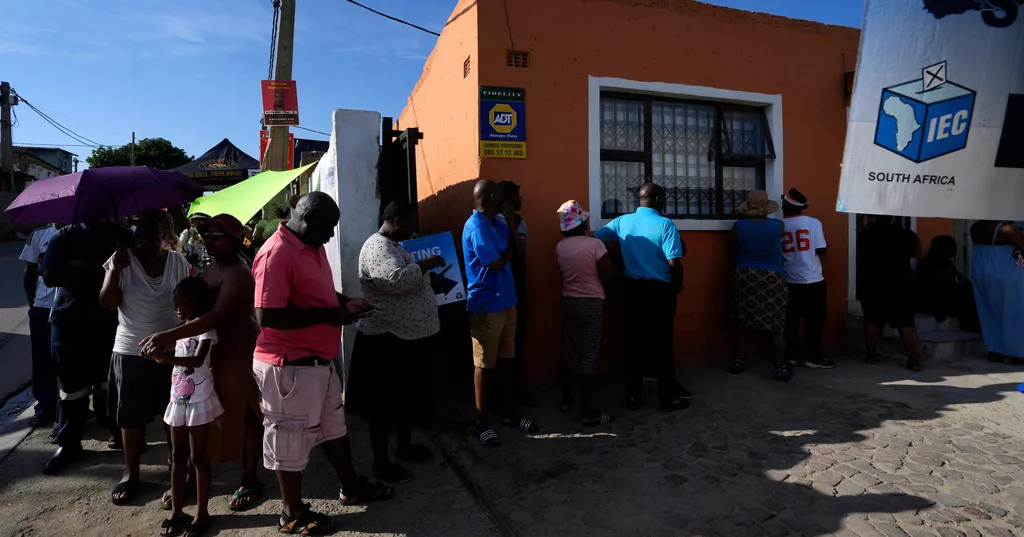
South Africans went to the polls on Wednesday in local government elections that could further weaken the ruling African National Congress (ANC), which led the country out of white minority rule but has steadily lost public support over the past decade.
The elections will determine leadership in the country's eight major metropolitan municipalities, 44 district councils and 205 local councils.
Johannesburg, the country's largest city and economic hub, is a major battleground in the polls. Once regarded as Africa's richest city, it has been struggling with water shortages, electricity disruptions and other failures in public services, reflecting widespread frustration over local government performance.
The city has seen five changes of mayor in four years since the previous local elections. It is currently run by a fragile ANC-led coalition, while the Democratic Alliance (DA), South Africa's second-largest party, is seeking to take control.
The DA has nominated its former national leader, 75-year-old Helen Zille, as its mayoral candidate in Johannesburg. She has drawn attention through a series of publicity stunts highlighting the city's deteriorating services, including snorkelling in a water-filled road trench and rowing an inflatable boat through a pond formed by a water leak.
South African voters do not directly elect mayors. Instead, they elect municipal councillors, who subsequently choose mayors. Smaller parties often play decisive roles in forming local government coalitions.
The ANC's declining electoral support has been evident in recent polls. In the 2021 local elections, it secured less than 50 percent of the vote for the first time since the end of apartheid in 1994.
The party suffered a major setback in the 2024 national elections, losing its 30-year parliamentary majority and entering a coalition government with the DA and several other parties. However, ANC leader Cyril Ramaphosa retained the presidency.
Although the ANC and DA are partners in the national unity government, they remain fierce competitors in the local elections. Zille's mayoral bid will also test whether the DA can expand its support beyond its traditional stronghold of Cape Town, the country's second-largest city.
The elections will also mark the first local government polls contested by the MK Party, led by former president Jacob Zuma. Zuma resigned as president in 2018 amid corruption allegations and was expelled from the ANC in 2024 after launching his own political party.
The MK Party made a strong debut in the 2024 national elections, emerging as the country's third-largest parliamentary party. It enjoys considerable support in Zuma's home province of KwaZulu-Natal in eastern South Africa.
Poor public services, particularly unreliable water supplies, are among the major concerns for voters. Corruption and high unemployment have also featured prominently in the campaigns, alongside growing tensions over immigration.
Groups protesting against illegal immigration have gained public attention and support in recent months, criticising Ramaphosa and his government over their handling of the issue. Several political parties have also made opposition to undocumented migration a key component of their local election campaigns in the country of around 62 million people.