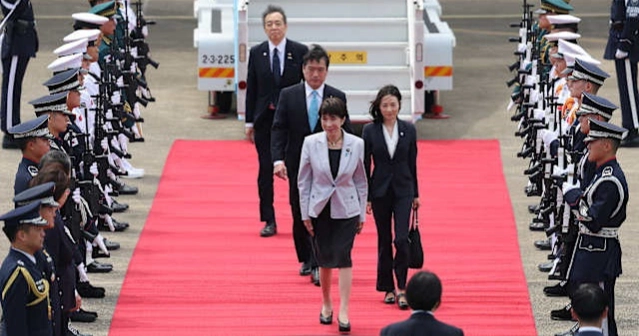
Lee Jae Myung and Sanae Takaichi held their fourth meeting in about six months on Tuesday, as the two leaders moved to strengthen relations between their countries amid growing regional and global challenges.
Lee hosted Takaichi in his hometown of Andong, a southeastern city known for its traditional folk village recognized as a UNESCO World Heritage site.
In January, the two leaders met in Takaichi’s hometown of Nara, making it the first time sitting leaders of the two countries have visited each other’s hometowns.
South Korea’s presidential office said the summit was expected to build greater trust between the two leaders.
Before the talks, Takaichi said she hoped to expand cooperation under difficult geopolitical conditions, including tensions in the Middle East and the Indo-Pacific.
The meeting focused on economic and energy cooperation, the Iran war and broader bilateral relations.
Experts said the talks were likely to proceed smoothly because both sides are currently prioritizing practical cooperation over historical disputes.
“Both countries are focusing more on areas of cooperation than on contentious issues,” said Choi Eunmi of the Asan Institute for Policy Studies.
South Korea and Japan are major allies of the United States, but their relationship has often been strained by unresolved issues stemming from Japan’s colonial rule of the Korean Peninsula from 1910 to 1945.
Relations began improving in 2023 when the previous governments agreed to set aside some historical disagreements and work together on shared concerns, including US-China rivalry, supply chain risks and North Korea’s nuclear programme.
When Lee and Takaichi took office last year, some analysts feared their differing political views could weaken ties.
Instead, the two leaders have maintained close cooperation.
In August last year, Lee became the first South Korean president to choose Japan as the destination for his first bilateral summit.
At the end of their January meeting, Lee and Takaichi joined an informal drumming session featuring songs by BTS, including “Dynamite.”
Analysts say the leaders are working more closely because they face mounting challenges, including President Donald Trump’s America First policies and economic disruption caused by the Iran war.
Both South Korea and Japan have pledged major investments in the United States, but Trump’s tariff policies and transactional approach to security have raised concerns in both countries.
Despite the recent improvement, experts warn that unresolved historical issues, including wartime forced labour and sexual slavery, could still trigger tensions if not properly addressed.
Choi said the two governments are avoiding public debate on those issues, but there is no guarantee they will not resurface in the future.