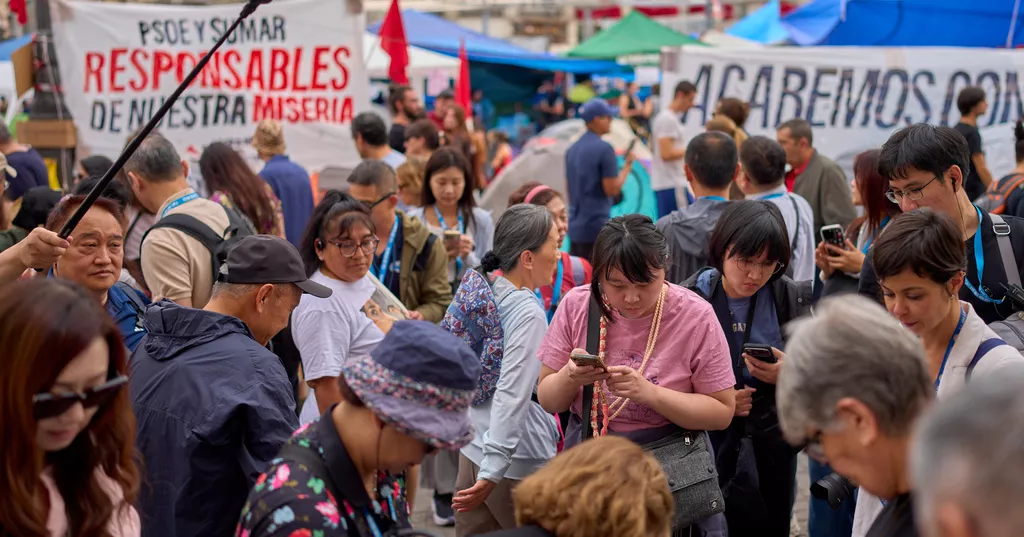
Spain's government on Tuesday unveiled emergency housing measures following days of protests over the eviction of an 87-year-old woman, as rising rents and a housing shortage fuel public anger.
The coalition led by Prime Minister Pedro Sánchez's Socialists announced the measures after four days of protests and an encampment at Madrid's Puerta del Sol, triggered by the eviction of María del Carmen Abascal, known as “Maricarmen,” who had lived in her apartment for seven decades.
Housing Minister Isabel Rodríguez said the decree would extend eviction protections for vulnerable people until 2030, regulate room rentals, introduce a tax on seasonal rentals and ban “speculative real estate purchases by vulture funds” until 2028.
It would also provide tax breaks to landlords renting to low-income tenants, interest-free loans to first-time homebuyers, and protection for public housing.
The decree must be ratified by parliament within 30 days. The government has 152 of the 350 seats and needs support from smaller parties to secure approval.
The Madrid Tenants' Union, which organised the protests, said it would study the details before deciding whether the measures meet its demands. Smaller encampments have also appeared in several other Spanish cities.
Meanwhile, Abascal may be able to return to her home after reaching a preliminary agreement with the building's owner. Her lawyer said the proposed deal would cap her rent at 30% of her income, or no more than the 500 euros ($570) she previously paid.
The property changed ownership in 2018. An investment fund later raised Abascal's rent from 500 euros to 2,650 euros and subsequently reduced it to 1,650 euros, which she still could not afford on her pension, according to the tenants' union.
Spain has had a housing law since 2023 that regulates rents, protects tenants and allows rent caps in high-demand areas.