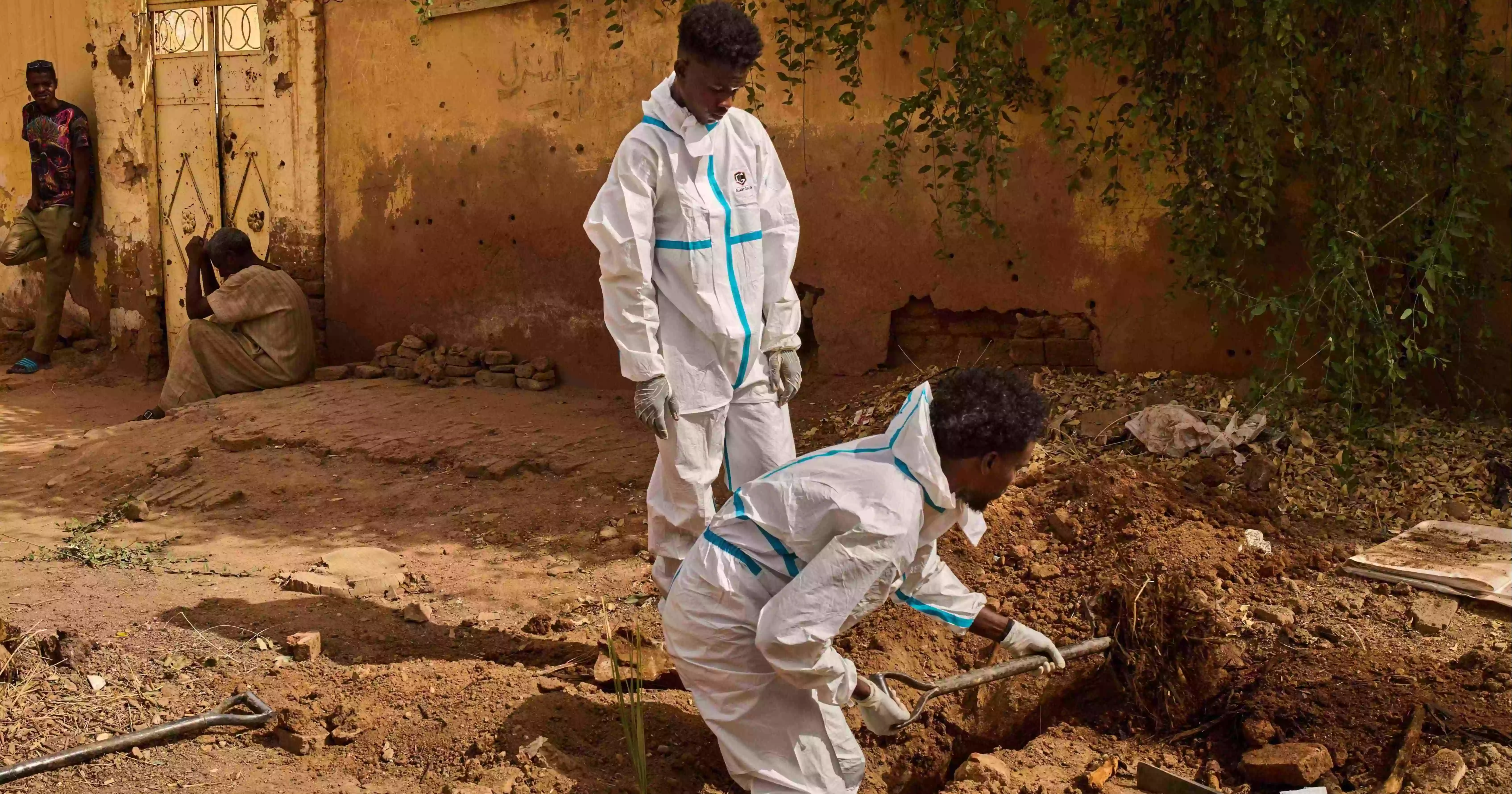
Sudan’s three-year civil war has left more than 8,000 people missing, with many feared buried in unmarked graves across the conflict-ravaged country, according to the International Committee of the Red Cross (ICRC).
Families continue to search desperately for loved ones who disappeared amid fighting, displacement and arrests as the conflict between Sudan’s army and the paramilitary Rapid Support Forces (RSF) devastates the country.
Among the missing is Fahmy al-Fateh, a 38-year-old farmer and merchant who joined the army after the war began. He disappeared more than a year ago while returning from a military base in Khartoum.
His wife, Azaher Abdallah, said she has searched hospitals, morgues and military camps but still has no information about his fate.
“I would feel more at peace if I knew something. It’s better than not knowing what happened to him, whether he's alive or dead,” she said.
According to the ICRC, many missing people in Khartoum state are believed to be buried in makeshift graves created during intense fighting when it was too dangerous to reach formal cemeteries.
Associated Press reporters visiting Khartoum last month saw burial sites in football fields, beside roads and near abandoned buildings, with many graves remaining unidentified.
Khartoum authorities say nearly 30,000 bodies have already been relocated from temporary graves, while thousands more remain buried across the city. Around 10 percent of the reburied bodies remain unidentified.
Forensic officials are preserving DNA samples from unidentified remains in hopes that future testing may help families identify relatives.
Psychologists warn that uncertainty surrounding missing loved ones causes long-term emotional trauma.
“Families of missing persons experience additional layers of vulnerabilities due to hostilities, displacement and ambiguous loss,” said ICRC psychologist Nathalie Nyamukeba.
Many families continue searching despite the dangers.
Sulafa Mustafa has spent two years looking for her son Suleiman Abdalsid, who disappeared after visiting a friend near Khartoum.
“I haven’t lost faith in finding you,” she said.
Others who have located relatives face the painful task of reburying loved ones properly after they were hastily buried near homes during the fighting.
“What happened had left a mark on my heart,” said Abubakar Alswai after relocating his brother’s remains to a public cemetery.