The United States launched military strikes on Iran early Wednesday after accusing Tehran of attacking three commercial vessels in the Strait of Hormuz. Washington also revoked Iran's ability to openly sell crude oil on the international market, while Iran responded by targeting US military facilities in Bahrain and Kuwait.
The latest exchange has heightened concerns that the interim agreement aimed at halting the conflict could collapse, increasing the risk of a broader war across the Middle East.
The attacks on commercial shipping and the subsequent military strikes came during the dayslong funeral of Iran's Supreme Leader Ayatollah Ali Khamenei, who was killed on Feb. 28 in the opening hours of the war at the age of 86. The funeral, which concludes Thursday, had been expected to ease tensions, although mourners have repeatedly chanted calls for the deaths of US President Donald Trump and Israeli Prime Minister Benjamin Netanyahu.
Negotiations on a permanent agreement had been scheduled to begin after Khamenei's burial, with discussions expected to focus on fully reopening the Strait of Hormuz and rolling back Iran's disputed nuclear programme. The latest escalation has cast doubt over those talks.
"The era of bullying and extortion is over," Iran's Parliament Speaker Mohammad Bagher Qalibaf wrote on X. "It leads nowhere. We don't fold."
US strikes hit Iranian military targets
The US military's Central Command said the overnight operation was intended "to impose heavy costs for targeting and attacking commercial shipping crewed by innocent civilians in an international waterway."
According to the military, the strikes targeted Iranian air defence systems, radar installations and more than 60 small boats operated by Iran's paramilitary Revolutionary Guard, which have frequently been used to harass vessels transiting the strait.
The US military said it remains "postured and prepared to hold Iran accountable when the agreement is not adhered to or obeyed," adding that the latest round of attacks had concluded.
Iran acknowledged the strikes but gave no details about casualties or damage. Iranian state media reported explosions in Bandar Abbas, Qeshm and Sirik.
On Wednesday morning, Bahrain, which hosts the US Navy's Fifth Fleet, and Kuwait, home to US Army forces, issued missile alerts. Iran's Revolutionary Guard later confirmed that it had targeted US military installations in both countries.
In a statement, the Guard said, "The child-killing and terrorist U.S. army ... openly violated the ceasefire and violated the Islamabad understanding by launching an airstrike on a number of coastal bases and civilian stations on the coasts of Hormozgan and Mahshahr provinces," without addressing the attacks on commercial ships in the Strait of Hormuz.
The latest confrontation followed a similar series of Iranian attacks on shipping, US retaliatory strikes and Iranian attacks on Bahrain and Kuwait late last month. Wednesday's operation also coincided with Trump's visit to Turkey for a NATO summit.
US revokes licence for Iranian oil sales
The United States also revoked the licence that had allowed Iran to openly sell crude oil under the interim agreement. The arrangement had enabled Tehran to conduct oil sales on the international market in US dollars for the first time in years. Iran has long been accused of selling sanctioned crude oil to China at discounted prices.
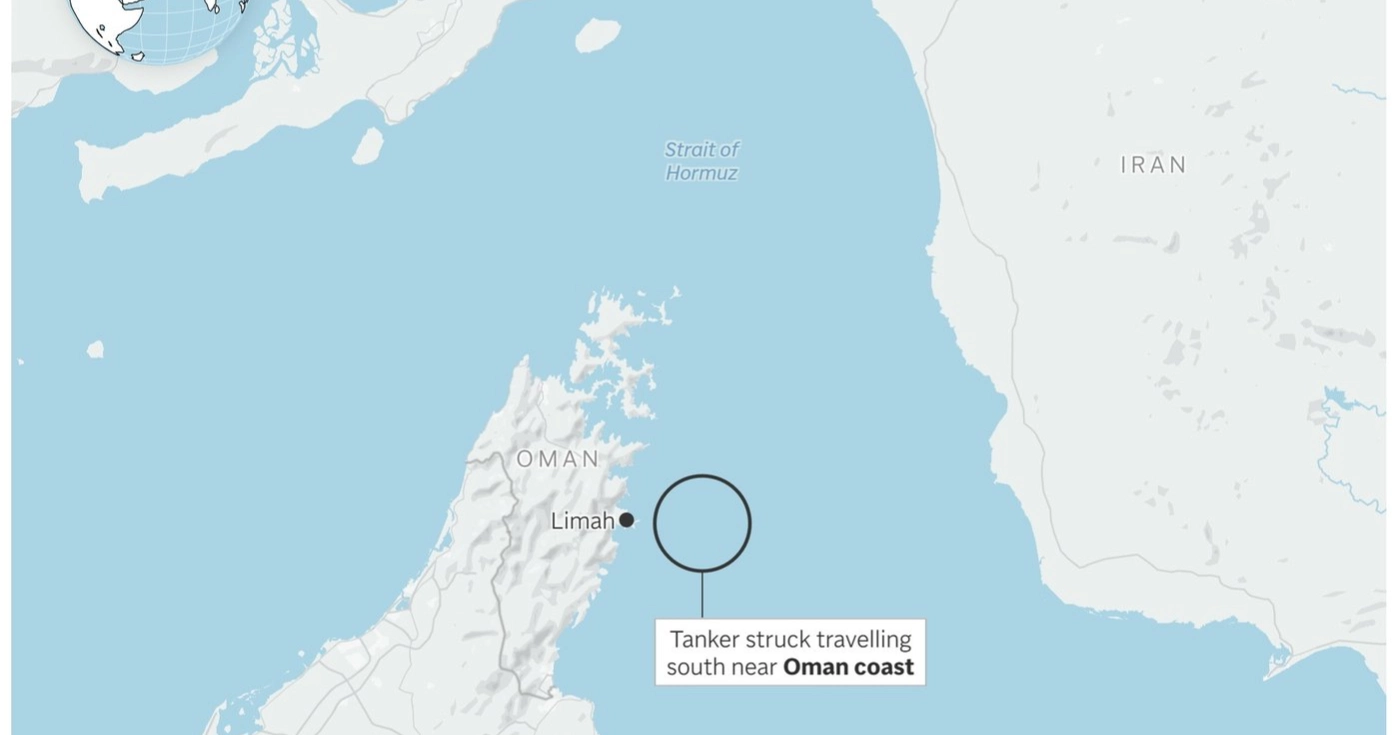
The move followed attacks on commercial shipping in the Strait of Hormuz. The United Kingdom Maritime Trade Operations centre said one tanker caught fire after being struck off the coast of Oman. Iranian state television reported that the liquefied natural gas tanker was attacked after ignoring warnings but stopped short of claiming responsibility.
The UK maritime agency said the other two vessels suffered minor damage but continued their voyages, with no injuries reported.
Since the war began, Iran has maintained tight control over the Strait of Hormuz, disrupting global energy markets. In peacetime, about one-fifth of the world's traded oil and natural gas passes through the strategic waterway. The vessels targeted on Tuesday were reportedly using a route close to Oman's coastline instead of the route designated by Tehran.
Iran has repeatedly insisted that only its approved route through the strait is safe and has been suspected of attacking vessels that used the Oman route.
Majed al-Ansari, spokesperson for Qatar's Foreign Ministry, said the Qatari tanker Al Rekayyat had been targeted in what he described as "an unacceptable attack" on international navigation and global energy security. He said Qatar holds Iran "fully legally responsible."
Under the interim agreement, Iran and the United States had agreed to allow ships to pass through the Strait of Hormuz without paying transit charges for 60 days. However, Tehran later insisted that it should determine shipping routes and eventually impose passage fees, a proposal rejected by Washington and several Gulf Arab states.