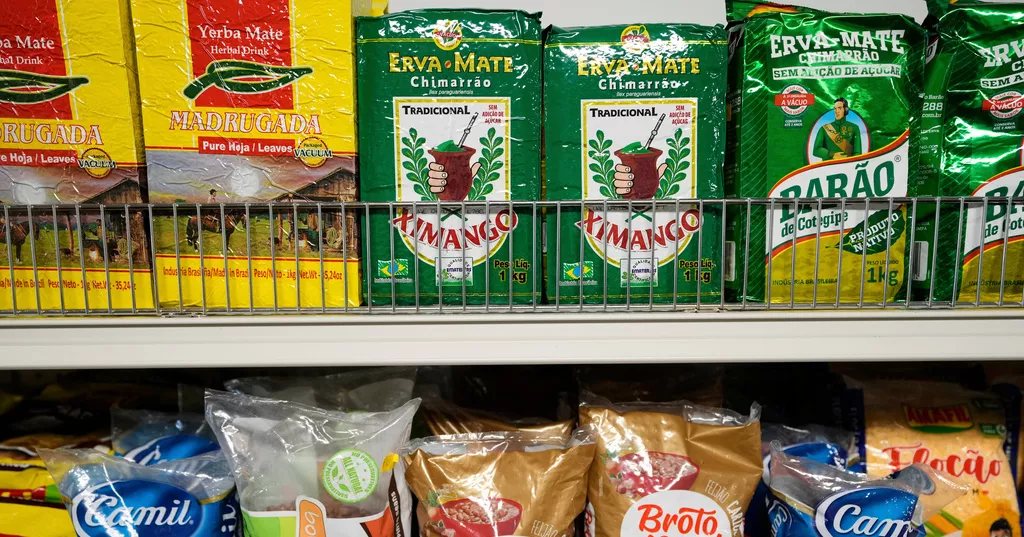
The administration of US President Donald Trump has proposed imposing a 25% tariff on imports from Brazil, accusing the South American country of maintaining trade practices that unfairly disadvantage American businesses despite the United States enjoying a significant trade surplus with Brazil.
The proposal, announced Monday, follows an investigation by the Office of the U.S. Trade Representative (USTR), which alleged that Brazil has weak anti-corruption enforcement measures and imposes unfair trade barriers, among other concerns.
Brazilian President Luiz Inácio Lula da Silva strongly criticized the move, saying he received the decision "with indignation." He also blamed the development on political actions by Sen. Flávio Bolsonaro, son of former President Jair Bolsonaro, who recently visited Washington.
Lula suggested that domestic political interests linked to the Bolsonaro family were influencing US policy toward Brazil.
US Trade Representative Jamieson Greer said he and President Trump had held constructive discussions with Lula and other Brazilian officials, but significant differences remained over issues identified in the investigation.
Speaking on Tuesday, Lula accused US Secretary of State Marco Rubio of being hostile toward Latin America and claimed he had already informed Trump that Rubio did not have a favorable view of Brazil.
The Brazilian government said in a statement that ongoing diplomatic efforts between the two countries, including direct engagement by both presidents, were being undermined by what it described as electoral and family interests connected to the Bolsonaro family.
Brazil also warned that it would take all necessary measures to minimize any economic damage if the tariffs are ultimately implemented.
The latest proposal comes months after Trump imposed a 50% tariff on Brazilian goods, citing concerns over Brazil's prosecution of former President Jair Bolsonaro for allegedly attempting to overturn his 2022 election defeat. Relations between Trump and Lula appeared to improve during Lula's visit to the White House in early May.
However, tensions resurfaced after the Trump administration designated two Brazilian criminal gangs as terrorist organizations following Flávio Bolsonaro's recent trip to Washington. Lula opposes the designation, which analysts say could strengthen his political rivals.
The USTR has scheduled a public hearing on the proposed tariffs for July 6.
Trade experts noted that the proposal would exempt more than half of Brazilian exports to the United States, including aircraft and key mineral products.
The investigation was launched under Section 301 of the Trade Act of 1974, a legal authority frequently used by the United States to address alleged unfair trade practices abroad.
Lula also criticized Flávio Bolsonaro and his brother, former lawmaker Eduardo Bolsonaro, accusing them of encouraging foreign interference in Brazilian affairs. He described their actions as harmful to the country's interests.
The tariff proposal comes after the US Supreme Court ruled in February that Trump had exceeded his authority by using the International Emergency Economic Powers Act (IEEPA) to impose broad tariffs on trading partners. However, tariffs imposed under Section 301 have generally survived legal challenges, making them a more durable tool for the administration.
Lula emphasized that he had personally presented Trump with trade data during their May meeting, showing that the United States enjoys a substantial trade surplus with Brazil.
According to USTR figures, US exports to Brazil increased nearly 11% last year to $54.4 billion, while Brazilian exports to the United States fell 5.7% to $39.9 billion, resulting in a US goods trade surplus of more than $14 billion.
The imbalance is even greater in services trade. US services exports to Brazil reached $29.6 billion in 2024, roughly four times the value of Brazilian services exports to the United States.
Lula dismissed concerns that the tariffs would severely hurt Brazil, saying the country would seek alternative markets if necessary.
"If they don't want to buy from us, we will sell to someone else," he said.
Brazil's largest trading partner for the past decade has been China.