
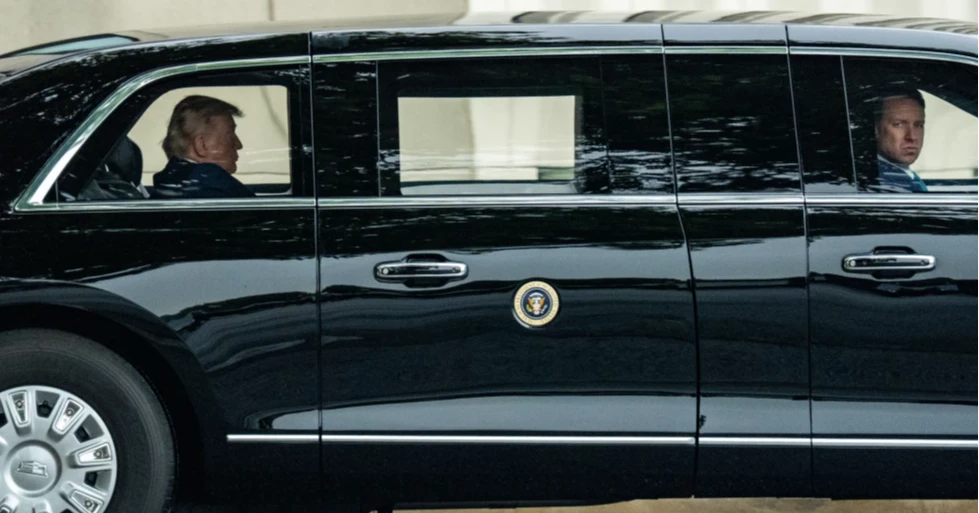
US President Donald Trump is set to meet his Cabinet on Wednesday at a critical point in ongoing efforts to end the conflict with Iran. This comes just days after he claimed that a settlement had been “largely negotiated,” even though discussions remain unsettled.
Ahead of the meeting, Trump has expressed confidence that a deal is close. He hopes the agreement will help reopen the Strait of Hormuz and allow him to argue that Iran’s nuclear capabilities have been reduced enough to declare success. The conflict has been politically unpopular among Republicans, adding pressure for a resolution.
However, there are concerns that any deal reached may fall short of expectations. Key issues have been left for later negotiations, and critics including some of Trump’s supporters fear Iran could emerge weakened but more determined.
The situation is becoming more sensitive as US midterm elections approach, with Republicans worried about rising fuel prices and growing public dissatisfaction.
Tensions increased further after US forces carried out what the Pentagon described as “defensive” strikes on missile sites and boats in southern Iran earlier this week. While Washington said the action was restrained, Iran criticized it as a sign of bad faith.
US Secretary of State Marco Rubio said negotiations on reopening the Strait of Hormuz and extending the ceasefire would take a few more days. He added that Trump would either secure a strong agreement or walk away without a deal.
Meanwhile, Trump complained on social media that even a full surrender by Iran might still be portrayed by the media as a victory for Tehran.
Concerns among allies
Despite Trump’s optimism, major differences remain between the US and Iran. Some Republican leaders, including Senators Roger Wicker, Lindsey Graham and Ted Cruz, have voiced concern that the proposed terms may favor Iran too much.
They argue that parts of the deal resemble the nuclear agreement reached under former President Barack Obama — a deal Trump had previously scrapped.
Under the proposed agreement, Iran would give up its stockpile of highly enriched uranium in exchange for relief from sanctions, according to officials familiar with the talks. However, details of how this would be done are still unclear and may be negotiated during a 60-day period.
The International Atomic Energy Agency estimates that Iran currently possesses a significant amount of uranium enriched close to weapons-grade levels, though Tehran has not publicly agreed to surrender it.
Trump recently suggested the uranium could be handed over to the US or destroyed under international supervision, signaling a softer stance compared to his earlier position.
Impact on regional tensions
Another unresolved issue is whether the ceasefire would include Israel’s ongoing operations against Hezbollah in Lebanon. Iran has insisted that Lebanon must be part of any broader agreement.
The US proposal appears to allow flexibility, supporting a ceasefire while also recognizing Israel’s right to defend itself against threats. Israeli Prime Minister Benjamin Netanyahu has indicated that military operations in Lebanon are continuing.
Analysts warn that any sanctions relief could allow Iran to rebuild its military strength and support allied groups like Hezbollah and Hamas.
Abraham Accords push faces hurdles
Trump has also suggested expanding the Abraham Accords — agreements aimed at normalizing relations between Israel and several countries — as part of a broader deal.
However, this proposal faces challenges. Key regional players like Saudi Arabia have said they would only consider such steps if there is clear progress toward establishing a Palestinian state, something Israel opposes.
Reports suggest that Trump’s proposal received a muted response from some Middle Eastern leaders, although opinions appear divided.
Despite concerns, US allies in the region continue to support efforts to end the conflict, seeing few alternatives to diplomacy.