
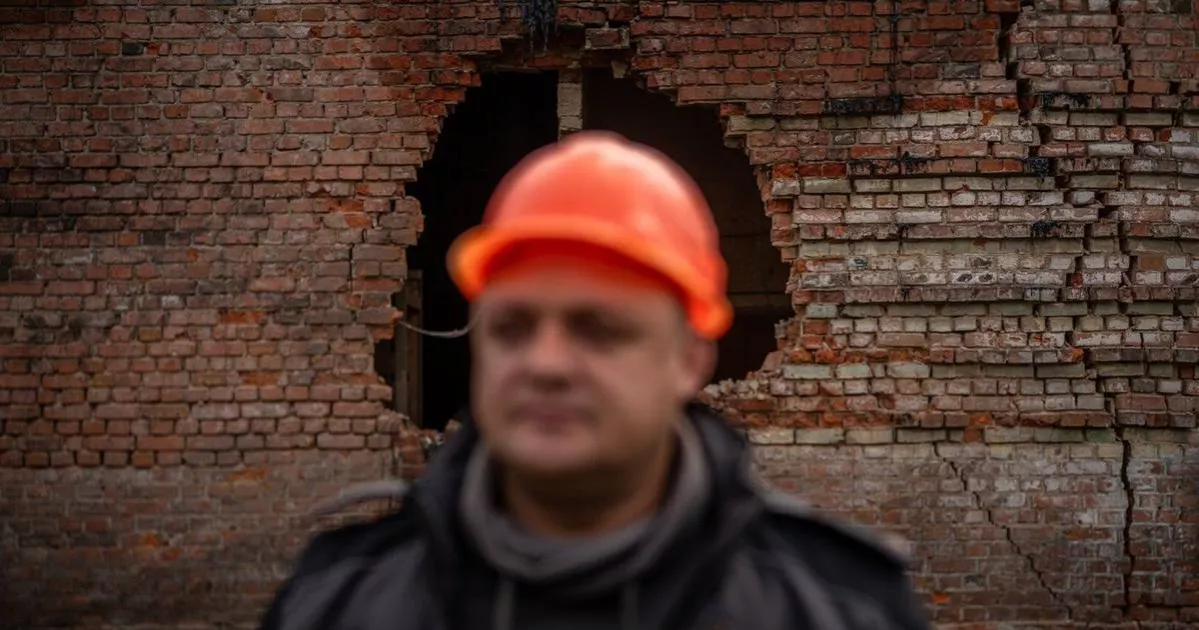
Nearly four years into Russia’s full-scale invasion, Ukraine’s energy workers continue to risk — and often lose — their lives trying to keep the country’s electricity system running amid relentless attacks.
When strikes hit, turbine operator Mykhailo does not head for shelter. “If all the operators hid, there’d be no energy,” he said inside a thermal plant’s machine hall. He has worked in the sector for 23 years, but never imagined the job would become so dangerous.
At least 160 energy workers have been killed and more than 300 wounded since the war began, according to Ukrainian officials. Colleagues say they keep working despite fear, exhaustion and the constant threat of drones and missiles. Many also face added frustration as a major embezzlement scandal at the state nuclear energy company places top executives under scrutiny.
Mykhailo lost a close colleague, Dmytro, who was killed just meters away during a strike. The AP had met Dmytro in 2024 after an earlier attack; he had vowed to “work as long as I can.” He died seven months later.
Across the country, repairs have become part of daily life. In Chernihiv, 58-year-old technician Andrii Dzhuma has spent decades maintaining the same power lines he helped install in Soviet times. Since the invasion, he has repaired nearly 100 kilometers of damaged wires. “Somehow, we still give people light,” he said.
In Shostka, 24-year-old lineman Bohdan Bilous said he often works 12-hour shifts under the sound of drones. “If one hits me, it’ll be sad, but at least it isn’t a child or a house,” he said. “It’s a kind of self-sacrifice.”
The danger is constant. In October, crane operator Anatoliy Savchenko was hit by a drone while returning from a substation in Chernihiv. A second drone struck as colleagues rushed to help. Savchenko, 47, and worker Ruslan Deynega, 45, were killed. “Nobody thought this would happen, especially on the way home,” said Savchenko’s widow, Liudmyla.
For many, the work has become a mission. In the Kyiv region, substation repair supervisor Oleksandr Tomchuk said his team rushes out within minutes when drones damage equipment. “People’s heat and comfort depend on us,” he said. Western-supplied electrical gear is crucial to keeping repairs going. “We’ll restore again and again — even if it’s hit today after being fixed yesterday.”
At home, Tomchuk shrugs off talk of fatigue as his children clamber around him. “There’s no time to be tired,” he said, though he knows the risks remain high.
The emotional toll is heavy. Mykhailo said morale often dips, but workers support each other to cope. Quitting, he added, is hardly a safe option — it could mean losing his profession or being sent to the front. “It’s scary and mentally hard,” he said. “You go to work knowing you could be killed.”
Dmytro’s widow, Tetiana, said her husband understood the risks after fleeing occupation in southern Ukraine in 2022 when he refused to work for Russian-installed authorities. “Light doesn’t come from machines,” she said. “It comes from people who risk their lives to bring it. If they stop going to work, there will be no gas, no heat, no light.”