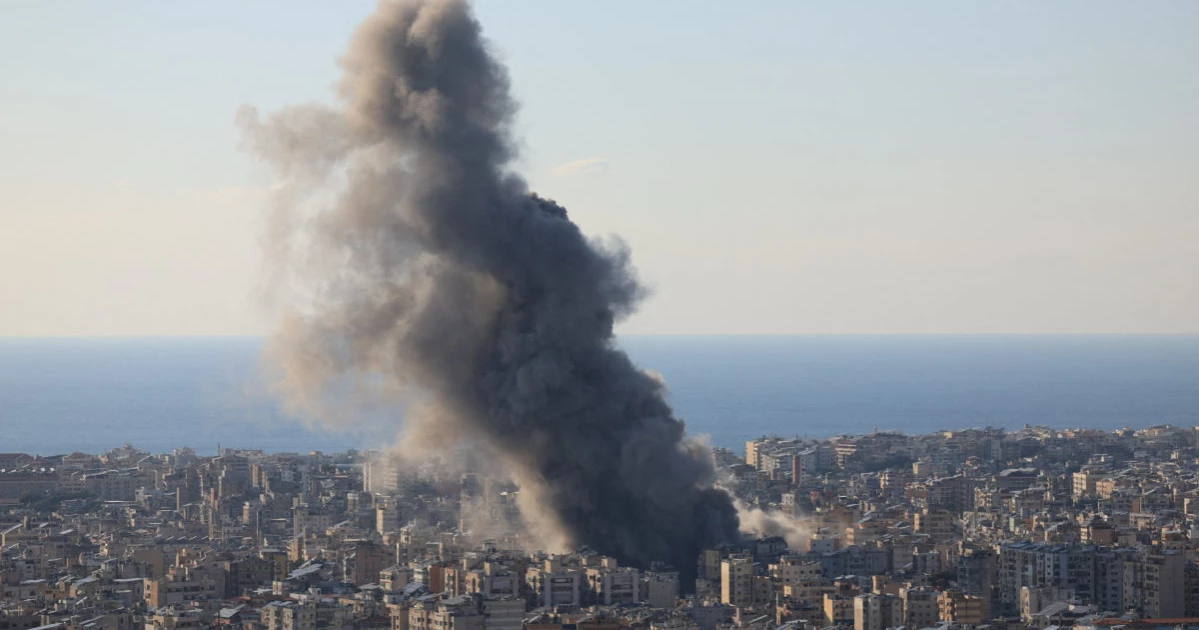
A fresh wave of unclaimed airstrikes struck multiple locations across Iran after the United States announced the completion of its latest military operations, raising new questions over who may be targeting the Islamic Republic.
The strikes took place on Thursday as Iran prepared for the funeral of late Supreme Leader Ayatollah Ali Khamenei, hitting areas in southern Iran, including Bushehr and Sistan and Baluchestan provinces, as well as the cities of Ahvaz and Chabahar.
While Iranian authorities have not officially blamed any country for the attacks, a member of parliament accused the United Arab Emirates of supporting the United States during its military campaign and warned that Abu Dhabi would "pay the price."
The US Central Command said earlier Thursday that it had completed a round of operations targeting about 90 sites across Iran. However, Iranian media reported additional explosions and airstrikes shortly afterward. CENTCOM has not commented on those subsequent attacks.
The latest strikes come amid heightened tensions in the Gulf following weeks of conflict that disrupted shipping through the Strait of Hormuz, a critical global energy route carrying roughly one-fifth of the world's oil and natural gas supplies. Iran has insisted the strategic waterway should remain under its sole control, while the United States and Gulf states maintain it must remain open to international navigation.
Iran responded to Thursday's developments by launching missile attacks toward Bahrain, Jordan, Kuwait and Qatar. Air raid sirens sounded across the four countries, and Kuwait reported at least one injury as air defense systems intercepted incoming missiles.
Following the attacks, UAE President Sheikh Mohammed bin Zayed Al Nahyan traveled to Kuwait for talks with the country's leadership, while Gulf states also held consultations with Qatar's foreign minister, who has been involved in mediation efforts between Tehran and Washington.
During the recent conflict, officials later acknowledged that Saudi Arabia and the UAE had carried out strikes against Iran after Tehran targeted energy facilities in their territories. However, neither country has commented on the latest attacks.
Israel, which participated in earlier military operations against Iran, has also not claimed responsibility for the latest strikes. Israeli Defense Minister Israel Katz nevertheless warned that Israel remained prepared to resume military action if necessary, saying the country's armed forces were ready to restore air superiority and launch further operations against Iran if new threats emerged.
Meanwhile, Iranian officials continued to issue warnings against Gulf states. Lawmaker Esmail Kousari accused the UAE of playing a behind-the-scenes role in recent US operations, an allegation the Gulf states have consistently denied.
The Joint Maritime Information Center, overseen by the US Navy, has again advised commercial vessels to use the southern shipping lane through Oman's territorial waters when transiting the Strait of Hormuz. The advisory follows recent attacks on merchant vessels and aims to reduce the risk of further incidents in the strategically vital waterway.